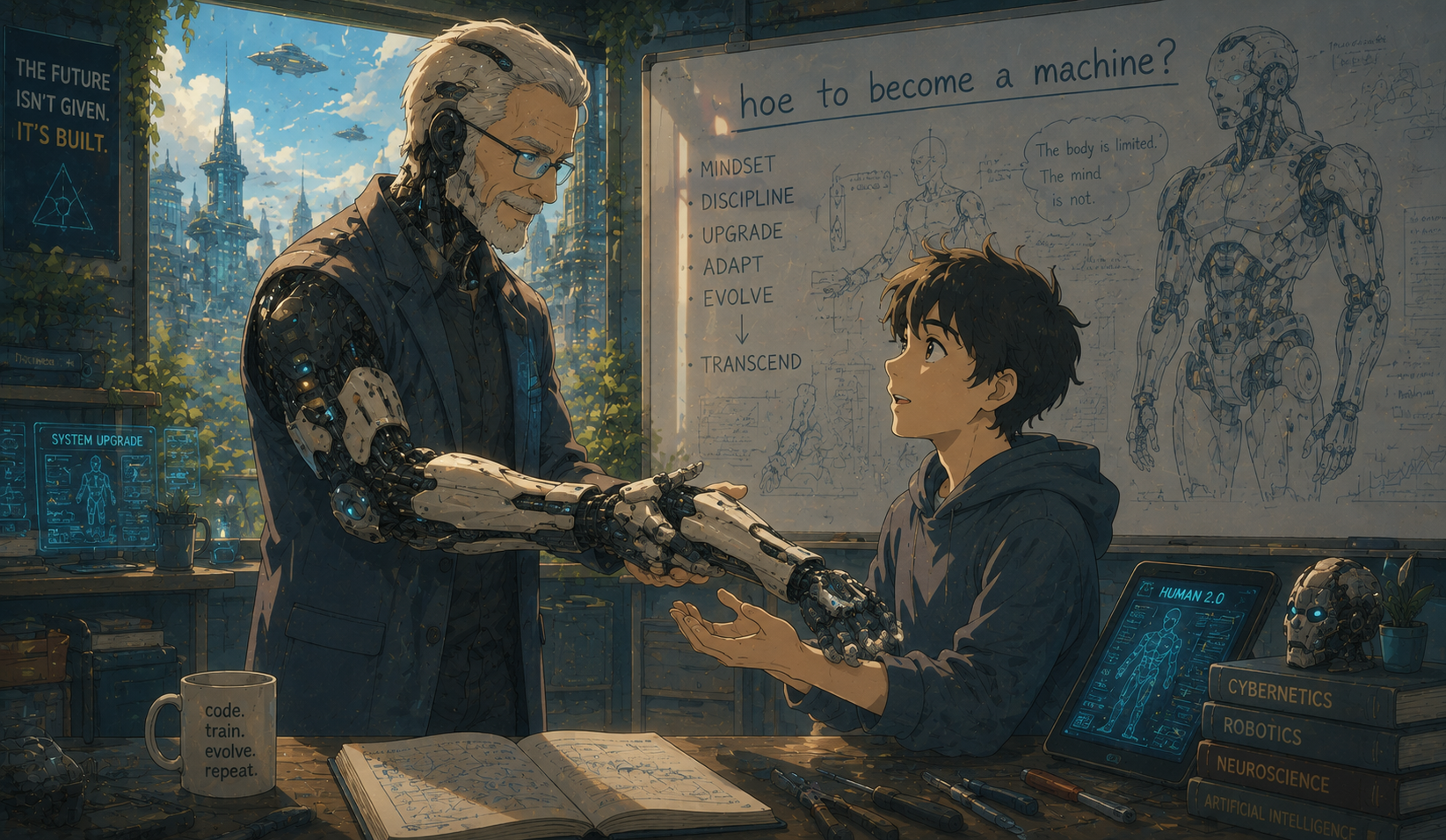
We are teaching managers how to be machines. Just as machines are taking over.
 Rolf Schutten
- 03 Aug, 2026
For decades, business schools and executive programs have relied on a familiar curriculum.
If you want to become a successful manager, you learn data analysis, financial modeling, operational planning, and strategic execution. You are trained to optimize processes, map out roadmaps, and treat an organization like a mechanical system that can be tuned with the right metrics.
This is the exact, analytical side of business administration. It is logical, structured, and comfortably measurable.
There is just one fundamental problem with this approach: We are spending billions teaching human leaders how to perform tasks that computers can now do significantly better, faster, and cheaper.
The crisis of relevance in management science
The traditional management discipline is facing a quiet crisis of relevance.
Analytical capacity, resource scheduling, operational planning, and data-driven scenario analysis used to be the exclusive domain of senior executives and high-priced consultants. Today, algorithmic models, automated platforms, and AI systems can synthesize complex organizational data in seconds. The hard, analytical side of management is rapidly becoming software.
Yet, our educational institutions and corporate training programs continue to produce managers trained for a world that no longer exists.
Instead of evolving, we pass down the exact same playbook from generation to generation. A playbook that produces managers who default to the classic 3 C’s: Coordinating, Commanding, and Controlling. They try to act like human processors, optimizing spreadsheets while remaining distant from the human reality of their teams.
Real leadership cannot be automated
If machines are taking over the mechanics of management, what is left for human leaders to do?
Everything that actually matters.
True leadership has never been about process management. It is, first and foremost, an emotional, personal, and interpersonal discipline. It requires traits that no software model possesses:
- Authenticity: The courage to be transparent, vulnerable, and consistent in your values.
- Social and Emotional Intelligence: The ability to navigate conflict, read unsaid dynamics, and build genuine trust.
- Sense-Making: Helping teams find purpose, context, and direction in an increasingly complex world.
You cannot learn these qualities by studying a framework or passing a written exam. Emotional maturity and authentic leadership require rigorous personal reflection, deep self-awareness, and—above all—the willingness to experiment, fail, and gain messy, real-world experience.
From command to connection
We have reached a fork in the road. We can either double down on outdated management models and watch our organizations become rigid and disengaged, or we can fundamentally shift our course.
We must stop training leaders to be analytical overseers and start developing them as social-emotional anchors.
When you strip away the administrative and analytical tasks that technology now handles, a leader’s true responsibility becomes clear: Don’t manage the process; empower the people.
That means stepping away from the urge to command and control. It means creating an environment of psychological safety where employees feel trusted to take ownership, innovate, and make decisions within a clear direction.
The generational loop we need to break
The reason bad management persists is not a lack of books or webinars. It persists because it is copied.
Young professionals enter the workplace, watch their managers lead through control and coordination, and assume that is what authority looks like. When they eventually get promoted, they repeat the cycle. They pass down the 3 C’s because nobody taught them how to navigate the uncomfortable, human side of leadership.
Breaking this cycle is the most urgent challenge facing modern organizations. We don’t need more managers who act like algorithms. We need leaders who have done the hard internal work of becoming emotionally developed human beings.
Closing thought
Technology is stripping away the illusion that management is merely an analytical science. It is forcing us to confront a truth we should have embraced long ago.
If your value as a leader relies solely on planning, tracking, and operational control, you are already redundant. The future belongs to leaders who understand that technology handles the logic, but humans supply the soul.
Stop training managers to compete with machines. Start raising leaders who know how to connect with people.