Showing Posts From
Management
 Rolf Schutten
- 01 Sep, 2026
Breaking the pattern of being the operational bottleneck
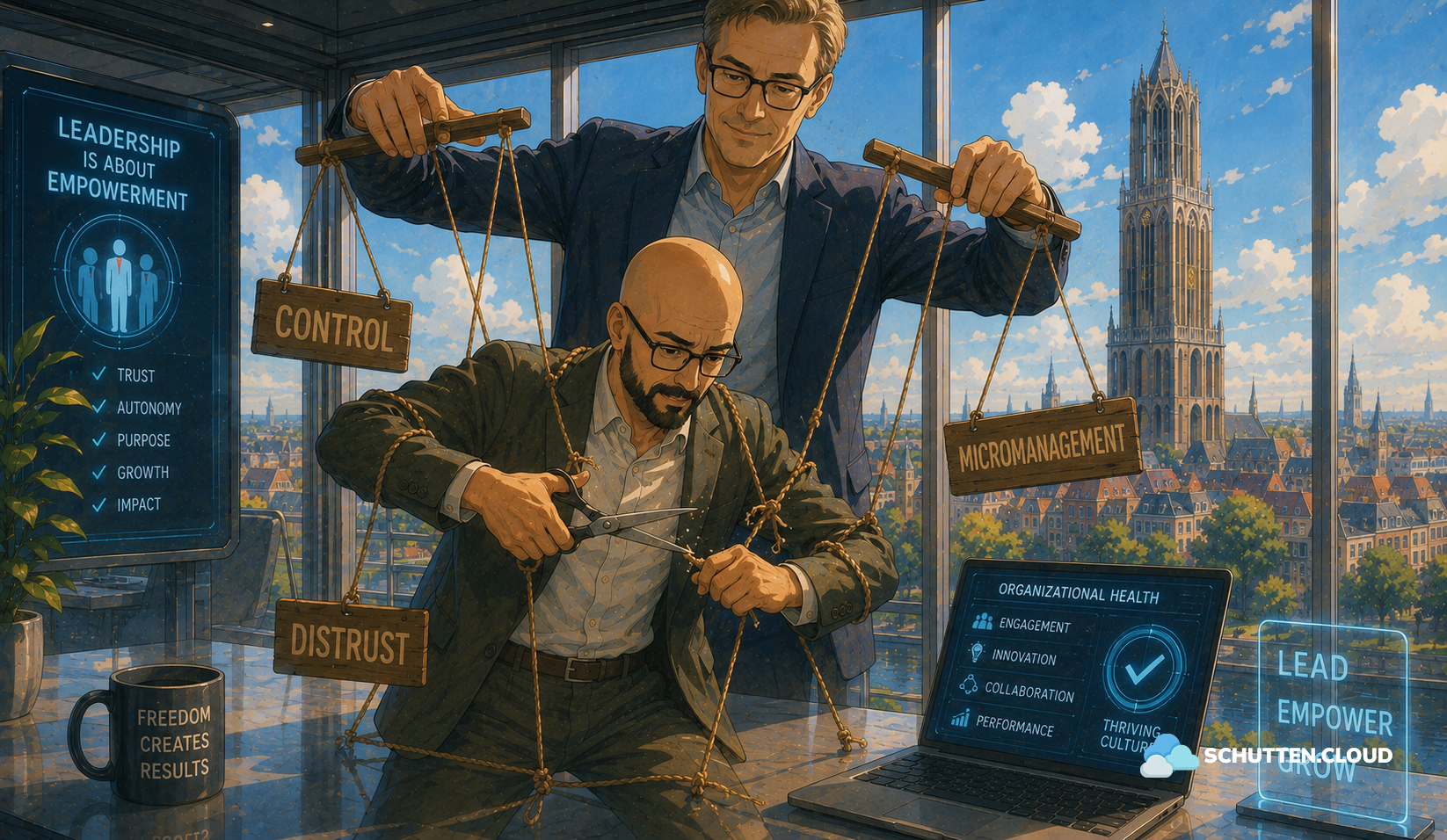
You spend your entire working day running from one urgent problem to another. Your digital calendar is completely packed with back-to-back meetings, and your phone buzzes constantly with urgent questions from your team. You work hard late into the evening, answering emails and reviewing documents that should have been finished hours ago. Yet, when you finally close your laptop at night, you realize that your strategic goals have not moved forward at all. It is exhausting. Disconnecting from work becomes almost impossible because your mind remains trapped in daily operational details. When an entire operational department depends on one person for every minor decision, progress slows down significantly. The team stays extremely busy, but the exact same issues keep returning to your desk week after week. You feel like a firefighter putting out the same fires over and over again. You wonder why your capable employees cannot handle these tasks on their own, and you feel frustrated that you are the central bottleneck holding everything up. The reality of the operational bottleneck To understand why this situation happens, we must look at how daily work actually flows through an organization. An operational bottleneck occurs when too many approvals, decisions, and technical checks must pass through a single person before work can move forward. In many companies, this person is the department manager, team lead, or senior operations director. At first, being the central point of contact feels productive. You know everything that is happening in your department, and you can give fast, accurate answers to complex questions. However, as the business grows or work becomes more complex, this setup quickly breaks down. Decisions start piling up in your inbox. Projects stall while team members wait for your approval. Instead of spending your time on strategic planning, process improvement, or long-term growth, you spend your entire day handling micro-decisions and operational emergencies. This pattern is rarely created by incompetent or lazy employees. In fact, it happens most frequently to highly talented, dedicated leaders who care deeply about their work. Because you are fast, experienced, and knowledgeable, solving a problem yourself takes less time than explaining the solution to someone else. It feels efficient in the moment. However, every time you provide a quick answer, you accidentally teach your team that bringing their problems directly to you is the easiest path forward. Over time, your team stops attempting to solve difficult problems independently. Examining the counter-perspective: why central control exists Before we talk about breaking this pattern, it is essential to examine the opposite argument. Is central control always a bad thing? Why do so many experienced leaders choose to keep tight control over daily operations, and are there valid reasons for doing so? To build a complete understanding of leadership, we must recognize that tight central control is not always a mistake. In many business situations, holding firm control over decisions is entirely logical, necessary, and even responsible. There are several clear reasons why a leader might choose to stay directly involved in operational details: First, consider high-risk operational environments where mistakes carry severe consequences. In industries like healthcare, aviation, financial compliance, or heavy manufacturing, an error in judgment can cause financial bankruptcy, legal prosecution, or physical harm. In these environments, strict quality control and centralized oversight are vital. A leader cannot simply tell an inexperienced team to figure things out for themselves when safety regulations or legal laws are at stake. Centralized authority ensures that standards remain exceptionally high and that critical procedures are followed without deviation. Second, central control is often necessary during times of organizational crisis or rapid change. When a business faces a sudden financial emergency, a major cyberattack, or a massive market collapse, clear and centralized leadership is essential. During a crisis, there is no time for long group discussions or slow democratic decision-making. The organization needs one decisive leader who can make rapid choices, give direct orders, and coordinate the entire team's effort. In emergency situations, centralization provides clarity, speed, and direction. Third, tight control is natural when a team is very new, understaffed, or lacking basic technical skills. You cannot delegate real responsibility to employees who do not yet possess the knowledge or confidence to perform the work. If a manager steps back too quickly without training their team first, the result is not empowerment; it is operational chaos. In the early stages of building a team, a leader must be hands-on, guiding every step and reviewing every document until the staff builds the necessary competence. Fourth, keeping control protects the team from external organizational noise. Senior leaders often act as a shield, absorbing pressure from executive boards, demanding clients, and corporate politics. By centralizing communication and decisions, the manager prevents their employees from feeling overwhelmed by executive demands. The manager takes on the burden so the team can focus on their daily work without unnecessary anxiety. Finally, we must acknowledge the psychological comfort that tight control provides to the leader. Being needed feels good. When team members constantly ask for your advice, it reinforces your status, authority, and sense of job security. Knowing every detail of the operation gives you a sense of certainty in an unpredictable corporate world. Letting go of control requires stepping into uncertainty, which can feel deeply uncomfortable for someone who takes pride in being an expert. Understanding these counter-arguments helps us see that central control is not an evil habit created by bad intentions. It is a natural response to risk, crisis, and organizational complexity. However, the critical issue arises when temporary control becomes a permanent operational model. The long-term costs of holding control too long While central control serves a clear purpose during crises or early team development, maintaining it permanently creates severe long-term risks. What begins as a protective measure eventually turns into an operational barrier that suffocates organizational growth. The first major risk is employee turnover, especially among your most talented staff. In today's competitive job market, high-performing employees want autonomy, trust, and room to develop their skills. If ambitious workers realize that every minor decision must be double-checked by their manager, they feel micromanaged and disempowered. They quickly realize that their professional growth is blocked. Eventually, these top performers leave for companies that offer real responsibility. Meanwhile, employees who prefer to follow orders without thinking will stay behind, making the department even more dependent on the manager. The second major risk is organizational paralysis. When every decision must pass through one person, the entire department can only move as fast as that single individual can work. If the manager falls ill, takes a vacation, or leaves the company, operations grind to a sudden halt. The organization becomes incredibly fragile because key operational knowledge is stored inside one person's head rather than built into repeatable team processes. The third risk is personal health and burnout. Carrying the entire mental burden of a department takes a heavy toll on a leader's physical and emotional well-being. Sleep deprivation, chronic anxiety, and high stress levels become regular parts of life. Over time, physical fatigue impairs decision-making ability, leading to poor strategic choices and emotional irritability. A leader who is constantly exhausted cannot provide inspiring direction or clear guidance for their team. Recognizing patterns instead of blaming people When managers realize that their department is struggling with dependency, their initial reaction is often to blame the employees. They might assume that their staff lacks ambition, intelligence, or work ethic. However, after working with operational leaders for many years, a clear truth emerges: teams do not become dependent because of bad people; they become dependent because of established patterns. A pattern is a learned cycle of behavior that repeats automatically within an organization. Consider how a typical dependency pattern develops in daily work:An employee encounters a challenging problem or an unfamiliar situation. Feeling uncertain or wanting to avoid making a mistake, the employee asks the manager what to do. The manager, wanting to be helpful and keep work moving quickly, immediately provides the answer. The employee carries out the solution, relieved that they did not have to take personal responsibility for the outcome. The next time a similar problem arises, the employee repeats the exact same step, bringing the issue directly to the manager.Over weeks and months, this cycle reinforces itself until it becomes an automatic habit for everyone involved. The manager feels increasingly overworked, while the employee experiences learned helplessness. Learned helplessness occurs when capable people stop using their own intelligence because they have been conditioned to rely on someone else for every solution. Breaking this cycle does not require firing your staff or completely restructuring your company. It requires recognizing the pattern and systematically changing your daily interactions with your team. Crucially, these patterns are broken not through external training courses or theoretical seminars, but through deliberate, small adjustments made during daily operations. Practical steps to build independence on the job Transitioning from a central bottleneck to an empowering leader is a gradual process that requires patience, discipline, and consistent practice. You cannot simply announce that you are delegating everything starting tomorrow; doing so would cause operational failure and alienate your team. Instead, you must implement a structured approach that gradually builds your team's confidence and capability while maintaining appropriate operational safety. The first step is to establish clear decision boundaries. Your team needs to know exactly which decisions they can make independently, which decisions they can make but must report to you afterward, and which high-risk decisions still require your direct approval. Many employees seek approval simply because they do not know where their authority ends. By defining these boundaries clearly, you remove uncertainty and give your staff permission to act independently within safe limits. The second step is changing how you respond when employees bring problems to your desk. When a team member enters your office asking for a solution, resist the strong internal urge to give an immediate answer. Instead, pause and ask a simple, empowering question: "What do you think we should do?" Initially, your employees might feel surprised or hesitant when you ask this question. They may offer a brief answer or admit that they do not know. Encourage them to analyze the situation, evaluate potential options, and recommend a specific course of action. Even if their proposed solution is not exactly how you would have done it, support their idea as long as it is safe and effective. By shifting from giving answers to asking questions, you teach your team to think critically and take ownership of their work. The third step is creating safe-to-fail opportunities. If employees believe that making a minor mistake will ruin their career or draw harsh criticism from management, they will continue to pass every decision up to you to protect themselves. You must demonstrate that small, low-risk mistakes are treated as valuable learning opportunities rather than punishable failures. When an employee makes a minor error while acting independently, guide them through a constructive debrief. Discuss what happened, what can be learned, and how to handle the situation differently next time. This approach builds psychological safety and encourages continuous improvement. The fourth step is investing time in coaching during daily work. Transforming your team's habits does not require spending hours in a classroom away from your job. Instead, spend about two hours each week providing short, focused coaching moments directly on the shop floor or during regular operational checks. Use real work situations to teach your team how to analyze problems, assess risks, and manage workflows. Over time, these brief coaching moments build deep capability within your workforce, allowing you to step back with confidence. As you implement these steps, you will gradually notice a significant shift in your daily work environment:The constant stream of minor interruptions and urgent questions will decrease significantly. Your team members will demonstrate higher confidence, discipline, and pride in their achievements. You will regain control of your personal schedule, restoring balance to your personal life. You will finally have the time and mental space required to focus on long-term strategic improvements that move the business forward.Comparing operational models To see the fundamental differences between these two ways of leading, it is helpful to contrast their core characteristics.Operational dimension Central bottleneck model Empowered team modelPrimary role of leader Chief problem-solver and central controller Coach, facilitator, and strategic guideDecision-making process All decisions pass through the leader's desk Decisions are made locally within clear boundariesTeam mindset Passive, hesitant, and reliant on permission Proactive, accountable, and focused on solutionsResponse to errors Blame, tighter control, and increased oversight Constructive analysis, learning, and coachingOrganizational speed Slow, limited by the leader's personal capacity Fast, flexible, and capable of handling growthLong-term outcome High burnout, turnover, and operational risk High engagement, resilience, and sustainable successClosing thoughts Being a central operational bottleneck is a common challenge, but it is not a permanent reality. While holding tight control is understandable during a crisis or in high-risk situations, maintaining it indefinitely limits your company's growth and damages your personal well-being. By recognizing the automatic patterns that create dependency, setting clear decision boundaries, and coaching your team during daily work, you can transform your department into a confident, self-sustaining unit. True leadership is not about making yourself indispensable, but about empowering your team to succeed without you.

- Rolf Schutten
- 28 Aug, 2026
The importance of celebration in modern leadership
Today is August 28th, and it is a very special day for me. It is my wife's birthday. As I sat down at my desk this morning to write this article, surrounded by decorations and birthday cards, I found myself thinking deeply about the concept of celebration. In our personal lives, we naturally take the time to pause, gather with people we care about, and honor important moments. We celebrate birthdays, weddings, anniversaries, and personal achievements because these moments bring joy and meaning to our lives. Yet, as I reflected on my years working with corporate teams, a striking contrast became clear. In the business world, we often treat celebration as an afterthought. We finish a massive six-month project, deliver exceptional results, and then immediately jump to the next urgent deadline without missing a beat. We forget to pause. We forget to say thank you. By ignoring these milestones, leaders miss a vital opportunity to inspire their teams and build lasting motivation. Why we forget to celebrate at work Why do so many managers struggle to celebrate professional wins? The root cause often comes down to human biology and corporate habits. Human brains are naturally wired with a negativity bias. Thousands of years ago, paying close attention to threats and problems kept our ancestors alive. Today, that same biological mechanism makes managers focus constantly on what is broken, what is missing, or what might fail in the next quarter. This bias leads to a style of management built on constant urgency. Managers scan their teams for errors. When everything runs smoothly, they stay silent because they expect good performance as the default standard. They only step in when something goes wrong. Over time, this creates a defensive workplace culture. Employees start working out of fear rather than passion. They focus on protecting themselves from criticism instead of exploring new, creative ideas. Leading purely from pressure destroys energy. People get tired. When every week is treated like a critical emergency, team members eventually suffer from emotional burnout. The human mind cannot maintain high stress levels forever. Without moments of rest, recognition, and shared happiness, employees lose their connection to the company's long-term vision. The science behind recognition and progress Celebrating a milestone is not just a nice social gesture. It is a biological necessity for sustained high performance. When a team achieves a goal and receives genuine appreciation, their brains release dopamine. Dopamine is a powerful chemical linked to motivation, learning, and pleasure. It signals to the brain that a specific behavior was successful and should be repeated. Celebrating a win chemically reinforces positive habits across the whole organization. Recognition also creates psychological safety. This means employees feel accepted, respected, and safe to take creative risks. When leaders regularly highlight progress, they show their workers that they value them as human beings, not just as tools to hit targets. People want to feel seen. A team that feels truly appreciated will always handle future crises with greater trust and resilience. Furthermore, big goals can feel terrifyingly distant. If a software project takes two years to complete, waiting until the very end to celebrate will drain everyone's energy. Successful leaders understand the power of small wins. Breaking large projects into smaller milestones and celebrating each step creates continuous energy. It keeps momentum alive over long periods. Shifting from problem-driven to progress-driven leadership Moving toward a positive leadership model does not mean ignoring real business problems. Mistakes happen. Budgets get tight. True progress-driven leadership is about balance. It means correcting errors constructively while actively looking for things to praise. Progress-driven leaders change how they talk to their teams every day. They notice small improvements. They also understand that celebration looks different for different people. Not everyone wants a loud public party. An extraverted employee might love being praised in front of a large crowd during a company meeting. On the other hand, an introverted worker might prefer a quiet, personal conversation or a simple thank-you email. Great leaders take the time to learn what makes each team member feel valued. Celebration does not have to cost a lot of money. You do not need expensive gifts or lavish dinners every month. Often, the most memorable celebrations are simple. A handwritten note, a sincere word of thanks, or giving a team an afternoon off after a tough project can mean more than a generic financial bonus. Authenticity is what matters most. Simple ways to embed celebration into daily culture If you want celebration to become part of your organization's identity, you must build habits around it. It cannot be something you only remember to do once a year during performance reviews. Start weekly meetings by sharing positive wins before discussing operational problems. Celebrate smart risks and creative effort, even if the final project did not achieve its financial goals. Create simple channels where colleagues can publicly thank and recognize each other for helping out. Mark personal milestones, like work anniversaries or life events, to remind everyone that work is made of people.When celebration is built into the weekly routine of a company, the workplace environment changes completely. People stop dreading Mondays. They feel connected to a shared purpose. Comparing urgency with positive reinforcement To see the practical difference between these two management styles, it is useful to look at how they affect daily work.Leadership aspect Urgency and negativity model Celebration and progress modelPrimary focus Fixing errors and preventing mistakes Recognizing progress and achieving goalsEmployee motivation Driven by fear, anxiety, and self-defense Driven by pride, joy, and positive feedbackResponse to setbacks Blame, anger, and tighter control Analysis, support, and continuous learningTeam culture Cautious, defensive, and tired Safe, creative, and highly resilientLong-term results High turnover and emotional burnout Sustainable productivity and strong loyaltyClosing thoughts Writing these thoughts today on my wife's birthday has been a wonderful reminder of what truly matters. Life is not just a series of tasks to be checked off a list, and neither is our work. Leadership is ultimately about helping human beings achieve great things together. While solving problems will always be part of the job, focusing only on the negative drains the life out of a team. Taking the time to stop, smile, and honor hard work is a powerful strategic choice. When you celebrate the milestones along the way, you build a workplace where people feel valued, energized, and ready to face the future together. Never forget that taking the time to celebrate progress is the fuel that powers future success.
- Rolf Schutten
- 27 Aug, 2026
Are leaders born or made?
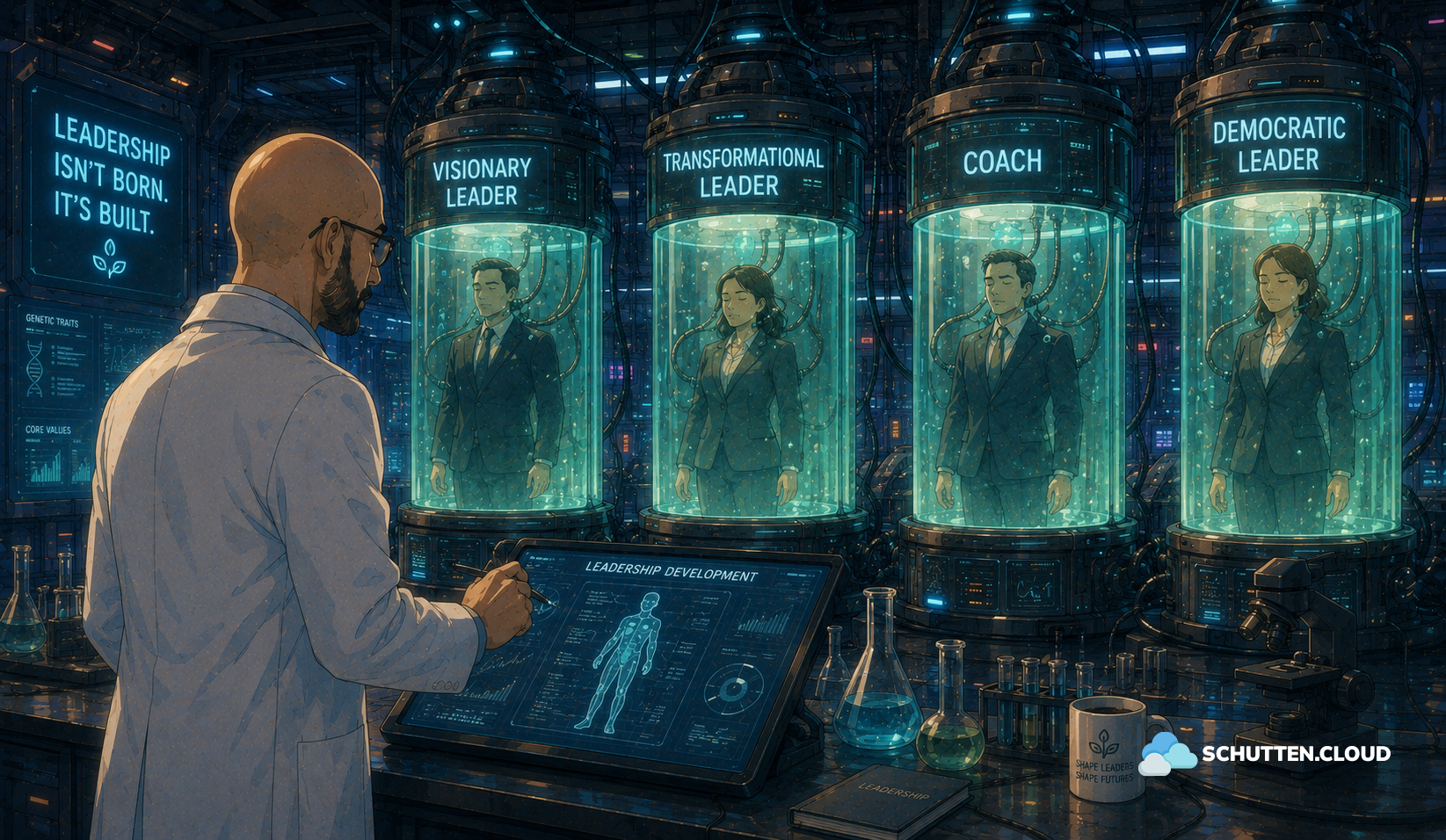
Think about the most impressive leader you have ever worked with in your career. Was this person born with a natural gift for guiding others? Or did they spend years learning how to lead through trial, error, and hard experience? This question has been debated for decades in offices, university classrooms, and executive boardrooms around the world. People often wonder if leadership is an innate talent hardwired into our DNA or a practical skill that anyone can acquire with enough effort. In the past, many researchers supported the idea that historical figures were simply born with extraordinary qualities. Today, modern behavioral science provides a much more complete answer. Scientists study human behavior using a framework called the bio-psycho-social model. This model shows that becoming an effective leader is not a simple choice between nature and nurture. Instead, leadership develops through a continuous interaction between your genetic code, your personality, your childhood upbringing, and your life experiences. The biological blueprint of leadership Let us begin by looking at biology. Are some human beings naturally born to lead? To answer this question, behavioral scientists have spent decades studying identical and fraternal twins. Because twins share either all or half of their genetic material, comparing their life choices helps researchers measure the exact impact of DNA on career paths. These twin studies consistently show that genetic factors account for roughly twenty-four to thirty percent of the variation in who takes on leadership roles. In simple terms, biology plays a real role, but it only explains about a third of the overall story. Scientists have even identified specific genetic markers associated with leadership positions. Research points to specific DNA sequences connected to neural receptors in the brain that appear more frequently in individuals who hold management roles. However, it is vital to understand what these genetic markers actually do. Genes do not automatically create a great manager or a charismatic executive. There is no single leadership gene that guarantees success. Instead, your DNA influences underlying biological systems that make certain leadership behaviors easier to perform. For example, genetics influence how your body regulates stress hormones like cortisol. Some people inherit a nervous system that stays calm during high-pressure situations. When a sudden crisis hits a company, these individuals do not panic easily. Genetics also influence dopamine levels, which drive physical energy, ambition, and the desire to achieve goals. A person born with high physical energy and a steady nervous system may find it easier to step into demanding roles. Yet, having a biological advantage is never enough on its own. Think of genetics as the quality of a seed in agriculture. A high-quality seed has great potential. However, if you drop that seed onto dry rocks without water, sunshine, or fertile soil, it will never grow into a tree. The exact same rule applies to human beings. A person may inherit a strong nervous system and high energy, but without the right environment, proper education, and real opportunities, that biological potential remains completely unused. Learning to lead through practice and experience Since genetics account for less than a third of leadership tendencies, the remaining seventy percent comes down to environment, education, and life experiences. This is an encouraging realization for anyone who wants to improve their skills. It proves that leadership is primarily a learned discipline rather than an exclusive club reserved for a lucky few. To understand how people learn to lead, we must look at how the human brain adapts over time. The brain is not a static organ that stops developing after childhood. Through a natural process known as neuroplasticity, the brain constantly builds new connections whenever you practice a skill or reflect on a new experience. Leadership is made of specific practical behaviors. Active listening, emotional control, strategic planning, clear communication, and delegating tasks are all skills that can be trained. None of these abilities appear magically overnight. Just like learning to play a musical instrument or speak a new language, mastering leadership requires deliberate practice. When a manager repeatedly practices remaining calm during difficult conversations, the brain strengthens the neural connections responsible for self-control. Over time, what felt difficult and awkward becomes a natural habit. People also learn how to lead by observing others around them. From an early age, human beings watch parents, teachers, managers, and public figures. When we see a manager handle a team conflict with fairness and respect, we remember that positive outcome. We mentally store that behavior and copy it when we face similar challenges later in life. Conversely, watching a poor manager destroy team trust teaches us what mistakes to avoid. However, the most powerful learning experiences often come from facing severe hardship. In leadership research, these intense personal challenges are called crucibles. A crucible might be a failed business venture, a painful career setback, a major project collapse, or a personal health crisis. These difficult moments force individuals to pause, examine their values, and rebuild their approach to life. When a leader goes through a crisis and takes time to reflect on what went wrong, they develop deep self-awareness and emotional strength. True confidence is rarely born during easy times. It is forged when you face failure, learn from your mistakes, and rebuild your career with greater wisdom. Personality traits and the myth of the extrovert While everyone can learn leadership skills, personal traits shape how individuals approach the role. Psychologists often study personality using five main characteristics: extraversion, conscientiousness, openness to experience, agreeableness, and emotional stability. Understanding these traits helps explain why different people adopt distinct management styles. Extraversion is often the most visible personality trait. People who score high in extraversion are outgoing, energetic, and comfortable in social settings. Because extraverts naturally speak up in groups and seek attention, they are frequently the first people to step forward into leadership positions. Researchers call this phenomenon leader emergence. When a team faces an uncertain situation, the loudest and most confident voice often gets chosen to take charge. However, there is a big difference between emerging as a leader and being an effective leader over time. While extraversion helps people get noticed initially, traits like conscientiousness and openness to experience predict long-term success. Conscientious individuals are organized, disciplined, reliable, and detail-oriented. They keep promises, meet deadlines, and create structured systems that allow businesses to run smoothly. Openness to experience brings curiosity, creativity, and a willingness to explore new ideas, which is vital for long-term strategy. Emotional stability is another crucial factor. Leaders who experience high anxiety, frequent mood swings, and deep self-doubt often struggle to make decisions under pressure. These negative emotions hurt decision-making and make it difficult for team members to feel secure. A leader who panics under stress spreads fear throughout the entire organization. For many years, popular culture assumed that great leaders had to be loud, dramatic extraverts. This assumption created a widespread myth that introverted individuals could not lead effectively. Modern psychological research has proven that myth completely wrong. In complex and fast-moving business environments, introverted leaders often outperform extraverted leaders. Introverted managers tend to be quiet, thoughtful, and excellent listeners. Instead of trying to dominate every conversation, they create space for their team members to share creative suggestions and take initiative. When a team consists of proactive, highly skilled employees, an introverted leader allows those employees to shine and innovate. Extraverted leaders, on the other hand, sometimes feel the need to control every discussion, which can accidentally crush the initiative of talented workers. While positive personality traits support healthy leadership, dark personality traits can cause immense damage. Characteristics like extreme narcissism, manipulativeness, and a lack of empathy can ruin organizations. Individuals with these traits often appear charming, confident, and persuasive in job interviews. They frequently climb corporate ladders quickly by taking credit for other people's work and manipulating office politics. However, in the long run, these individuals destroy trust, demoralize employees, and ruin corporate cultures. True leadership effectiveness must be measured by long-term organizational health, not short-term power. How early childhood shapes future leaders Long before a person attends their first business meeting or enters a management training program, their leadership foundation is already being built at home. The way parents raise their children leaves a permanent mark on how those children interact with authority, manage stress, and build relationships in adulthood. Psychologists study early childhood development using attachment theory. When parents provide consistent love, protection, and emotional warmth, a child forms a secure emotional bond. This secure attachment creates a strong sense of basic trust. Children who grow up feeling safe and valued develop healthy self-esteem and learn to trust other people. In adulthood, this basic trust becomes a cornerstone of healthy leadership. Secure leaders do not feel threatened when their team members succeed or express different opinions. They do not need to micromanage every detail because they genuinely trust their workers. Instead of controlling people through fear, secure leaders empower their teams, offer constructive support, and build environments where employees feel safe to take calculated risks. Parenting styles also play a direct role in developing personal responsibility. The most effective approach combines high emotional warmth with clear rules and boundaries. Parents who use this balanced approach set firm expectations, but they also explain the reasons behind those rules and listen to their children's feelings. This supportive environment teaches children that their actions have real consequences, developing an internal locus of control. An internal locus of control is the firm belief that you have the power to shape your own life through your choices and effort. Individuals who grow up with this mindset do not blame outside circumstances when things go wrong. When they face a crisis at work, they take ownership, adapt their strategy, and look for practical solutions. Furthermore, parents who encourage their children to make age-appropriate decisions build personal resilience early in life. Allowing a child to solve small problems, manage minor conflicts, and experience failure teaches them that mistakes are not fatal. When these children grow into adults, they possess the courage to make tough decisions under uncertainty without being paralyzed by the fear of making a mistake. Putting the bio-psycho-social model into practice Understanding the complete picture of how leadership develops changes how organizations should select, train, and support their managers. Relying on outdated ideas about natural talent or charismatic personalities leads to poor hiring decisions and wasted human potential. When companies hire or promote leaders, they should look beyond outward confidence and superficial charisma. Assessment processes should focus on emotional stability, conscientiousness, self-awareness, and personal integrity. Evaluating how a candidate handles failure and listens to feedback provides far better clues about their future performance than listening to an impressive interview speech. Organizations must also redesign their leadership development programs. Traditional management training often consists of short lectures and reading materials, which do little to change actual daily behavior. Because the brain learns through practice and active reflection, effective training must include hands-on experience, real-world projects, long-term mentoring, and continuous feedback. Creating a culture that views mistakes as learning opportunities is equally critical. If a company punishes every minor error, managers will avoid taking risks and default to rigid, defensive behaviors. However, when an organization treats setbacks as natural learning experiences, leaders develop the resilience and adaptability required to navigate complex market changes. Summary of leadership factors To bring all these elements together, it is helpful to look at how different factors contribute to the overall development of a leader.Dimension Share or role Primary mechanism Key research conceptsGenetics 24% to 30% Biological predisposition, stress and energy regulation Genetic markers and twin studiesLearnability Around 70% Neuroplasticity, practical experience, role models, reflection Social learning and life challengesPersonality Moderating role Main personality traits guide leadership style and effectiveness Extraversion, conscientiousness, introversionUpbringing Foundational role Secure attachment, supportive parenting, personal responsibility Early trust and internal controlClosing thoughts The debate over whether leaders are born or made turns out to be incomplete. Biology sets a basic foundation, providing raw physical energy, stress tolerance, and temperament tendencies. Childhood upbringing builds the emotional security and personal responsibility needed to interact healthily with others. Finally, years of deliberate practice, observation, and reflection turn that potential into practical skill. Nobody is born a finished leader, and nobody becomes a great leader purely by accident. Becoming a leader is a lifelong process of learning, making mistakes, and growing as a human being. When organizations recognize this truth, they can stop searching for mythical born leaders and start building environments where real leadership can flourish. Great leaders are neither simply born nor purely made, but continually developed through experience, reflection, and growth.

- Rolf Schutten
- 26 Aug, 2026
Humanizing change to build better organizations
Experiencing major unexpected changes in your career can be a frightening experience, especially when you are young and just starting out in the professional world. Early in many people's careers, there comes a moment when the stability of a company suddenly disappears. Imagine starting a new job at a historic airline that has spent decades helping millions of people travel across the world. Suddenly, the company declares bankruptcy, and everyone in the office realizes that difficult decisions are coming. The atmosphere becomes heavy with anxiety because saving the business requires hard choices, including laying off many dedicated employees. It is painful to think about saying goodbye to colleagues who have devoted their entire working lives to one organization. During such a crisis, external advisers and coaches are often brought in to guide leadership through the emotional and operational process. In one memorable meeting, an adviser asked a question that shocked everyone in the room. He asked the leadership team to consider what would happen if being laid off was actually a good thing for every person who lost their job. At first, this idea sounded completely unreasonable. For anyone living paycheck to paycheck, losing a job brings immediate fears about paying rent, covering utility bills, buying groceries, and maintaining health insurance. It creates deep worry about future career opportunities and personal stability. However, keeping an open mind allowed people to listen to the actual research behind workplace transitions. The adviser had tracked hundreds of laid-off employees over several years to see what happened to their lives after leaving the company. The data revealed that, in most cases, losing a job was actually a blessing in disguise. It forced people out of comfortable routines and career ruts that no longer challenged them. With the help of severance packages, supportive professional networks, and career coaching, these individuals pushed themselves to try completely new directions. Many found new positions that accelerated their career growth, while others went back to college, learned valuable technical skills, or started their own successful businesses. Learning about this research creates a powerful shift in perspective. It leads to a fundamental belief that change, even when forced upon us, can bring positive outcomes if we remain patient and curious. When unexpected events happen, instead of asking why something bad is happening to us, we can choose to ask what opportunity the situation is creating for us. This mindset becomes especially valuable when leading organizations through major transformations, where uncertainty is constant and human emotions run high. Understanding the biological fear of uncertainty Leading organizational transformations across different industries shows that change is happening faster and becoming more complex than ever before. Whether working with global manufacturers restructuring their workforce, mining companies on the edge of financial failure, or essential grocery chains during global health crises, one truth remains clear. Change is continuous, and it is not going away. Yet, despite its frequency, the vast majority of people dislike change and actively try to avoid it. This resistance is not simply a negative attitude or a lack of discipline. Human beings are biologically built to resist change and uncertainty. The human brain is designed to seek safety and avoid potential threats in order to ensure survival. Whenever a person encounters an unexpected or unfamiliar situation, the brain automatically identifies it as a potential danger. Before a person even has time to think logically, a small part of the brain called the amygdala triggers an immediate physical response by releasing stress hormones such as cortisol and adrenaline. To understand how this reaction works in daily life, consider a simple situation in nature. If you are walking through a forest and suddenly encounter a large bear, your brain immediately recognizes a life-threatening danger. Your body is instantly flooded with stress hormones, and your immediate physical reaction is to run away as fast as possible. However, running away from a wild animal is often the worst thing you can do, because it triggers the animal's natural instinct to chase you. To stay safe, you need to override your emotional panic, remain completely still, and rely on logical thinking rather than immediate impulse. A similar biological process happens in the modern corporate world. When a chief executive officer announces a sudden company merger, a major restructuring, or a new software system, employees experience the exact same chemical reaction in their brains as if they were facing a wild animal in the forest. Their bodies receive a wave of stress hormones, causing them to feel threatened, anxious, and defensive. This automatic response explains why nearly three-quarters of all corporate transformation programs fail to achieve their intended goals. When major changes are announced in the workplace, employees rarely respond with immediate excitement or open minds. Instead, their natural reaction is to list every possible reason why the initiative will fail. People often express skepticism by claiming that new strategies never work, or they silently choose to ignore the new rules in the hope that the initiative will eventually disappear. It does not matter how well a company plans its technical strategy if the humans involved are unconsciously working against it. Effective change management is fundamentally about helping people manage their biological fear response so they can use their intelligence and creativity to support the organization's growth. Moving beyond corporate metrics and financial goals To overcome this natural human resistance, business leaders must humanize the way they approach organizational transformation. Too often, companies focus entirely on structural adjustments, technology deployments, and project deadlines, completely forgetting about the emotional experience of the employees who must carry out the work. Humanizing change means placing the needs, motivations, and mental capacities of workers at the center of every strategic decision. One of the biggest mistakes corporate leaders make when communicating new strategies is relying entirely on financial language and executive metrics. Leaders frequently try to motivate their workforce by talking about increasing shareholder value, raising the company stock price, expanding profit margins, or hitting target bonuses. While these numbers are important to executive boards and investors, they fail to inspire the vast majority of everyday employees. Expecting frontline workers to feel passionate about corporate profit metrics ignores basic human psychology. Research conducted in behavioral science labs shows that people are motivated by very different internal drivers. When you study what truly inspires individuals to give their best effort at work, five main motivators consistently emerge. Everyone responds to these motivators to different degrees, but almost every person has one primary driver that influences their daily decisions and commitment. The first driver is personal achievement. Employees who are motivated by personal achievement care deeply about their individual career progression. They are energized by reaching clear career milestones, earning promotions, securing prestigious job titles, and being selected for high-profile projects that demonstrate their skills. The second driver focuses on customers. Workers who are driven by this motivation want to see how their daily effort directly impacts the real world. They care about the quality of the products or services their company provides and are energized by listening to user feedback so they can continuously improve the customer experience. The third driver revolves around team dynamics. People who are motivated by teams care intensely about their colleagues and the social environment of their workplace. Financial rewards alone will not keep these individuals in a company if they dislike their work environment. Conversely, if they feel supported by a strong and caring team, they will happily work late hours and overcome difficult challenges together to help their colleagues succeed. The fourth driver is community impact. Employees motivated by community need to know that their organization contributes positively to society. They look for companies that support social causes, participate in local charity initiatives, protect the environment, and actively work to make the world a better place. The fifth driver is financial outcomes. This motivator is straightforward and relates directly to monetary rewards. People driven by financial outcomes want to know exactly how a project or business performance will translate into higher wages, clear bonuses, and financial security for themselves and their families. When you survey a large group of employees across an organization, their primary motivators are usually divided quite evenly across these five categories. This means that if leadership only talks about corporate profit margins and executive bonuses, they are completely failing to connect with the majority of their workforce. By ignoring the drivers related to customers, team culture, personal growth, and community contribution, leaders leave most of his or her employees feeling uninspired and disconnected from the company's mission. Connecting company transformation to personal meaning To create a successful transformation, leaders must encourage employees to build their own personal change stories. A personal change story explains why an individual is personally motivated to support a new direction and why they are committed to seeing it through difficult times. When employees understand their own personal motivations and review them regularly, they can overcome their natural biological urge to resist workplace changes. A powerful example of this principle occurred during the turnaround of a large mining company that was just three months away from complete financial failure. The organization needed an immediate and drastic transformation to survive. During a strategy workshop with senior managers, one leader stood up to share his personal change story. He explained that he had grown up in severe poverty and knew firsthand how difficult life could be without financial security. Because of his background, he was deeply disturbed by the massive amount of wasted materials and inefficiency within the mining operations. This manager then connected the company's transformation plan directly to all five core motivators. He explained that if the turnaround succeeded, the business would attract essential investment from shareholders, satisfying the financial requirement. With that new capital, the company could purchase modern equipment to increase efficiency, allowing them to keep prices low for their customers. The increase in business stability would allow the company to raise worker wages, fulfilling personal achievement goals. Most importantly to him, the profits would allow the business to fund a local poverty reduction program in the surrounding community, while the improved operational stability would give internal teams more time to invest in learning and professional development. By the time the manager finished speaking, he was moved to tears, as were many of his colleagues in the room. In that single moment, the company's transformation shifted from a cold, numerical goal about saving money into a meaningful shared mission. Every employee in the room could see how their work connected to something larger than themselves. As a result, the entire organization united behind the plan, successfully turning the business into a profitable and stable enterprise. Modern technology makes it easier than ever for organizations to connect with employees on a personal level. By using communication platforms, automated tools, and thoughtful message segmentation, leadership can share news and updates that directly appeal to different employee motivators. For instance, workers who care deeply about team culture can receive updates highlighting collaborative achievements, while those motivated by community impact can receive stories about the company's environmental progress. Tailoring the message helps every employee stay reminded of why the change matters to them personally. Measuring cognitive load and managing team capacity Even when employees understand the purpose of a transformation and feel motivated to participate, leaders must remember that every individual has a different capacity to handle extra stress and work. A common mistake in corporate management is assuming that every employee possesses the exact same amount of energy, time, and emotional resilience. Organizations often manage major projects by using standard activity charts and assigning equal numbers of tasks to every team member, completely ignoring their individual circumstances. In reality, two employees sitting next to each other may have completely different ability levels to manage new responsibilities. One employee might have a stable personal life, high energy levels, and plenty of time to take on new challenges. Meanwhile, another employee might be experiencing severe personal stress, such as a painful divorce, a health issue, or family difficulties at home. Assigning the exact same workload to both individuals will inevitably cause the second employee to feel overwhelmed, leading to exhaustion, errors, and deep resentment toward the company. To prevent burnout and maintain steady progress during a transformation, organizations must regularly measure and manage cognitive load. Cognitive load refers to the total amount of mental effort and emotional energy required to perform a job effectively. It consists of two primary elements: capacity and confidence. Capacity relates to whether an employee has the actual time, physical energy, and material resources required to complete their assigned duties. Confidence relates to whether an employee truly believes in their personal ability to execute those duties successfully. If either capacity or confidence is lacking, the employee's cognitive load becomes dangerously heavy, making it nearly impossible for them to adapt to new workplace systems or expectations. Measuring cognitive load does not require complex or expensive tools. Leaders can gather valuable insight by asking employees to complete short, simple surveys on a regular basis. These surveys ask individuals how they are feeling emotionally, giving options such as feeling excited, tired, proud, or anxious. The survey then asks direct questions about their personal capacity, such as how effectively they are managing their balance between work and home life. Finally, it asks questions about their confidence, measuring how certain they feel about completing challenging tasks successfully. Gathering this information allows managers to make intelligent, human-centered adjustments across their teams. When the data shows that an employee has high confidence and extra capacity, managers can offer them new leadership opportunities, assign them complex projects, and help them advance their careers. Conversely, when the data reveals that an employee is struggling with heavy emotional stress or low confidence, managers can temporarily reduce their workload, adjust project deadlines, or provide extra support. Combining personal motivation with active capacity management creates a healthy workplace environment where change can actually succeed. When an employee experiences a dip in confidence or feels overwhelmed by new expectations, managers can step in with targeted support. A simple, encouraging note from a trusted leader or a brief reminder of the employee's personal change goals can help them regain their confidence. These small human interactions provide the support workers need to push through temporary difficulties and overcome their natural fear of uncertainty. Closing thoughts Navigating continuous change is one of the greatest challenges facing modern organizations, yet it also presents the greatest opportunity for long-term improvement. Success depends on recognizing that technological tools, strategic plans, and operational processes are only as effective as the people who run them. By understanding the biological reasons behind fear, connecting company goals to individual motivators, and actively protecting the mental capacity of employees, leaders can transform resistance into genuine commitment. Lasting organizational progress occurs when leaders stop fighting human nature and start designing change around the needs of their people.

- Rolf Schutten
- 25 Aug, 2026
Seeing opportunities with AI
Artificial Intelligence (AI) is changing the way businesses operate, offering new opportunities and challenges. As a C-level executive, it's important to understand how AI can benefit your company while managing the risks involved. Setting Your AI Goals First, you need to decide what you want to achieve with AI. Do you want to use it to improve internal processes or to create new products and services? Your ambition will guide your strategy and set realistic goals. For example, AI can help streamline back-office tasks, making them faster and more efficient. Or, you might use AI to offer personalized customer experiences, which can lead to higher customer satisfaction and loyalty. Choosing the Right Approach Next, consider how you will implement AI. There are different ways to do this. You can use pre-built AI tools that are already available. This is quick and doesn’t require much technical knowledge, but it may not fit your specific needs perfectly. Alternatively, you can adapt existing models with your own data to make them more tailored to your business. This approach is more flexible but requires more expertise. Lastly, you can develop your own AI system from scratch. This gives you full control but is more expensive and time-consuming. Choosing the right path is crucial. It affects how quickly you can start using AI and how much it will cost. For instance, if your goal is to quickly improve customer service, a pre-built solution might be the best choice. If you need a highly customized solution for a specific problem, developing your own AI system might be necessary. Navigating the Risks Using AI also comes with risks. These include unreliable outputs, data privacy issues, cyber threats, and regulatory concerns. For example, AI systems can sometimes produce incorrect or unexpected results. This can happen if the data used to train the AI is flawed or if the system encounters new situations it hasn’t seen before. Ensuring data privacy is crucial, especially when handling sensitive information. You need to comply with regulations like GDPR in Europe or HIPAA in the U.S. Cyber threats are also a concern. AI systems can be targeted by hackers, putting your data at risk. This means you need to have robust cybersecurity measures in place. Additionally, different countries have different rules about AI, and you need to follow them. This can be complex, as regulations can change quickly and vary widely. For instance, regular audits and compliance checks can help ensure you stay within legal boundaries. Leading with Vision and Prudence Leading with AI requires a balanced approach. You need to support innovation while also ensuring safety and ethical considerations. This involves engaging stakeholders, balancing speed and caution, and fostering a culture of learning. Engaging stakeholders means talking to everyone involved, from developers to end-users, to get their input and support. This helps build a sense of ownership and alignment. Balancing speed and caution is also important. You need to move fast to stay ahead of competitors but take time to ensure your AI is reliable and secure. Fostering a culture of learning means encouraging your team to learn about AI and keep up with new developments. This helps keep your organization ahead of the curve. Wrapping Up AI offers a unique chance for C-level executives to drive growth and innovation. However, it also presents significant challenges. By carefully planning and managing risks, you can use AI to improve your business and stay ahead of the competition. In summary, leading with AI means setting clear goals, choosing the right deployment strategy, and being prepared for risks. With the right approach, you can unlock the full potential of AI for your organization. True leadership means guiding your company through the complexities of AI with vision and resilience.

- Rolf Schutten
- 24 Aug, 2026
Co-managed IT explained: who is really responsible?
Choosing how to run your IT infrastructure is one of the most important strategic decisions a business can make. However, many business leaders struggle with confusing terminology in the IT service provider landscape. Terms like co-managed IT, co-sourcing, fully managed services, and co-creation are often used incorrectly, leading to failed partnerships and unclear expectations. Understanding what these models actually mean, how responsibilities are divided, and how financial billing works is essential before signing any contract. The landscape of IT management models To make informed choices, business leaders must clearly distinguish between the different ways IT services can be delivered and organized. Under an insourcing model, a business handles all technology needs internally by hiring and managing its own personnel. Outsourcing, by contrast, transfers an entire process or department to an external provider who guarantees specific performance targets. Co-sourcing takes a staff augmentation approach by bringing in external personnel to work under your internal team's direction, adding temporary capacity without shifting operational control. Service delivery models also differ in scope and management approach. A standard managed service focuses on buying a specific functional outcome under a strict agreement, while remote managed services rely on software tools to monitor systems from a distance. Fully managed services go a step further by handing over complete operational responsibility for the entire IT environment to an external partner. Finally, co-managed IT involves an internal team and a provider managing a domain together, whereas co-creation focuses on jointly developing new digital products rather than managing existing systems. Deep dive into co-managed IT: what it is and what it is not Co-managed IT is often misunderstood in the service provider market, where it is frequently confused with buying extra staff or single software tools. In reality, a true co-managed setup is a joint operational partnership. Both the internal IT team and the external provider actively manage a specific domain together by sharing access to management platforms, support queues, and daily workflows. Both parties share equal accountability for system health, overall uptime, and cybersecurity. This approach is fundamentally different from other sourcing arrangements. It is not co-sourcing because co-sourcing merely supplies extra hands without transferring operational accountability to the vendor. It is also distinct from co-creation, which develops new intellectual property, and traditional outsourcing, which removes the internal team from daily operations entirely. Companies select co-managed models when they have a capable internal team that understands the business, but needs enterprise-grade tools, 24/7 coverage, and specialized knowledge. Financially, co-managed services usually rely on a predictable monthly fee per user or device, combined with set rates for project support. Deep dive into co-creation: what it is and what it is not Co-creation is another term that is often misused when organizations confuse custom software development with operational IT management. At its core, co-creation is a collaborative development strategy where a client and a technology vendor build a software tool together. The client provides domain expertise, practical feedback, and operational requirements, while the vendor contributes technical architecture, software engineering, and scalable infrastructure. This model should not be confused with standard custom software development, where a client pays the full cost to keep exclusive rights. Nor should it be mistaken for co-managed IT or co-sourcing, as co-creation focuses on building new digital tools rather than supporting daily IT operations. Businesses choose co-creation when standard commercial software falls short, but building custom tools alone is financially unfeasible. Financially, the client typically receives lower development rates or early software access. In return, the vendor retains the core intellectual property and creative freedom, allowing them to market and sell the solution to other commercial customers. The shared responsibility model: operational versus legal reality When working with an external IT partner, dividing responsibilities correctly is critical to avoiding operational gaps and legal surprises.IT Sourcing Model Operational Execution Operational Responsibility Legal Accountability Common Billing StructureInsourcing Internal staff Internal IT management Internal business board Internal salaries and capital spendOutsourcing External provider External service provider Internal business board Fixed monthly contract or service feeCo-sourcing Internal staff & external personnel Internal IT management Internal business board Time and materials or daily ratesCo-managed Shared internal and external team Joint shared responsibility Internal business board Fixed fee per user/device + project rateCo-creation Joint development team Joint development leadership Internal business board Discounted dev fees + IP retentionFully Managed External provider External service provider Internal business board Fixed monthly fee per user or deviceOperationally, you can delegate tasks and share daily responsibilities with a partner. In a co-managed environment, the vendor might handle backup management and software patches while your internal team supports end users. If a backup fails due to vendor negligence, the vendor is operationally accountable based on agreed service levels. However, legal responsibility works very differently. Regulators and courts hold your board of directors legally accountable if a cyberattack occurs or privacy laws are violated. While you can seek financial damages from a partner for breach of contract, ultimate legal accountability remains with your business. Closing thoughts Modern IT management requires a clear understanding of where effort ends and true responsibility begins. Misidentifying your sourcing model leads to operational confusion, unfulfilled promises, and unmanaged business risk. By defining roles, financial structures, and legal boundaries early, organizations can build effective partnerships that protect their operations. True IT partnerships are built on shared operational accountability, but business leaders must remember that legal responsibility can never be outsourced.

- Rolf Schutten
- 23 Aug, 2026
Governing AI agents while driving business value
Technology leaders today face a very difficult choice. On one hand, company executives want to see clear financial results from artificial intelligence investments. On the other hand, using automated AI tools introduces safety and security risks that older systems never had. To handle this successfully, companies must move away from simple testing and focus on clear rules, cost control, and practical learning. Higher pressure on budgets and financial results For a few years, many companies spent money on AI just to see what it could do. Today, that period of open spending is over because business leaders want to see real value. While many companies are still spending more money on technology, only a small number expect to get fast returns on their AI investments. This gap between spending and real results puts a lot of pressure on technology directors. To solve this, successful companies are changing their approach in three main ways:Focusing on clear tasks: Leaders are stopping general pilot projects that have no clear goals and are choosing tasks where results are easy to measure. Setting goals before starting: Good teams decide on clear targets before launching a project, so they can prove the financial benefits later. Managing hidden costs: Using AI models too much, paying high usage fees, and running uncontrolled software tools can quickly become too expensive.The hidden risks of automated software tools The step from standard AI models to automated AI agents creates new risks for companies. Standard tools just answer questions, but automated agents can run code, change databases, and complete complex actions across different systems by themselves. If these systems operate without strict rules, they can make unexpected mistakes, like accidentally deleting important company databases. At the same time, many employees are using unapproved AI tools on their own. Workers in different departments often use personal accounts or free online tools to do their jobs faster. While this can save time, it can also leak private company information and create serious security problems. Changing safety rules from yearly checks to daily monitoring Old ways of managing software risks, such as checking rules once a year, do not work for fast AI systems. Because automated tools work continuously and very quickly, security plans must adapt to monitor them all the time. To keep systems safe without stopping work, technology managers should follow a clear plan:Limiting system access: Automated tools should never have full access to everything; their permissions must match the exact task they are doing. Creating strong central rules: Instead of changing safety settings for every new tool, create one strong system that decides what data can be used and when a human must check the work. Keeping complete activity logs: Every action taken by an automated tool must be saved in a list so managers know what happened and why.** Giving clear responsibility to staff: Set up mixed teams and clear ownership so that technology, legal rules, and business goals work together.Helping employees learn and adapt As software work becomes more automated, companies face a new human problem. Younger workers and junior developers who rely too much on AI tools might not learn basic building skills. If they do not learn from real mistakes, it becomes hard for them to notice when an AI system gives a wrong answer. To fix this problem, business leaders need to build a learning culture. Experienced staff members should guide younger workers, encourage open discussions about technical issues, and check AI outputs carefully. Good training across the whole business helps everyone understand both the power and the limits of these new tools Closing thoughts Navigating the complex world of modern technology requires both fast innovation and careful control. Successful leaders will not be the ones who buy every new tool, but those who build clear safety rules, manage spending carefully, and stay responsible for their automated systems. True progress in technology happens when we combine speed with total responsibility.

- Rolf Schutten
- 22 Aug, 2026
Mastering inner leadership
Effective leadership does not begin with managing teams, setting strategy, or optimizing processes; it starts with mastering your own mindset. To navigate complex environments, leaders must move beyond quick automatic reactions and cultivate a deep level of self-awareness. Understanding your inner sabotage Every leader carries hidden patterns that quietly influence decisions. Under intense pressure, these automatic triggers take control. We often mistake our immediate emotional impulses for logical thinking. In reality, these impulses usually stem from fear, ego, too much empathy, or a need for complete control. Recognizing that your initial reaction is rarely your best response is the foundational step toward true authority. When you stop acting on instinct alone, you gain the clarity required to lead effectively. Thinking in loops and balancing opposites When pressure mounts, standard linear thinking pushes leaders toward rapid, binary choices: problem versus solution, yes versus no. Real growth happens when we adopt continuous loop thinking, recognizing that opposing forces exist together and can balance each other out. Instead of fighting difficult emotions or impulses, effective leaders invite their natural counterparts to restore harmony:Anger and forgiveness: Uncontrolled anger drains energy, whereas choosing forgiveness restores focus, reduces conflict, and creates emotional clarity. Pride and humility: An inflated ego creates organizational blind spots, while conscious humility keeps leaders grounded and open to learning. Jealousy and self-worth: Comparing performance to others breeds insecurity, but leaning into core values builds authentic confidence. Greed and generosity: The urge to hoard control or credit weakens trust, while generosity creates shared success and stronger teams.The power of paradoxical action Understanding internal dynamics is important, but true leadership mastery shows up in your actions under pressure. Leaders often fall into predictable behavioral traps driven by immediate instincts. Breaking these habits requires practicing paradoxical action: stepping out when your instinct tells you to step in, and stepping in when your instinct tells you to step out. When pride or frustration urges you to intervene immediately, dominate a situation, or enforce total control, that is your signal to step out, observe, and create space. Conversely, when uncertainty or discomfort makes you want to avoid a crucial conversation or delay a tough decision, that is your precise cue to step in and lead. Building long-term emotional agility Self-mastery is not a one-time decision; it is a continuous daily habit. By observing your reactions without judgment, you create a vital pause between emotion and action. Over time, this deliberate practice transforms leadership from a series of stressful stress-responses into a calm, intentional art. Closing thoughts Great leaders are not defined by their initial emotional impulses, but by how they choose to respond to them. By breaking automatic patterns and balancing internal forces, you unlock genuine emotional agility and strong personal authority. True leadership begins when you master the courage to step back from reaction and step into responsibility.

- Rolf Schutten
- 21 Aug, 2026
Stop wasting time on the scenic route to success
A manager once gave me a long speech about how success is a slow journey. He used the metaphor of a road trip: driving from Amsterdam through Cologne, relaxing in Austria, enjoying good food, and eventually reaching Rome. He told me that every leader needs to enjoy the ride. My response was simple: "If the goal is to enjoy a road trip, that makes sense. But if the goal is to get to Rome as fast as possible, I am going to Schiphol Airport to catch a plane. I can eat good food and relax when I get there." Too often, I hear leaders say that things "just take time." But every leader should ask themselves an honest question: is this really taking time, or are you just letting time pass? The trap of enjoying the journey too much There are many managers and directors who make a comfortable living taking the slow road. They love the discussions, the endless process, and the feeling of moving forward without the pressure of actual results. They are happy, well-paid, and comfortable. However, using "the journey" as an excuse often hides a lack of ambition or execution. When leaders focus too much on the process, they confuse activity with achievement. Enjoying the ride is fine, but as a leader, your primary responsibility is still to reach the destination. From zero to hero in three years I know how powerful human potential is when you combine a clear goal with discipline. Years ago, after several frustrating client conversations, I decided to leave service management and move into presales and architecture. At that point, I had never even opened the Azure portal. Instead of taking years to figure it out slowly, I set a clear target. Every evening, I studied in my attic room. I stayed curious, learned relentlessly, and built a network of experts who were willing to help me. In less than three years, I went from knowing nothing about Azure to becoming a Microsoft MVP and a senior solutions architect. It happened because I refused to accept anything less than my target. I did not wait for time to pass; I made time work for me. Taking control of your health with the same discipline I applied this exact same mindset when my health was at risk. My children wanted me to stop smoking, and after suffering a second collapsed lung before a major operation, I knew I had to make a drastic change. I stopped smoking completely. Today, I train in the gym four days a week, play padel with friends, eat healthy, avoid weekday alcohol, and deal with stress immediately instead of keeping it in my body. I prioritized myself so that I could be strong enough to support others. Once again, it was not about waiting for a slow transformation. It was not about making small, simple changes. It was about making a firm decision and following it up with daily discipline. Most people underestimate their own power Most leaders and teams severely underestimate what they can achieve. Although they overestimate what you can achieve in a few weeks, they underestimate what discipline can do for you in a few months. Consistency is key. Most leaders think big changes require endless time, so they move at a comfortable pace. But with real ambition, clear focus, and relentless discipline, you can achieve in months what takes others years. It is completely fine if some people prefer the long, scenic route. But you do not have to slow down for them. Set your goal, board the plane, and leave the slow movers behind. You'll meet them in Rome later. Closing thoughts Success is not an accident, and time is not an excuse. While others spend years talking about the journey, you have the power to define your destination and fly straight to it. Focus on what you want, build the discipline to get it, and never let comfortable people dictate your pace. True leadership is not about enjoying a slow ride, but about having the discipline to reach your destination at your own pace.

- Rolf Schutten
- 20 Aug, 2026
Why leaders shouldn't give weight to every battle
As a leader, you are constantly surrounded by information, conflicts, opinions, and unexpected events. It feels natural to address everything that lands on your plate. However, there is a fundamental rule in leadership that many overlook: your reaction creates reality. When you choose to respond to a situation, you publicly give it weight. You acknowledge that it is real, important, and worthy of attention. But what happens when you react to the wrong things? Understanding when to step into the ring and when to pretend you didn't see a thing is one of the most critical skills a leader can master. The hidden danger of acknowledging everything It is tempting to believe that a good leader handles every problem directly. But acknowledging every minor conflict, provocation, or mistake can backfire quickly. When you validate every issue by responding to it, two things happen:You give up your power: If you constantly react to what others do or say, you let them set your agenda. You become reactive instead of strategic. You risk looking weak or submissive: Formally acknowledging minor politics or small attacks can make you look defensive. It shows that those small things can easily disturb you.If you react to every small distraction, you erode your own authority and mandate. You waste precious energy on noise instead of focusing on long-term impact. When to "play dumb" Sometimes, the most powerful response is no response at all. In management, choosing not to see or hear something—turning a blind eye—can be a strong tactical move.It starves negative energy: Small drama and minor provocations rely on oxygen. If you don't give them attention, they usually fade away on their own. It preserves focus: Your team watches what you pay attention to. If you focus on small details, they will too. If you ignore the noise, they stay focused on the real work. It maintains your position: By ignoring trivial issues, you signal that certain low-level behavior is simply beneath your level of engagement.Act or ignore? Before you jump into action, ask yourself these three filtering questions: 1. Does this threaten our core values or strategic goals? If a situation directly harms team safety, ethics, or main targets, you must act firmly and immediately. Leaving these issues unaddressed damages your credibility. 2. Am I reacting out of ego or true necessity? If someone makes a light remark or questions your stance, ask yourself if your ego is just feeling hurt. If there is no real impact on the business, let it go. 3. Will my reaction solve the problem or just amplify it? Sometimes, bringing an issue into the spotlight creates a bigger crisis than the original problem. If acknowledging an event makes your position weaker or subordinate, step back. Protecting your mandate and authority Leadership is not about fighting every battle; it is about choosing which battles are worth winning. When you are selective with your energy, your team learns that when you do speak or act, it truly matters. By refusing to acknowledge small, distracting realities, you protect your authority and stay in control of the narrative. Closing Thoughts Mastering the balance between action and silence takes practice. Acknowledge what builds your team and advances your mission. Ignore the noise that drags you into petty politics. Your authority does not come from controlling every detail, but from directing your focus toward what truly lasts. True authority is not shown by responding to everything, but by choosing what truly deserves your energy.

- Rolf Schutten
- 19 Aug, 2026
Why saying 'no' is the only sustainable choice
Many operational leaders recognize this scenario: you return from vacation and discover that important decisions were made informally over coffee. Official rules were ignored, and there is no proper handover. Suddenly, an urgent executive presentation lands on your desk with a 48-hour deadline. Your first instinct is likely to work overtime and clean up the mess. It feels helpful, useful, and necessary. However, stepping in to fix everything is the worst thing you can do. Leadership expert Bas Kodden explains in his book The Devil Inside that you end up sabotaging yourself and your organization. When you solve problems caused by poor leadership, you hide the real damage of broken agreements and keep the chaos alive. To build a healthy organization, you must face the truth: you have to stop helping. The trap of self-sabotage Why is it so hard to say "no"? Why is our default reaction always a stressed "yes"? It comes down to internal "saboteurs" or emotional triggers:Fear: Fear of conflict, fear of appearing unhelpful, or fear that everything will fall apart if you do not step in. Empathy: Excessive sympathy for desperate colleagues, which causes you to take on their pressure and stress. Ego: The desire to be the hero who saves the day, or the fear of feeling guilty.Because of these triggers, we constantly compensate for broken processes. True leadership starts with self-leadership: leading yourself first. You need to reflect on these emotional traps and stop making excuses for poor planning. Why "no" is the most sustainable choice Saying "no" to artificial urgency is not selfish or unhelpful. It is the most sustainable choice for your team and organization. When you decline an unplanned request, three positive things happen:The problem stays with the owner: The person who ignored rules or failed to plan feels the direct consequences, which encourages better behavior next time. You protect your team: You save your team's energy and capacity for planned operational goals. Governance is restored: Declining informal requests forces managers to use official decision-making channels.7 Rules for operational boundaries Saying "no" requires self-control. Use these seven practical rules to evaluate last-minute requests:No goal means "no": If the request does not directly support agreed goals, it is not a priority. Urgent is not always important: Someone else's panic usually means poor planning. Do not make it your problem. Look at hidden costs: Every extra task takes time. Ask yourself: Which important goal must I sacrifice for this? Saying "yes" to chaos means saying "no" to strategy: Time is limited. Last-minute work always hurts the quality of your core duties. Take time to pause: Stop reacting automatically. Take a moment to think before giving a clear answer. Let your calendar decide: If the task does not fit into your schedule, the calendar makes the decision for you. Demand context first: Ask for the business objective and proper approval. Often, you will find the request was not necessary after all.Closing thoughts An organization cannot grow on heroic acts, overtime, and personal favors. Sustainable success comes from clear agreements, structured roles, and respect for operational boundaries. Once you learn to manage fear, ego, and excessive empathy, you realize that saying "no" is not a rejection—it is professional respect. It forces the organization to mature and protect its own systems. Stop helping. Start protecting the system. Saying "no" to artificial chaos is the most sustainable choice you can make.

- Rolf Schutten
- 17 Aug, 2026
Why great leadership is about agreements, not expectations
Every morning, millions of professionals wake up and unconsciously ask themselves the exact same question: “What is expected of me today?” They spend the rest of their day trying to satisfy an endless list of imagined demands. What does my boss expect? What does my partner expect? What do my children expect? Trying to guess and fulfill everyone’s hidden expectations is an impossible task. It creates a painful cycle of stress and frustration. Instead of growing into who they could truly be, people get trapped in a passive routine. Unspoken expectations never bring clarity; they only grow bigger, heavier, and more exhausting over time. Why expectations create immature relationships To understand why expectations fail in business, we can look at psychologist Eric Berne’s famous theory of Transactional Analysis. Berne explained that human interactions usually fall into specific roles: Parent, Child, or Adult. Expectation Culture: [Parent Leader] ⟷ [Child Employee] (Control & Frustration) Agreement Culture: [Adult Leader] ⟷ [Adult Employee] (Equality & Ownership)When management relies on vague expectations, it creates an unhealthy Parent-Child dynamic:The Manager acts as the Parent: Trying to micro-manage behaviors, soften every conflict, or act like a caretaker to be liked by everyone. The Employee acts as the Child: Waiting to be told what to do, feeling patronized, and complaining about unclear workload.Many managers make the mistake of practicing "amateur psychotherapy." They focus on controlling the personalities and emotions of their team members rather than building direct working relationships. This caretaking behavior is often just a way to avoid uncomfortable conversations. Real leadership is not about managing feelings; it is about treating people as equals who can take responsibility for their promises. Victims wait, owners agree In his book Conscious Business, leadership expert Fred Kofman highlights the fundamental difference between a Victim mindset and an Owner mindset. Expectations are, by definition, completely passive. When you expect something, you sit back in a false sense of safety, silently hoping someone else will act.The Victim Mindset: Victims prefer expectations because expectations require no courage. A stressed employee sits at their desk silently worrying: "Does my manager really expect this report by Friday? That's impossible, I'm already so overworked!" Instead of speaking up, the victim stays silent, misses the deadline, and blames the system. The Owner Mindset: Owners hate vague expectations. They know that promises require action, clarity, and bold communication. An owner steps forward, opens a direct dialogue, and creates a firm agreement: "I can deliver section A by Friday at 3 PM, but to do that, we need to push project B to next Tuesday. Do we agree?"Making an agreement requires real bravery. You must make clear promises, set measurable goals, and accept total responsibility for the outcome. How to build an agreement-driven workplace Replacing expectations with clear commitments instantly cleans up team communication. When two adults make a voluntary agreement, traditional micro-management becomes obsolete. The leader's role shifts simply to monitoring what was agreed upon. Key Elements of Effective Agreements:Explicit Deadlines and Numbers: Vague statements like "finish this soon" must be replaced with "delivered by Thursday at 12:00 PM." Mutual Input: Agreements are made together. Both parties must freely say "yes" or negotiate better terms before committing. Direct Problem-Solving: When an agreement is broken, you do not judge the person's character; you discuss the facts of the broken promise directly and respectfully.Closing thoughts Leadership is not about carrying the weight of everyone's emotions or expecting people to read your mind. It takes courage to stop guessing, abandon false safety, and start making clear, equal commitments with your team. When you replace passive expectations with active agreements, you build a culture of high performance, deep trust, and mutual respect. True leadership is not about managing personalities or setting vague expectations; it is about making clear agreements as equals and holding each other accountable.

- Rolf Schutten
- 06 Aug, 2026
The decision spectrum: Why unclear decision-making is slowing your team down
Most frustration in teams doesn't come from bad decisions. It comes from leaders using the wrong decision style for the problem at hand. In struggling leadership teams, you often see the same two mistakes. On one end, leaders make big choices completely on their own without asking anyone, creating anger and resistance. On the other end, they pull every small daily choice into endless meetings, turning simple tasks into slow bureaucratic debates. Good leadership is not a choice between acting like a dictator or running a democracy. It is about choosing the right approach for the right moment. To lead effectively, managers need to understand five clear ways of making decisions—and know exactly when to use each one. The 5 Modes of Making Decisions Decision theories and modern organizational models show that your authority must adapt to the situation. A strong leader clearly switches between five different modes: [ Mode 1 ] ------------> [ Mode 2 ] ------------> [ Mode 3 ] ------------> [ Mode 4 ] ------------> [ Mode 5 ] Silent Action Decide & Inform Ask for Advice Check Objections Group Decision1. Silent Action: Decide, act, and do NOT informWhen to use it: Small operational fixes or confidential personal matters. Why it matters: Flooding your team with useless updates creates unnecessary noise. If a decision has zero impact on a colleague's daily work, just make the call and keep moving.2. Unilateral Command: Decide and inform immediatelyWhen to use it: Urgent emergencies, clear expert choices, or small decisions that are easy to reverse. Why it matters: Speed is critical. When a crisis hits or you are the expert, asking for everyone's opinion is a waste of time. You make the choice, take responsibility, and inform your team right away.3. Ask for Advice: Consult experts, but keep ownershipWhen to use it: Important strategic choices where you need extra input, but you are still responsible for the outcome. Why it matters: This is where many managers get stuck. They confuse asking for advice with asking for a vote. In this mode, you tell your team: "I am making this decision, but I need your input first." You gather perspectives, but the final choice remains yours.4. Check for Objections: The Consent ModelWhen to use it: Major changes to policy or structure where hidden resistance could break execution later. Why it matters: Instead of trying to make everyone happy (which leads to weak compromises), you present a clear plan and ask: "Does anyone see a critical reason why this will not work?" You are not asking if everyone loves the plan; you are checking if anyone sees a real danger.5. Group Decision: Delegate to collective agreementWhen to use it: High-impact team goals where success depends 100% on everyone owning the plan. Why it matters: True consensus should be rare. Use it only when the entire team must own the result together. The manager steps back and becomes a facilitator, agreeing to follow whatever the group decides.Be clear about the rules upfront The secret to fast decision-making is transparency. Before you start a conversation, tell your team which mode you are using. If you call a meeting to ask for advice, but your team thinks they are gathered to vote, they will feel cheated when you make a different choice.Fake democracy causes far more damage than clear authority.When leaders hide behind fake group decisions to avoid personal responsibility, progress stops. But when leaders force decisions without checking for real objections, execution fails anyway. Closing thought Leadership is not about making every choice yourself, nor is it about dumping every problem on a committee. It is about picking the right decision style for the problem in front of you. Be crystal clear about how a decision will be made before you start the conversation. Clarity on how you decide is just as important as the decision itself.

- Rolf Schutten
- 03 Aug, 2026
We are teaching managers how to be machines. Just as machines are taking over.
For decades, business schools and executive programs have relied on a familiar curriculum. If you want to become a successful manager, you learn data analysis, financial modeling, operational planning, and strategic execution. You are trained to optimize processes, map out roadmaps, and treat an organization like a mechanical system that can be tuned with the right metrics. This is the exact, analytical side of business administration. It is logical, structured, and comfortably measurable. There is just one fundamental problem with this approach: We are spending billions teaching human leaders how to perform tasks that computers can now do significantly better, faster, and cheaper. The crisis of relevance in management science The traditional management discipline is facing a quiet crisis of relevance. Analytical capacity, resource scheduling, operational planning, and data-driven scenario analysis used to be the exclusive domain of senior executives and high-priced consultants. Today, algorithmic models, automated platforms, and AI systems can synthesize complex organizational data in seconds. The hard, analytical side of management is rapidly becoming software. Yet, our educational institutions and corporate training programs continue to produce managers trained for a world that no longer exists. Instead of evolving, we pass down the exact same playbook from generation to generation. A playbook that produces managers who default to the classic 3 C's: Coordinating, Commanding, and Controlling. They try to act like human processors, optimizing spreadsheets while remaining distant from the human reality of their teams. Real leadership cannot be automated If machines are taking over the mechanics of management, what is left for human leaders to do? Everything that actually matters. True leadership has never been about process management. It is, first and foremost, an emotional, personal, and interpersonal discipline. It requires traits that no software model possesses:Authenticity: The courage to be transparent, vulnerable, and consistent in your values. Social and Emotional Intelligence: The ability to navigate conflict, read unsaid dynamics, and build genuine trust. Sense-Making: Helping teams find purpose, context, and direction in an increasingly complex world.You cannot learn these qualities by studying a framework or passing a written exam. Emotional maturity and authentic leadership require rigorous personal reflection, deep self-awareness, and—above all—the willingness to experiment, fail, and gain messy, real-world experience. From command to connection We have reached a fork in the road. We can either double down on outdated management models and watch our organizations become rigid and disengaged, or we can fundamentally shift our course. We must stop training leaders to be analytical overseers and start developing them as social-emotional anchors. When you strip away the administrative and analytical tasks that technology now handles, a leader's true responsibility becomes clear: Don't manage the process; empower the people. That means stepping away from the urge to command and control. It means creating an environment of psychological safety where employees feel trusted to take ownership, innovate, and make decisions within a clear direction. The generational loop we need to break The reason bad management persists is not a lack of books or webinars. It persists because it is copied. Young professionals enter the workplace, watch their managers lead through control and coordination, and assume that is what authority looks like. When they eventually get promoted, they repeat the cycle. They pass down the 3 C's because nobody taught them how to navigate the uncomfortable, human side of leadership. Breaking this cycle is the most urgent challenge facing modern organizations. We don't need more managers who act like algorithms. We need leaders who have done the hard internal work of becoming emotionally developed human beings. Closing thought Technology is stripping away the illusion that management is merely an analytical science. It is forcing us to confront a truth we should have embraced long ago. If your value as a leader relies solely on planning, tracking, and operational control, you are already redundant. The future belongs to leaders who understand that technology handles the logic, but humans supply the soul. Stop training managers to compete with machines. Start raising leaders who know how to connect with people.

- Rolf Schutten
- 02 Aug, 2026
Why helping your team is secretly destroying their ownership
When pressure builds inside an organization, a predictable instinct kicks in for many leaders. They lean into what they know. They start managing closer, checking status updates more frequently, and making decisions on behalf of their teams. Without realizing it, they default to a classic, comfortable playbook built on three traditional pillars: Coordinating, Commanding, and Controlling. It feels responsible. It feels like taking charge. But in reality, it is an outdated operating system that paralyzes organizations, smothers initiative, and creates an environment where nobody takes true responsibility for the outcome. If we want to build resilient, adaptive teams, we have to abandon the old 3 C's—and rethink what leadership actually means. The trap of the 3 C’s The traditional manager spends their day coordinating schedules, commanding who does what, and controlling every output before it reaches the outside world. That model might have worked in assembly-line factories a century ago, where tasks were predictable and repetition was the goal. But in modern knowledge work—and especially in an era shaped by complex tech and fast-moving environments—it falls completely flat. When a leader coordinates everything, employees stop aligning with each other. When a leader commands, employees stop thinking critically. And when a leader controls, employees stop caring about quality because "the boss will check it anyway." You don't get speed, quality, or innovation. You just get a bottleneck with a title. A different triad: Direction, Space, and Accountability Leading effectively requires a fundamental shift in posture. Instead of managing tasks, leaders must design the environment in which work happens. That comes down to three entirely different principles:Provide Direction: Be crystal clear about where the team is going and why. What is the strategic goal? What does success look like? What are the boundaries? Offer Space: Step back and grant the team complete autonomy over how they achieve that goal. Give them the trust, tools, and psychological safety to figure out the path themselves. Ask for Results: Hold people accountable for the outcomes, not the hours spent or the exact steps taken. Expect ownership and high standards.Direction without space is micromanagement. Space without direction is chaos. Space without accountability is just apathy. But when you balance all three, ownership naturally flourishes. The dangerous illusion of "helping" This brings us to one of the most subtle ways leaders accidentally ruin their teams: the urge to help. It usually sounds benevolent: "Let me quickly take care of that for you," or "I'll jump into this meeting and fix it." It comes from a good place. Leaders want to be supportive, alleviate stress, or just get things done faster. But let’s be honest about what "helping" actually means in practice. In most cases, helping means partially or fully stepping in to take over ownership of a problem. The moment a leader takes the pen out of an employee's hand to rewrite the slide, or steps in to solve an operational issue, a invisible contract is signed: This is no longer your problem. It is now mine. What happens when ownership is stolen When you "help" by taking over tasks, two things break down instantly: First, you rob your team of the discomfort required for growth. Problem-solving is muscle memory. If you never let your team struggle through a complex challenge, they will never build the capability or confidence to handle it next time. Second, you create a culture of learned helplessness. Employees quickly realize that if a problem gets tough enough, the leader will step in and solve it for them. Ownership evaporates, and the leader is left wondering why "nobody takes initiative around here." Real support isn't stepping in to do the work. Real support is coaching from the sidelines while keeping the ball firmly in the team's field. Bringing leadership back to intent True leadership is not measured by how much work passes through your hands, or how indispensable you make yourself to the daily execution. It is measured by how well your team performs when you are not in the room. That requires letting go of the need to control the micro-details. It means being willing to sit with the temporary discomfort of watching someone else solve a problem differently than you would have solved it yourself. Closing thought The role of a leader is not to carry the weight of every problem. It is to build a team capable of carrying it themselves. If you spend your days coordinating every move, commanding every step, and stepping in to "help" whenever things get difficult, you aren't leading. You are just holding your organization hostage to your own capacity. Stop managing the execution. Give direction, create genuine space, demand results—and leave the ownership exactly where it belongs.

- Rolf Schutten
- 23 Jul, 2026
The invisible tax of organizational immaturity
When organizations talk about costs, the conversation usually revolves around salaries. Or around software licenses, cloud consumption. Office space even, or procurement. Those costs are easy to measure. They appear neatly on financial statements. But after working with organizations of different sizes and maturity levels, I've become convinced there's another cost almost nobody measures. An invisible tax. One that quietly drains productivity, frustrates employees and slows decision-making. Not because people aren't working hard. But because the organization itself creates friction. Everyone is busy. Few people are moving forward. One of the first things I pay attention to when joining an organization isn't the technology. It isn't the financial performance. It isn't even the organizational chart. I watch how people work. How decisions are made. How priorities change. How meetings end. How often people say things like:"We're waiting." "Nobody knows who's responsible." "We'll discuss it again next week." "I assumed someone else was taking care of it."Those sentences rarely point to individual performance. They point to organizational design. Because mature organizations don't become productive by hiring smarter people. They become productive by reducing unnecessary friction. The tax nobody budgets for Organizational immaturity doesn't usually appear as one dramatic failure. It appears as thousands of tiny inefficiencies. Like a meeting without decisions. An action without an owner. A priority that changes three times in one week. An approval that waits in someone's inbox. A project delayed because two departments assumed the other was responsible. Individually, none of those events seem particularly significant. Collectively, they become incredibly expensive. Not because they cost money directly. Because they consume something even more valuable: Leadership capacity. Attention. Momentum. Friction compounds Recently I observed an organization working through several operational challenges at the same time. None of them were catastrophic. A leadership transition. A supplier decision waiting for approval. Priorities shifting as new information became available. Teams adjusting schedules to respond to unexpected developments. Every individual situation was understandable. What interested me wasn't the incidents themselves. It was how much organizational energy disappeared into coordinating them. People weren't solving customer problems. They were reorganizing calendars. Clarifying responsibilities. Following up on decisions. Waiting for answers. Every interruption looked small. Together, they formed a pattern. The organization wasn't paying for the incidents. It was paying for the friction between them. Activity is not progress Immature organizations often look incredibly busy. Calendars are full. Teams work hard. Everyone feels under pressure. From the outside, it almost looks impressive. Until you ask a few simple questions: What are our three most important priorities this quarter? Which KPI tells us whether we're improving? Who owns this decision? What happens if nothing changes?Surprisingly often, the answers become vague. Because activity is easy to observe. Progress requires clarity. And clarity requires leadership. The hidden cost of ambiguity Ambiguity is one of the most underestimated operational costs I know. If priorities are unclear... People create their own. If ownership is unclear... People wait. If success is undefined... Everyone believes they're doing the right thing. The irony is that highly capable people become less effective, not because they lack competence, but because they're forced to spend their energy navigating uncertainty instead of creating value. Organizations don't lose momentum because employees suddenly become less talented. They lose momentum because ambiguity quietly taxes every decision. Every interruption has a cost One unexpected meeting. One rescheduled customer visit. One delayed approval. One forgotten follow-up. One unclear decision. Individually, they're almost invisible. But organizations rarely suffer from one interruption. They suffer from hundreds. Every context switch costs attention. Every unclear responsibility creates another conversation. Every missing KPI creates another opinion. Every delayed decision creates another dependency. Eventually, the organization becomes extremely busy managing itself. Instead of serving customers. Maturity isn't about perfection No organization operates without surprises. Nor should it. Markets change. Customers change. People leave. Plans evolve. Operational maturity isn't the absence of unexpected events. It's the ability to absorb them without disrupting everything else. The most mature organizations I've worked with weren't necessarily the most structured. They were the most predictable. People knew who decided. People knew what mattered. People knew what success looked like. That predictability creates an enormous competitive advantage. Because it allows talented people to focus on solving meaningful problems instead of organizational ones. The role of leadership This is why I believe organizational maturity is fundamentally a leadership responsibility. Not because leaders should solve every problem. But because leaders design the environment in which problems are solved. Good leaders don't simply remove obstacles. They remove recurring obstacles. They don't fix today's confusion. They redesign tomorrow's process. They don't celebrate people who constantly save the day. They build organizations that need fewer heroes. Because every recurring operational problem is usually trying to tell you something. Not about the people. About the system. Closing thought The most expensive organizations aren't always the ones with the highest payroll. Sometimes they're the ones quietly paying an invisible tax every single day. A tax on attention. A tax on momentum. A tax on decision-making. A tax on leadership. Most organizations never notice it because they experience it gradually. It simply becomes "the way we work." But it doesn't have to be. Because organizational maturity isn't measured by how hard people work. It's measured by how little unnecessary friction they have to overcome before they can do their best work.

- Rolf Schutten
- 08 Jul, 2026
Great organizations don't react faster. They lead sooner.
Every organization faces unexpected events. A key employee resigns. A customer leaves. A supplier disappoints. A critical project slips behind schedule. None of those situations are remarkable. The interesting question isn't whether they happen. It's what happens next. Because while every organization reacts... Not every organization leads. Two conversations always emerge I've noticed that almost every unexpected event creates two conversations. The first is about what happened. Who made the decision? Could it have been prevented? What were the circumstances? Who approved it? Those questions are natural. Sometimes they're even necessary. But then there's a second conversation. One that often receives far less attention. What are we going to do now? That's where leadership begins. Reality doesn't care whose fault it is One of the most common patterns I observe inside organizations is how quickly conversations drift toward explanation. Why this happened. Why another department was involved. Why someone else needed to decide first. Why a dependency caused the delay. Why governance prevented action. Interestingly, most of those explanations are factually correct. They're also largely irrelevant. Reality doesn't change because we understand it better. Leadership starts the moment we stop negotiating with reality and start working with it. The circumstances are what they are. The only remaining question is what we intend to do next. Waiting is often a decision Every leader encounters situations where formal approval is required. That's normal. Governance exists for a reason. But I've also seen organizations confuse governance with inertia. A recommendation has been written. The preferred solution has been identified. The risks are understood. The business case is complete. Everything is ready. And then... Everyone waits. Not because there's nothing left to do. But because everyone assumes someone else now owns the next step. Waiting feels safe. After all, nobody can criticize you for acting too early. The problem is that waiting is rarely neutral. It is often a decision disguised as patience. Great leaders create momentum The most effective leaders I've worked with share one characteristic. They don't spend much time asking whether circumstances are ideal. They ask a different question. "Given today's reality, what can we move forward?" Maybe implementation can't start yet. But preparation can. Maybe contracts can't be signed. But planning can begin. Maybe a final decision hasn't been made. But dependencies can already be removed. Momentum rarely appears on its own. Someone creates it. Governance should enable action One of the biggest misconceptions about governance is that it's primarily about control. I don't think it is. Good governance exists to improve decision-making. Not to delay it. Not to spread accountability so thinly that nobody feels responsible. And certainly not to create an environment where people stop thinking for themselves. The healthiest organizations I've seen combine strong governance with strong initiative. People understand the boundaries. But they also understand that leadership begins long before formal approval arrives. Governance should answer the question: "How do we make better decisions?" Not: "How do we avoid making them?" Leadership is accepting reality quickly One lesson I've learned over the years is that exceptional leaders don't waste much energy wishing reality were different. They don't spend days arguing with circumstances. Or blaming timing. Or waiting for perfect conditions. They accept reality remarkably quickly. Not because they like it. Because they understand that accepting reality isn't surrender. It's the starting point for changing it. You can't influence the situation you're refusing to acknowledge. The difference between reacting and leading Reactive organizations ask: "Who owns this?" Leading organizations ask: "What can we influence right now?" Reactive organizations focus on why progress is difficult. Leading organizations focus on removing the next obstacle. Reactive organizations wait until certainty appears. Leading organizations create clarity through action. The circumstances may be identical. The outcomes rarely are. Leadership is a mindset before it's a position Titles don't create leadership. Authority doesn't create leadership. Experience doesn't create leadership. Leadership begins with a decision. The decision to stop defining yourself by what others haven't done. And start defining yourself by what you can do next. That doesn't mean ignoring governance. Or bypassing colleagues. Or acting recklessly. It means refusing to surrender your ability to influence the outcome simply because someone else hasn't moved yet. There is almost always another conversation to have. Another dependency to remove. Another scenario to prepare. Another problem you can solve before someone asks you to. That's what leaders do. Closing thought Every organization will experience disruption. Every organization will encounter uncertainty. Every organization will have days where carefully made plans suddenly become obsolete. Those moments don't reveal whether an organization is successful. They reveal how it thinks. Some organizations become trapped in explanations. Others immediately start creating options. Because leadership isn't demonstrated when everything goes according to plan. It's demonstrated in the moment reality refuses to cooperate. You can spend your energy explaining why circumstances prevented progress. Or you can ask the only question that has ever moved an organization forward. "Given reality as it is... what's our next move?"