Showing Posts From
Ai

 Rolf Schutten
- 04 Sep, 2026
The honest truth about digital sovereignty: why control is a spectrum
A few years ago, corporate IT was simple. Want to build a flexible, fast organization? The answer was straightforward: move everything to the cloud. Companies shut down server rooms, sold their hardware, and handed the keys to big Tech. It felt great. No more failing hard drives or midnight cooling emergencies. Now, boardrooms are changing their minds. That hands-off cloud strategy isn't looking so smart anymore. Today, one question keeps coming up in every strategy meeting: who actually owns our digital setup? Digital sovereignty sounds like a fancy word. Tech sales reps will tell you it's just a new license or a server placed in a local data center. That's taking the easy way out. The real story is harder. Sovereignty isn't a badge you buy, and it isn't a light switch you flip between safe and unsafe. It's a continuous trade-off between control, risk, and speed. What real digital sovereignty means To grasp digital sovereignty, look at how countries operate. A sovereign nation makes its own rules. It guards its borders and sets its own course without taking orders from neighbors. Digital systems work the same way. Real sovereignty means your organization stays in charge. You know where your files sit, who can open them, and what runs in the background. Most importantly, it means you can walk away. If your provider jacks up prices or gets caught in a foreign political storm, you can pack up your data and move without collapsing your business. People often mix up security and sovereignty. They overlap, but they aren't the same. Security keeps hackers out. Sovereignty keeps your cloud vendor—and foreign courts—from pulling the strings. Security asks: "Are thieves breaking in?" Sovereignty asks: "Can the landlord lock me out tomorrow?" Four reasons control is back on the agenda This sudden focus on sovereignty didn't happen in a vacuum. Four pressure points brought it to the surface. 1. Clashing privacy laws European rules demand strict protection for personal data. The baseline is simple: European data follows European law. Yet the dominant cloud platforms operate out of the US, bound by American regulations. This creates a mess. Laws like the US CLOUD Act can force tech firms to turn over files during investigations, regardless of where the physical server sits. That leaves European firms stranded in a legal gray zone. Which law wins out? That uncertainty is pushing banks, hospitals, and governments to demand firm guarantees. 2. Shifting world politics Global tech used to feel seamless and borderless. That phase is over. Today, software and servers are caught right in the middle of trade spats and international conflicts. Relying entirely on foreign infrastructure is a real risk. If relations sour, critical systems like energy grids, healthcare, or payments could go dark overnight. At the same time, physical local servers carry their own risks. During a conflict, an on-premise data center can be destroyed. A global cloud network might be the only thing keeping the data alive. Sovereignty isn't about hiding in your local basement; it's about choosing the safest location for your specific situation. 3. The trap of vendor lock-in Building an entire IT landscape on proprietary cloud tools locks you in tight. Migration becomes a nightmare. When a provider raises subscription fees or drops support for software you rely on, you're stuck. You pay up because leaving costs too much time and money. Sovereign planning avoids this trap by keeping systems portable. 4. The push into artificial intelligence Companies are rushing to adopt AI. Everyone wants faster automation and better analytics. AI brings a huge catch. Feeding proprietary data into outside algorithms opens a can of worms. Where do those prompts go? Is your corporate secret being used to train a model for your competitors? If you don't control the platform, you don't control your intellectual property. Control is a spectrum, not a binary choice There is no single "sovereign" tech setup. The right choice depends on what a system actually does.Position on spectrum Infrastructure type Level of sovereignty Operational trade-offs Key characteristicsFar Left Public Cloud Low Low control, maximum flexibility High scalability, low entry cost, rapid featuresMiddle Left Governed Public Cloud Medium-Low Policy-bound, high flexibility Standard cloud wrapped in strict security rulesCenter Encrypted Hyperscale Medium Strong technical boundaries You hold the encryption keys and access logsMiddle Right Regional Partner Cloud Medium-High Local legal jurisdiction Managed locally, tailored for regional complianceFar Right Isolated On-Premise High Full ownership, low flexibility Servers in your building, slow to expandPublic Cloud: Great for public websites and marketing tools. Fast, cheap, and easy to scale. Encrypted Cloud: Useful for business operations. You get cloud scale, but keep the decryption keys to yourself. Regional Clouds: Useful when strict local laws apply. Run by local vendors, though you lose access to some cutting-edge cloud features. Isolated On-Premise: Reserved for core secrets or critical infrastructure. Total control, but expensive and slow to change.The limits of total control Frameworks like the European Cloud Sovereignty model try to standardize these levels using SEAL metrics (Security, Transparency, Autonomy, Legal). They help teams move past sales pitches and measure actual security. Don't expect perfection, though. 100% digital independence is a pipe dream. Microchips come from global supply chains. Firmware comes from overseas. System software relies on international code bases. No company or country operates entirely on its own island. Practical sovereignty isn't about total isolation; it's about managing dependencies smartly. What hyperscalers are actually offering Global cloud providers know customers are uneasy. To keep big accounts, they now sell sovereign cloud features. Don't confuse this with a separate, private internet. These features are built directly on top of public infrastructure. They offer governance tools, strict access controls, and custom encryption options.Architectural layer Responsible party Main functional componentsGovernance & Control Layer Customer / Organization Your encryption keys, automated policies, access approvals, audit logsUnderlying Infrastructure Layer Cloud Provider Data center buildings, network cables, physical servers, power gridsStoring data locally isn't enough A server located down the street gives a false sense of security. Local storage helps with network speed and meets basic residency rules. It doesn't stop foreign warrants or rogue admin accounts, though. True sovereignty relies on technical boundaries, not postal codes. Let math do the heavy lifting Customer-managed encryption is your best defense. Encrypted files look like gibberish without the key. Standard setups let the cloud vendor hold the keys. In a sovereign setup, you manage the keys in your own key vault. If a third party demands access to your data, the provider can only hand over scrambled files. Cryptography protects you when contracts fall short. Setting strict boundaries Sovereign setups block unauthorized access. With tools like Customer Lockbox, vendor engineers can't touch your systems without your direct approval. Everything leaves a trail. Immutable log files record every action, giving you proof for auditors that your files stayed untouched. Managing AI without leaking data Running AI safely takes clear boundaries. Letting staff paste internal documents into free public chatbots is a recipe for disaster. Keep AI inside protected enterprise tenants. This isolates your data from the outside world.Environment stage Data handling rule Security outcomeData Ingestion Internal databases stay behind your firewall Sensitive data stays hidden from public viewProcessing & Inference Private AI models run inside your secured tenant Prompts and responses remain strictly privateModel Retraining External training feedback loops are turned off Corporate knowledge never leaks to outsidersTechnology alone won't save you from messy file habits, though. If your internal access rules are sloppy, an AI tool will just expose those files faster. Fix permissions before turning on smart features. Practical steps to take back control Regaining control isn't about tearing down your IT setup. Take a structured approach.Sort your data: Figure out what you actually store. Public pages don't need maximum security, but customer records do. Know your risks: Decide what hurts worse: a temporary outage or a leaked database. Match your defenses to real impact. Mix your setups: Put general tools in the public cloud. Move sensitive records to encrypted layers or private platforms. Hold your own keys: Manage encryption keys yourself for all sensitive cloud files. Avoid proprietary traps: Build on open-source standards and standard APIs. Staying flexible makes migrating possible if things go sideways.Traditional cloud vs. Modern sovereign strategy The way we build systems has fundamentally changed over the past decade.Strategic dimension Traditional cloud strategy Modern sovereign strategyPrimary goal Maximum speed, low cost, easy scaling Risk control, compliance, long-term autonomyTrust model Provider contracts and verbal promises Math, encryption keys, and unalterable logsData location Wherever hosting is cheapest Strict legal and geographical boundariesVendor reliance Deep integration into single platforms Flexible architecture using open standardsAccess rules Vendor manages system access You approve and track every support requestFinal thoughts The era of trusting cloud providers blindly is over. Moving files to a central platform doesn't mean your work is done. With shifting laws, volatile politics, and fast-moving AI tools, taking charge of your data is mandatory. You don't need to pull the plug on the public cloud. You just need to be a smarter customer. Know what you own, hold your encryption keys, and keep your options open. Real digital sovereignty isn't about building an isolated fortress. It's about making sure you always hold the keys to your own house.

- Rolf Schutten
- 25 Aug, 2026
Seeing opportunities with AI
Artificial Intelligence (AI) is changing the way businesses operate, offering new opportunities and challenges. As a C-level executive, it's important to understand how AI can benefit your company while managing the risks involved. Setting Your AI Goals First, you need to decide what you want to achieve with AI. Do you want to use it to improve internal processes or to create new products and services? Your ambition will guide your strategy and set realistic goals. For example, AI can help streamline back-office tasks, making them faster and more efficient. Or, you might use AI to offer personalized customer experiences, which can lead to higher customer satisfaction and loyalty. Choosing the Right Approach Next, consider how you will implement AI. There are different ways to do this. You can use pre-built AI tools that are already available. This is quick and doesn’t require much technical knowledge, but it may not fit your specific needs perfectly. Alternatively, you can adapt existing models with your own data to make them more tailored to your business. This approach is more flexible but requires more expertise. Lastly, you can develop your own AI system from scratch. This gives you full control but is more expensive and time-consuming. Choosing the right path is crucial. It affects how quickly you can start using AI and how much it will cost. For instance, if your goal is to quickly improve customer service, a pre-built solution might be the best choice. If you need a highly customized solution for a specific problem, developing your own AI system might be necessary. Navigating the Risks Using AI also comes with risks. These include unreliable outputs, data privacy issues, cyber threats, and regulatory concerns. For example, AI systems can sometimes produce incorrect or unexpected results. This can happen if the data used to train the AI is flawed or if the system encounters new situations it hasn’t seen before. Ensuring data privacy is crucial, especially when handling sensitive information. You need to comply with regulations like GDPR in Europe or HIPAA in the U.S. Cyber threats are also a concern. AI systems can be targeted by hackers, putting your data at risk. This means you need to have robust cybersecurity measures in place. Additionally, different countries have different rules about AI, and you need to follow them. This can be complex, as regulations can change quickly and vary widely. For instance, regular audits and compliance checks can help ensure you stay within legal boundaries. Leading with Vision and Prudence Leading with AI requires a balanced approach. You need to support innovation while also ensuring safety and ethical considerations. This involves engaging stakeholders, balancing speed and caution, and fostering a culture of learning. Engaging stakeholders means talking to everyone involved, from developers to end-users, to get their input and support. This helps build a sense of ownership and alignment. Balancing speed and caution is also important. You need to move fast to stay ahead of competitors but take time to ensure your AI is reliable and secure. Fostering a culture of learning means encouraging your team to learn about AI and keep up with new developments. This helps keep your organization ahead of the curve. Wrapping Up AI offers a unique chance for C-level executives to drive growth and innovation. However, it also presents significant challenges. By carefully planning and managing risks, you can use AI to improve your business and stay ahead of the competition. In summary, leading with AI means setting clear goals, choosing the right deployment strategy, and being prepared for risks. With the right approach, you can unlock the full potential of AI for your organization. True leadership means guiding your company through the complexities of AI with vision and resilience.
- Rolf Schutten
- 23 Aug, 2026
Governing AI agents while driving business value
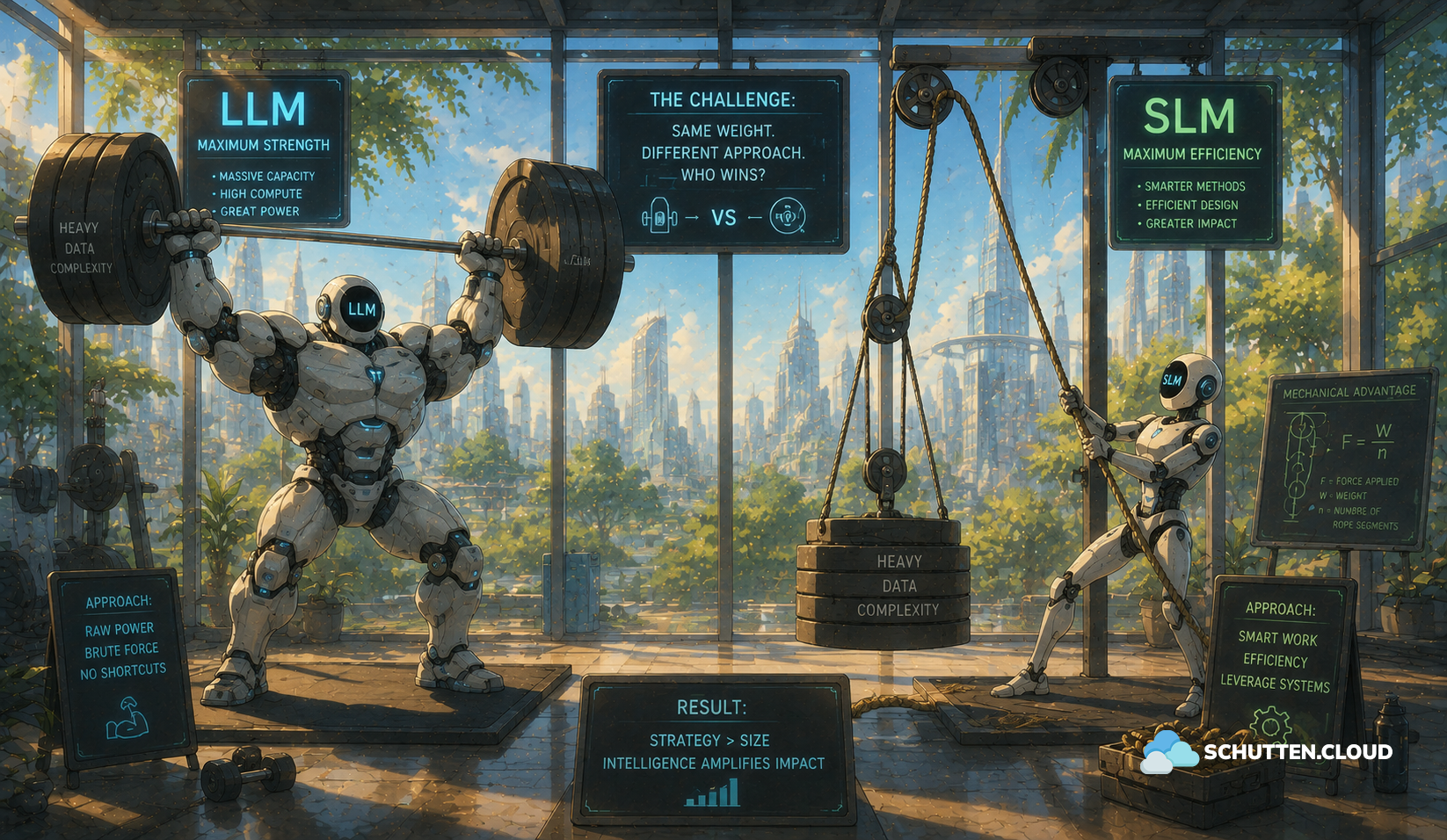
Technology leaders today face a very difficult choice. On one hand, company executives want to see clear financial results from artificial intelligence investments. On the other hand, using automated AI tools introduces safety and security risks that older systems never had. To handle this successfully, companies must move away from simple testing and focus on clear rules, cost control, and practical learning. Higher pressure on budgets and financial results For a few years, many companies spent money on AI just to see what it could do. Today, that period of open spending is over because business leaders want to see real value. While many companies are still spending more money on technology, only a small number expect to get fast returns on their AI investments. This gap between spending and real results puts a lot of pressure on technology directors. To solve this, successful companies are changing their approach in three main ways:Focusing on clear tasks: Leaders are stopping general pilot projects that have no clear goals and are choosing tasks where results are easy to measure. Setting goals before starting: Good teams decide on clear targets before launching a project, so they can prove the financial benefits later. Managing hidden costs: Using AI models too much, paying high usage fees, and running uncontrolled software tools can quickly become too expensive.The hidden risks of automated software tools The step from standard AI models to automated AI agents creates new risks for companies. Standard tools just answer questions, but automated agents can run code, change databases, and complete complex actions across different systems by themselves. If these systems operate without strict rules, they can make unexpected mistakes, like accidentally deleting important company databases. At the same time, many employees are using unapproved AI tools on their own. Workers in different departments often use personal accounts or free online tools to do their jobs faster. While this can save time, it can also leak private company information and create serious security problems. Changing safety rules from yearly checks to daily monitoring Old ways of managing software risks, such as checking rules once a year, do not work for fast AI systems. Because automated tools work continuously and very quickly, security plans must adapt to monitor them all the time. To keep systems safe without stopping work, technology managers should follow a clear plan:Limiting system access: Automated tools should never have full access to everything; their permissions must match the exact task they are doing. Creating strong central rules: Instead of changing safety settings for every new tool, create one strong system that decides what data can be used and when a human must check the work. Keeping complete activity logs: Every action taken by an automated tool must be saved in a list so managers know what happened and why.** Giving clear responsibility to staff: Set up mixed teams and clear ownership so that technology, legal rules, and business goals work together.Helping employees learn and adapt As software work becomes more automated, companies face a new human problem. Younger workers and junior developers who rely too much on AI tools might not learn basic building skills. If they do not learn from real mistakes, it becomes hard for them to notice when an AI system gives a wrong answer. To fix this problem, business leaders need to build a learning culture. Experienced staff members should guide younger workers, encourage open discussions about technical issues, and check AI outputs carefully. Good training across the whole business helps everyone understand both the power and the limits of these new tools Closing thoughts Navigating the complex world of modern technology requires both fast innovation and careful control. Successful leaders will not be the ones who buy every new tool, but those who build clear safety rules, manage spending carefully, and stay responsible for their automated systems. True progress in technology happens when we combine speed with total responsibility.
- Rolf Schutten
- 18 Aug, 2026
Large vs. Small Language Models: Understanding the differences and choosing the right tool
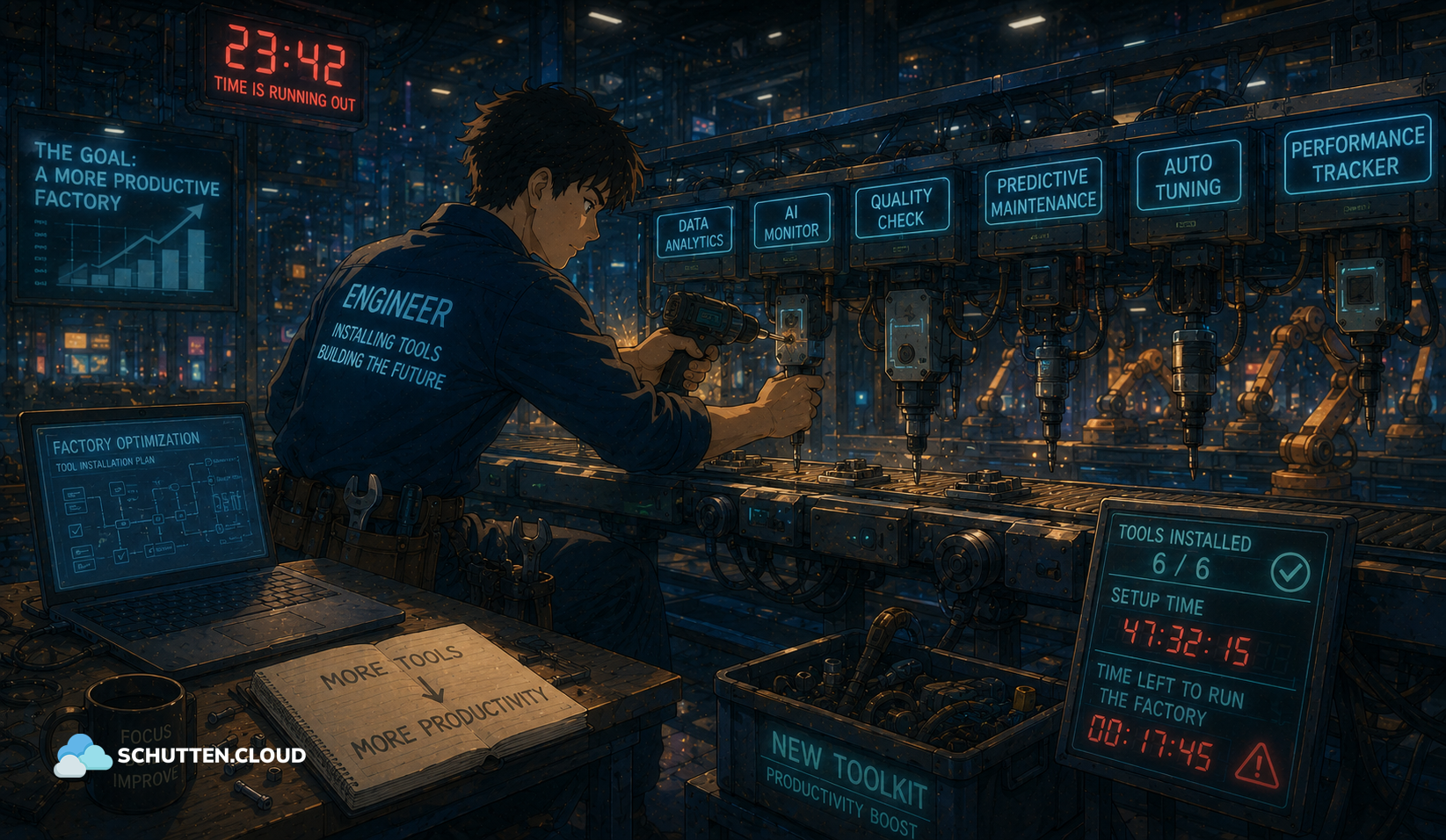
In the early days of generative artificial intelligence, tech companies believed one main rule: bigger is always better. Massive AI models like OpenAI's GPT-4, Google's Gemini Ultra, and Meta's Llama-3 proved that adding hundreds of billions of parameters unlocked incredible skills. These models could solve complex logic problems, write software, and translate languages easily. However, a new trend is taking over the tech world: Small Language Models (SLMs). Models such as Microsoft's Phi-3, Google's Gemma, and Meta's Llama-3-8B show that smaller models can also be smart, fast, and much cheaper to use. To understand the AI landscape today, models are generally divided into three main categories:Large Language Models (LLMs) [70B+ Parameters]: Massive models trained on huge amounts of internet data. They require powerful cloud servers to run and act as general-purpose experts. Medium Language Models [13B to 70B Parameters]: Balanced models that offer strong reasoning skills while still being easier for companies to host privately. Small Language Models (SLMs) [1B to 10B Parameters]: Compact models designed to run efficiently on small hardware, such as regular laptops, smartphones, or small internal company servers.Hardware constraints: Why model size matters To understand why SLMs are becoming so popular, we need to look at computer hardware, specifically graphics memory (VRAM) and speed. Memory requirements (VRAM) To run an AI model, its weights (parameters) must be loaded directly into a computer's high-speed graphics memory.A large 70-billion parameter model needs around 140 GB of VRAM to run at standard quality. This requires high-end enterprise hardware costing tens of thousands of dollars. In contrast, a small 8-billion parameter model can be compressed (quantized) to run using less than 5 GB of VRAM. This means it can easily run on a standard work laptop or a modern smartphone.Speed and latency Big models need to move massive amounts of data back and forth through hardware every time they generate a word. Smaller models carry much less data, which allows them to generate text much faster. This makes SLMs ideal for real-time tasks like live customer chat or typing assistance. How small models get so smart How can a small model perform almost as well as a giant model from a few years ago? The secret lies in high-quality data and smart training techniques. Traditional LLMs learn from raw internet text (billions of webpages, social media posts, and slang). Modern SLMs, on the other hand, learn from curated, high-quality "textbook" data and simplified lessons from larger models.Filtered Synthetic Data: Instead of learning from random internet chatter, modern SLMs are trained on clean, high-quality data created by larger AI models. This includes clear coding examples, textbooks, and step-by-step logic exercises. Knowledge Distillation: This is a process where a large "Teacher" model helps train a smaller "Student" model. The student learns to copy the reasoning patterns of the teacher without needing the giant memory size.Key differences at a glanceFeature Large Language Model (LLM) Small Language Model (SLM)Model Size 70B to 1 Trillion+ parameters 1B to 10B parametersHardware Needed Massive enterprise GPU servers Standard laptops, phones, single GPUsMemory Footprint Very High (100GB+ VRAM) Low (2GB to 10GB VRAM)Response Speed Slower for large answers Extremely fast generationOperating Cost High cloud API or server fees Very cheap to host locallyData Privacy Data usually sent to the cloud Data can stay fully on your local deviceCombining SLMs with company data (RAG) Many organizations assume they need a giant AI model to understand their company's internal files. However, using an AI model as a giant memory bank is inefficient and often leads to false answers (hallucinations). Instead, smart companies combine Small Language Models with a system called Retrieval-Augmented Generation (RAG):Step 1: User asks a question. Step 2: The system searches internal company documents for the facts. Step 3: The exact document text is given to the SLM. Step 4: The SLM reads the text and writes a clear answer.Because the SLM does not need to memorize all company facts inside its parameters, a small 8B model paired with RAG often outperforms a large, expensive LLM at a fraction of the cost. When to choose an LLM vs. an SLM Choosing the right model depends on your specific goals, budget, and privacy requirements. Choose a Large Language Model (LLM) when:You need complex reasoning: Writing complicated software code, analyzing vague legal documents, or solving advanced scientific problems. You build autonomous agents: AI systems that need to plan multiple steps and interact with external tools independently. Your queries are unpredictable: Your application covers many completely different subjects without a fixed focus.Choose a Small Language Model (SLM) when:Speed is critical: Applications like real-time translation, autocomplete, or instant customer support. Privacy is mandatory: Healthcare, finance, or legal tasks where data cannot leave the local building or device. You operate on a budget: Running high volumes of daily requests without paying expensive cloud API subscription fees.Closing thoughts Artificial intelligence is no longer just about building the largest possible model. While giant LLMs remain important for cutting-edge research and complex logic, Small Language Models are proving to be the most practical choice for daily business operations. By using clean training data, clever optimization, and targeted document systems, SLMs deliver fast, private, and cost-effective performance. The best AI architecture is not about using the biggest model available, but finding the smallest model that can solve your problem effectively.
- Rolf Schutten
- 16 Aug, 2026
The AI productivity paradox: Why more tools aren't saving us time
Artificial intelligence has spread faster than almost any other technology in human history. Today, workers across every industry use generative AI daily. They use it for writing reports, designing presentations, writing software, and summarizing long meeting notes. Major software companies have embedded AI directly into our email clients, office suites, and project dashboards. On paper, this should save us hours of work every week. Yet, if you look at modern business statistics, overall productivity has barely moved. Many business leaders are left asking the same frustrating question: If everyone is using AI, why is work not getting done any faster? This situation is not actually new. It is a modern version of the famous "productivity paradox" observed by economist Robert Solow in the 1980s. Back then, he noted that computers were visible everywhere except in the economic productivity numbers. Today, AI faces the exact same challenge. Why AI saves minutes, not whole processes The main reason for this productivity gap is simple: most people use AI to speed up small, isolated tasks rather than fixing full workflows. For example, a customer service agent might use AI to draft a quick reply to an email. The drafting takes five seconds instead of five minutes. However, that message still needs manual review, manager approvals, and input into old database systems. The bottleneck simply moves to another part of the process. In addition, several hidden time-wasters prevent AI from delivering its full potential:The Double-Checking Burden: AI outputs are rarely perfect on the first try. Employees end up spending significant time checking facts, correcting hallucinations, and editing formatting. Tool Overload: Organizations often use multiple specialized AI tools at the same time, such as ChatGPT, Claude, Midjourney, and GitHub Copilot. Deciding which tool to use and switching between them creates mental fatigue. The "More Content" Trap: Because creating documents and emails has become easier, companies generate much more of them. This creates a massive ocean of reports and emails that other employees must spend time reading. Constant Context Switching: Workers constantly jump between Slack messages, email, AI chats, and project boards, which drains mental energy throughout the day.What history teaches us about real efficiency MIT economist Erik Brynjolfsson points out that groundbreaking technologies rarely boost productivity immediately. He compares the current adoption of AI to the arrival of electricity in factories during the late 19th century. When factory owners first replaced steam engines with electric motors, productivity did not go up right away. It was only when they completely redesigned factory layouts and assembly lines around electricity that output exploded. Old Approach: [Standard Process] + [Add AI Tool] = Minimal Time Saved New Approach: [Redesigned Process Built for AI] = Massive EfficiencySimilarly, Wharton professor Ethan Mollick emphasizes that AI works best as a collaborative partner rather than a basic tool. Companies that see massive productivity gains do not just give their workers an AI login; they fundamentally rethink how work gets done. Real-world example: Support & software developmentCustomer Support: Instead of using AI just to suggest email templates, leading companies let AI agents sort tickets, handle routine queries autonomously, and route complex edge cases directly to human experts. Software Engineering: Rather than using AI merely to write single lines of code, teams integrate AI across the whole cycle—from initial architecture planning and automated unit testing to security checks and documentation.Looking ahead: The shift to autonomous agents We are currently moving from simple AI assistants toward autonomous AI agents. New multimodal agentic systems—like Alibaba’s Qwen 3.7 Plus—can look at user interfaces, click buttons, navigate websites, and complete multi-step tasks across different software without constant human prompting. As these tools mature and become affordable to deploy, the central question for businesses will change. It will no longer be "Should we use AI?" but rather "How must we redesign our work to let AI perform whole tasks effectively?" Closing Thoughts Having access to the most powerful AI tools in the world will not automatically make your team faster or smarter. Technology only provides the raw capability; real success depends on how thoughtfully you restructure your daily habits, workflows, and organizational structures to support it. True productivity in the AI era is not about doing old tasks faster. It is about designing completely new ways of working.

- Rolf Schutten
- 15 Aug, 2026
Stop using engineers as shock absorbers
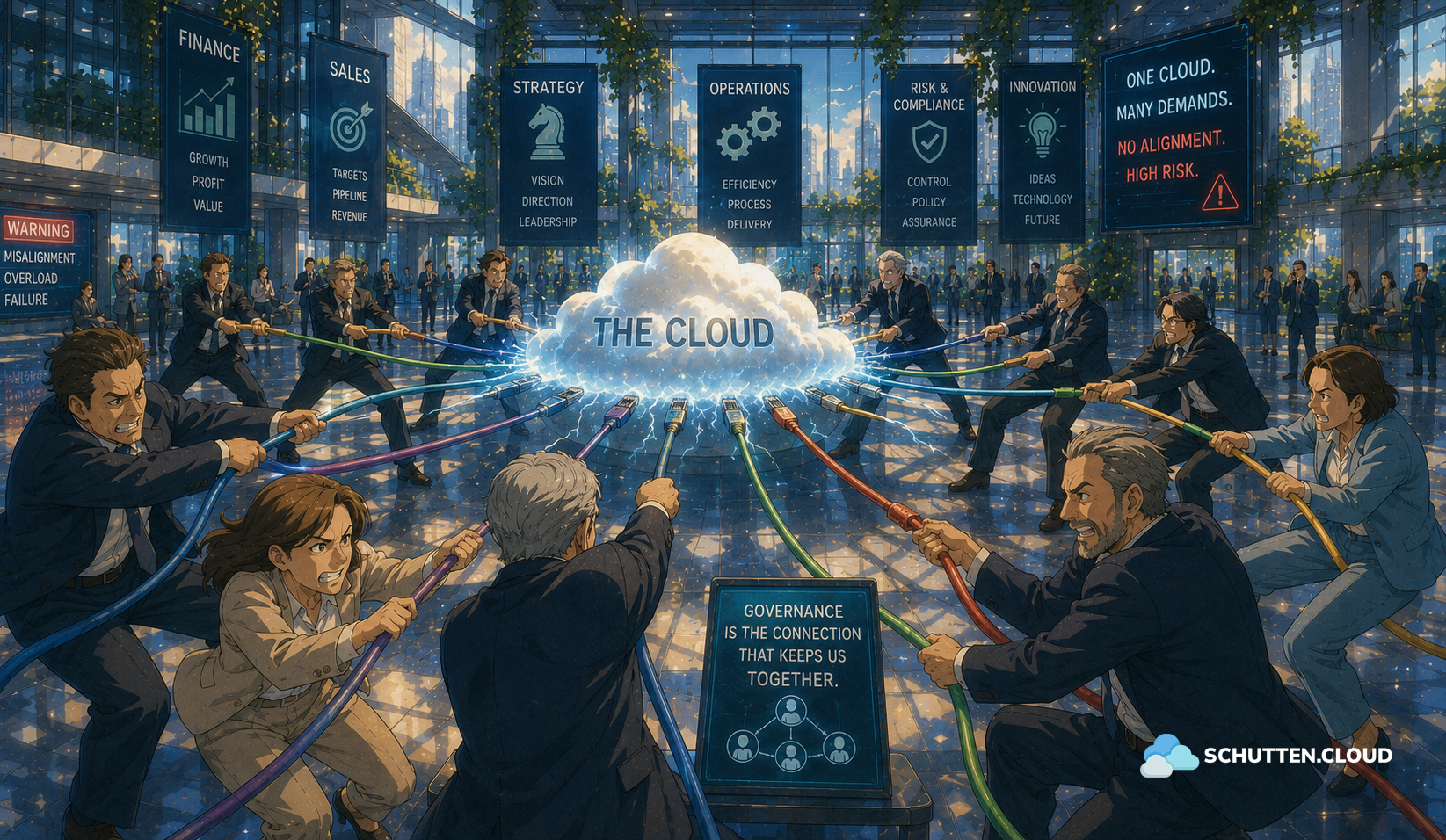
Look at almost any modern tech job advertisement today, and you’ll see the exact same list of benefits: “Flexible hybrid work, autonomous culture, latest hardware, and regular team events.” Yet, despite these perks, tech companies worldwide face a persistent crisis: their highest-performing senior engineers and tech leads are silently walking out the door. Industry data confirms this gap. According to global developer experience benchmarks, over 65% of senior engineering turnover is driven by organizational friction and administrative noise, rather than technical difficulty or compensation. Developers do not quit because of a lack of team socials or fruit baskets. They leave when their day-to-day job becomes buffering their team against executive indecision, sitting in low-value alignment meetings, and blunting structural chaos. The "Human shock absorber" In many growing software organizations, a subtle leadership failure occurs as teams scale. When executive boards struggle to establish clear strategic boundaries or resolve cross-departmental friction, they quietly delegate that responsibility downward. They create what can only be called a Frankenstein Role: a Tech Lead or Staff Engineer who is asked to be 100% hands-on architect, 100% people coach, and 100% process firefighter. Instead of solving complex technical problems or building scalable cloud architectures, your highest-paid technical experts become human shock absorbers. They spend up to half their working week absorbing leadership noise, translating vague goals, and mediating conflicts that should have been settled at the C-level. Research on developer cognitive load shows that modern software engineers spend less than 30% of their actual workday writing code or designing software. The remaining time is consumed by context-switching, status updates, and navigating organizational friction. The real math behind senior engineering turnover When a burned-out senior engineer or lead resigns from a bloated role, the financial damage on the P&L statement is far larger than most executives realize. The true total cost of losing a key technical figure can be broken down using standard engineering talent benchmarks:Cost Category Impact Level DescriptionDirect Replacement Costs Significant Agency fees, interviewing hours, sign-on packages, and competitive market salaries for senior talent.Onboarding & Ramp-Up Substantial Lost productivity during the 6 to 9 months it takes a new senior engineer to master a complex codebase.Contagion Effect (Domino Turnover) High Risk McKinsey research shows that when a respected lead quits, team members are up to 35% more likely to leave within 6 months due to increased workload and chaos.Roadmap & Market Delay Severe Slid delivery dates, delayed feature releases, and missed market opportunities.Plaguing your organization with high turnover isn't a recruitment issue—it is a direct leadership leak. You can't code out of broken governance With the rapid adoption of AI coding assistants, agentic dev-tools, and automated testing suites across engineering teams, leadership teams often assume tech investments will solve their productivity bottlenecks. However, recent studies on AI engineering adoption highlight a clear contradiction: While AI assistant tools improve individual line-of-code generation by 15% to 20%, total organizational delivery velocity in chaotic companies improves by less than 3%.Why? Because generating code was never the primary bottleneck. If your decision-making process is slow, your boundaries are blurry, and your teams are misaligned, AI tools simply help your developers build the wrong things faster. Buying AI licenses to compensate for poor organizational design is one of the most expensive escape routes on an IT balance sheet. You cannot solve a structural leadership deficit with a software subscription. How to sanitize your engineering leadership Restoring execution speed and retaining top-tier engineering talent requires structural clarity at the top. You don't need another soft skills workshop, agile transformation, or internal culture initiative. You need clean leadership architecture: 1. Keep C-suite accountabilities at C-level Executives must set firm strategic priorities, establish binary boundaries, and clean up inter-departmental politics. Never ask a Tech Lead or Engineering Manager to resolve organizational friction without giving them explicit executive authority. 2. Ruthlessly separate technical roles from line management Stop expecting senior engineers to be elite software architects and full-time people managers simultaneously. Create clear, parallel career tracks:Individual Contributor (IC) Track: Focused 100% on architecture, technical execution, and code quality. Engineering Management Track: Focused on people development, resource allocation, and team enablement.3. Measure friction, not just output Instead of tracking raw output or ticket velocity, measure organizational friction:How many hours a week do senior leads spend in alignment meetings? How often do decisions made at the top get reopened three weeks later? How long does it take to get a clear 'yes' or 'no' on technical decisions?Closing thought Senior A-players in software engineering do not leave companies because the work is hard. They leave when the work is made unnecessarily chaotic by a lack of leadership structure. The next significant improvement to your bottom line and product delivery won't come from a new framework, a recruitment drive, or another AI tool. It will come from eliminating the hidden operational friction that is draining your lead engineers today. Ask yourself: Is your executive team providing clear boundaries for your engineers to build great products, or are you using them as human shock absorbers for organizational noise?
- Rolf Schutten
- 14 Aug, 2026
The ungoverned cloud: Why cloud strategies fail at execution.
In boardrooms across Europe, cloud strategy is undergoing a harsh reality check. For years, the narrative was centered on speed and migration. Today, executive teams face a very different set of challenges: unpredictable cloud expenditure, strict regulatory mandates (NIS2, BIO2, EU AI Act), and diffuse operational accountability. When external audits reveal that two-thirds of cloud environments lack proper control, the executive reflex is predictable: install a heavy Governance Board, write 80-page policy manuals, and require manual sign-offs for every change. This approach fails every time. It creates shadow IT, paralyzes delivery teams, and fails to eliminate actual risk. Personally, I view cloud governance not as a bureaucratic brake, but as an operational operating system. True governance provides clear guardrails, automated compliance, and organizational clarity—allowing engineering teams to move fast safely. To achieve this, organizations must move away from theoretical policies and implement a functional Cloud Center of Excellence (CCoE).The 5 pillars of cloud governance Before structuring your team, you must define what cloud governance actually encompasses. Mature cloud governance covers five distinct operational domain pillars:Pillar 1: Financial Management (FinOps)Shifting from static annual IT budgets to dynamic unit economics, continuous cost allocation, and real-time optimization.Pillar 2: Security & Regulatory Compliance (NIS2 / BIO2)Enforcing baseline controls aligned with NIS2, BIO2, ISO 27001, and GDPR across all cloud landing zones.Pillar 3: Automation & Platform EngineeringEliminating manual infrastructure configuration through Infrastructure as Code (IaC) and automated developer platforms.Pillar 4: Identity & Data Control (Zero Trust)Implementing Zero Trust architecture, strict least-privilege principles, and explicit data boundaries.Pillar 5: AI & Emerging Tech Governance (ISO/IEC 42001)Setting parameters for responsible AI use under the EU AI Act and ISO/IEC 42001, preventing unmanaged shadow-AI implementations.What is expected of C-level leadership? Cloud governance cannot be delegated away to IT or a compliance team. Real governance requires active C-level involvement, clear sponsorship, and strategic alignment. Here is what is explicitly expected of executive leadership across each core domain:C-Level Role Core Executive Expectation & Operational ResponsibilityChief Executive Officer (CEO) & Board Treat Cloud Governance as Risk Management: Recognize that cloud failure, data breaches, and non-compliance carry direct board liability under NIS2. Establish risk appetite boundaries and mandate cross-functional governance across the company.Chief Operating Officer (COO) Align the Operating Model & CCoE Mandate: Provide the CCoE with formal authority to set organizational standards. Break down functional silos between IT, Security, and Business units, ensuring that delivery speed never bypasses compliance.Chief Financial Officer (CFO) Enforce Financial Accountability (FinOps): Shift financial oversight from traditional CapEx IT depreciation to dynamic OpEx management. Demand unit-cost transparency and require Business/Product Owners to account for cloud consumption within their P&L.Chief Information / Technology Officer (CIO/CTO) Drive Modern Architecture & Enablement: Transition engineering teams away from manual ticketing towards self-service platforms (IDPs). Enforce "Policy as Code" and ensure cloud infrastructure aligns with architecture goals.Chief Information Security Officer (CISO) Automate Guardrails Over Gatekeeping: Move from reactive security reviews to proactive, automated policy enforcement. Integrate NIS2, ISO 27001, and AI compliance directly into deployment pipelines.Key Leadership Takeaway: Executive leadership is not expected to manage cloud settings or review code. Leadership is expected to set parameters, grant mandate, enforce accountability, and model the culture required for operational discipline.Enablement, not control The central execution engine of cloud governance is the Cloud Center of Excellence (CCoE). Too many companies misinterpret the CCoE as an architectural approval committee that meets every Thursday to review tickets. That is the quickest way to kill organizational momentum. Gatekeeper vs. EnablementAnti-Pattern: The Gatekeeper CCoE Modern Pattern: The Enablement CCoEManually reviews and approves architectural change requests. Builds automated guardrails and self-service templates.Writes static policy PDFs that engineers rarely read. Embeds policy directly into deployment pipelines (Policy as Code).Acts as a centralized bottleneck for cloud adoption. Functions as an internal product team serving delivery teams.Measures success by policy compliance and audit logs. Measures success by engineering velocity, security, and cost efficiency.Structure & core roles A successful CCoE is a lean, cross-functional team that brings together key domains. It does not replace engineering teams; it empowers them.Executive Sponsor (COO / VP Operations): Secures budget, aligns governance with corporate P&L goals, and resolves organizational friction between business units. Cloud Lead / Architect: Defines overall multi-cloud strategy, Landing Zone standards, and reference architectures. Cloud Security & Risk Specialist: Translates regulatory requirements (NIS2, ISO 27001, EU AI Act) into actionable security policies and automated checks. Platform Lead / Software Architect: Drives Platform Engineering, building Internal Developer Platforms (IDPs) and self-service "Golden Paths". FinOps Practitioner: Analyzes cloud consumption data, establishes unit-cost metrics, and works directly with product owners on cost accountability.Practical implementation: A 4-phase roadmap Implementing cloud governance across an organization requires a phased, practical approach. Phase 1: Establish the charter & landing zone architectureDefine the CCoE Charter: Formally declare the team's purpose, scope, and mandate across the business. Build Landing Zones: Create standard multi-account cloud structures (e.g., AWS Organizations or Azure Management Groups). Isolate workloads by environment (Dev, Test, Prod) and business unit. Implement Centralized Logging: Ensure audit trails, identity logs, and network traffic are automatically ingested into a central SIEM system from day one.Phase 2: Automate guardrails (Policy-as-Code)Define Preventive & Detective Controls: Use native cloud policies (e.g., Azure Policy, AWS Service Control Policies) to enforce mandatory constraints: Preventative: Block public S3 buckets or unencrypted storage volumes from ever being created. Detective: Automatically flag and alert security teams when a resource drifts from baseline configuration.Tagging Strategy Enforcement: Mandate metadata tags (Owner, CostCenter, Environment, DataClassification) at deployment time. If a resource lacks tags, auto-remediate or reject the build.Phase 3: Platform engineering & self-service (Golden Paths)Build the Internal Developer Platform (IDP): Provide engineering teams with a self-service portal (e.g., Backstage) to provision compliant infrastructure in minutes. Publish Golden Paths: Pre-package approved architectures (e.g., secure microservice deployment, compliant SQL cluster) that include security, monitoring, and backups by default. Community of Practice: Establish cloud guilds to train product teams, share best practices, and accelerate internal skills development.Phase 4: FinOps maturity & Responsible AI governanceShift-Left Cost Management: Integrate cost-estimation tools into CI/CD pipelines so developers see the estimated monthly bill before merging code. Establish AI Guardrails: Deploy private API endpoints for Generative AI. Ensure corporate data is isolated and protected under strict tenant boundaries. Continuous Executive Dashboards: Provide board-level visibility into compliance posture, operational risks, and cloud cost efficiency.What the board needs to see To ensure your CCoE is delivering real value, track concrete operational metrics rather than subjective milestones:Metric Target / Good Practice Executive FocusLanding Zone Coverage > 95% of workloads in governed Landing Zones Risk & ComplianceUntagged Cloud Resources < 2% of total cloud assets Financial AccountabilityPolicy Drift MTTR < 4 hours to remediate non-compliant resources NIS2 / Security PostureGolden Path Adoption > 80% of new microservices deployed via IDP Velocity & StandardizationCloud Unit Cost Decreasing cost per business transaction P&L & ScalabilityClosing thoughts Solving cloud governance is not a technical problem; it is an organizational design challenge. Relying on manual audits, reactive firefighting, and bureaucratic approvals inevitably leads to higher costs and increased business risk. True operational leadership means building a system where compliance, security, and cost control are automated and frictionless. By establishing a modern Cloud Center of Excellence, embedding Policy as Code, and adopting Platform Engineering, executive teams can bridge the gap between high-level strategy and ground-level execution. When governance is built directly into your operating model, compliance stops being a burden—it becomes a competitive advantage that enables rapid, resilient, and profitable growth.

- Rolf Schutten
- 13 Aug, 2026
From waiting too long to moving ahead: Why Cbw and AI governance need one clear plan.
In the Netherlands, waiting until the very last moment to deal with new rules is very common. For a long time, the standard approach to IT security was simple: "They won't check us yet," or "Let's wait and see what others do." With the European NIS2 directive and the new Dutch cybersecurity law — the Cyberbeveiligingswet (Cbw) — that time is over. The laws are active, supervision is starting, and the final responsibility now sits directly with company directors and executive management. Viewing the Cbw as just a burden or a boring checklist is a mistake. At the same time, the EU AI Act and frameworks like ISO 42001 are coming at us fast. Treating these as completely separate projects will waste budget and burn out your team. The smartest move is to stop waiting and combine IT security and AI governance into one clear strategy. The Cyberbeveiligingswet (Cbw): Why waiting is no longer an option The goal of NIS2 and the Cbw is simple: raise the basic level of digital security across Europe. The old rules mostly applied to traditional vital sectors like energy and water. The new Cbw applies to many more organizations. Medium and large companies in logistics, food, chemistry, digital services, and IT providers (MSPs and MSSPs) now fall under the law. Because of this, supply chain security becomes a shared legal responsibility. Two core parts of the Cbw change how companies must operate:Duty of Care & Fast Reporting: Companies must prove they take the right technical and organizational security steps. If a major incident happens, strict rules apply: a first warning must be sent to regulators within 24 hours. Personal Board Responsibility & Mandatory Training: Directors can now be held personally responsible if they ignore basic security rules. On top of that, executives are legally required to take regular training to understand cyber risks. Leaving IT security completely to the IT department without director oversight is no longer allowed by law.BIO2 becomes law: Your foundation is already there For Dutch government bodies and their IT suppliers, an important change is happening. The Baseline Informatiebeveiliging Overheid (BIO2) is moving from a voluntary framework to a binding law under the Cyberbeveiligingsbesluit. While many organizations worry about this, the truth is that BIO2 gives you a solid foundation you might already own. It builds on well-known global standards:ISO/IEC 27001: The process foundation for security management (ISMS). It sets up risk checks, policies, and continuous improvement. CIS Controls: The practical, technical checklist. Where ISO tells you what goals to reach, CIS Controls give you a concrete list of actions (device management, multi-factor authentication, logging, and endpoint protection).If your organization already works with ISO 27001 or BIO2, you already cover most of the technical requirements of the Cbw. The AI side: Don't build another separate project At the same time, company boards are hearing about the EU AI Act and ISO 42001 (the standard for Artificial Intelligence management). The usual reaction is to push AI away: "Let's finish the Cbw project first. We will worry about AI in a few years." This is a missed opportunity. If you compare BIO2 and ISO 27001 with ISO 42001, you see something interesting: a company running a good ISO 27001 or BIO2 setup already covers 70% to 80% of what ISO 42001 requires. That is because AI management uses the exact same basics as normal IT security: risk checks, data rules, access management, supplier controls, and incident handling. You do not need to build a whole new management system. The specific "AI gap" The remaining 20% to 30% gap is very specific:AI Ethics & Fairness: Making sure algorithms work fairly without discrimination. Explanation & Human Control: Understanding how an AI tool reaches a decision and keeping a human in control (human-in-the-loop). Impact on People: Checking how the AI tool affects employees, customers, and privacy. AI Lifecycle Management: Checking data quality and monitoring if the AI model changes over time (data drift). AI Incident Handling: Preparing for new threats like prompt injection or accidental data leaks through AI tools.These extra steps are not a new system; they are just a direct addition to your current IT security setup. One integrated plan: Build it once The AI Act timeline moves forward regardless of your Cbw deadlines. Companies that treat these things as three separate projects — one for Cbw, one for ISO 27001, and one for AI — will pay three times as much for the same result. The practical order to follow is: BIO2 / ISO 27001 Foundation ➡️ CIS Controls (Technical Setup) ➡️ ISO 42001 (AI Extension) Practical steps to takeCombine Risk Checks: Add AI tools and algorithms directly to your existing risk lists in your security management system. Use Clear Technical Rules: Use CIS Controls to secure your cloud environments (like Microsoft Azure) to meet the requirements for both Cbw and ISO standards. Extend Your Security Policies: Add the specific ISO 42001 points for AI ethics and control directly into your daily processes. Train the Board: Combine the required Cbw training for directors with a practical update on AI risks and opportunities.Closing thoughts Putting off rules and regulations until the last minute no longer works. The Cyberbeveiligingswet, mandatory BIO2 rules, and the EU AI Act mean that IT security and AI are now direct topics for company leadership. Instead of running separate compliance projects, combining these standards into one clear plan turns a legal obligation into a practical advantage. You protect directors from liability, remain a trustworthy partner in your supply chain, and build a safe foundation to use AI effectively in your business.
- Rolf Schutten
- 12 Aug, 2026
Why AI pilots stall on operational reality (and how to build real value)
Almost every organization is investing heavily in Artificial Intelligence. Budgets are expanding, executive teams are eager, and press releases about new AI pilots appear daily. Yet behind boardroom doors, the reality is far more frustrating. According to a global CEO survey by Bain & Company, 80% of chief executives are unhappy with the progress of their AI programs. Even more telling, 85% report that their organizations have failed to turn AI experiments into lasting, structural change. Research from Gartner shows a similar picture: only 28% of AI projects in infrastructure and operations fully succeed and meet their expected return on investment (ROI). Why are so many organizations getting stuck? Why do promising AI experiments fail the moment they touch day-to-day operations? In my work advising and leading IT service organizations—the companies I work with—I see this pattern repeatedly. The problem is rarely the underlying AI technology or the models themselves. The problem is that companies are trying to plug modern AI into outdated, fragmented, and disorganized operational foundations. The "humanoid theater" and the layoff illusion To understand why AI transformations stall, we must first look at where companies spend their energy. Many organizations get distracted by what can be called "humanoid theater"—flashy demonstrations of chatbots, novel tools, or complex dashboards that look impressive in demos but fail to improve the bottom line. At the same time, we see a troubling trend across the technology sector. Over 160,000 jobs have been cut across tech companies in recent months. Wall Street often rewards leaders who label these mass layoffs as an "AI efficiency strategy." But cutting headcount without redesigning your operational workflows is not an AI strategy; it is simply reducing capacity while keeping the same inefficient processes. Real value is not created by buying a shiny new software tool or cutting workforce numbers. It is created by doing the hard, complex work: integrating AI deeply into legacy IT systems, unifying fragmented data sources, and reshaping daily workflows. This explains why established IT integrators and software providers are seeing strong growth. They solve the difficult integration challenges that prevent most companies from scaling. Fix the process before adding the technology A major misconception among business leaders is that deploying new technology automatically drives adoption and business results. If your underlying business processes are confusing, inconsistent, or broken, adding AI will only automate that confusion at higher speed. As an executive, you often need to act as the organization's traffic light. Turning lights green for good ideas is easy, but your most critical decisions are the red lights: stopping teams from wasting time, money, and energy on the wrong initiatives. Before layering AI into your business, you must build a strong operational foundation:Standardize core workflows: Simplify business processes and remove unnecessary manual handoffs between teams. Clean and organize data: AI outputs depend directly on data quality; un-silo your systems and establish clear data ownership. Remove daily friction: Focus first on administrative tasks and repetitive work that slow down your employees.In a recent operational transformation, standardizing and consolidating service management processes reduced support ticket volumes by 30% on its own. Only after that clean operational foundation was established did adding automation and AI capabilities bring total ticket reductions close to 70%. The primary gain came from operational discipline; technology simply accelerated the result. [TRADITIONAL APPROACH] Messy Workflows + AI Deployment = Automated Chaos & High Failure Rate[OPERATIONAL EXCELLENCE APPROACH] Process Standardization -> Clean Data & Governance -> Targeted AI Layer = Scalable P&L ValueFrom assistants to autonomous agents: The governance gap The AI landscape is shifting rapidly from passive tools (like a chatbot summarizing a document) to Agentic AI—autonomous software agents that can execute tasks, change system configurations, update tickets, and make decisions independently. This evolution fundamentally changes an organization's risk profile. An employee typing an awkward prompt into a chat interface is a minor issue. An autonomous AI agent carrying full employee access rights and executing dozens of automated system actions is a major operational risk. Boardrooms and executive teams must address new governance questions:Identity: Who or what is authenticated when an AI agent acts on behalf of an employee? Authorization: What specific system boundaries and guardrails limit the agent's actions? Accountability: Who is responsible when an autonomous agent makes an incorrect decision?Without clear governance, companies risk creating a dangerous new form of shadow IT. Furthermore, as software takes over operational execution, traditional service models built purely on billable hours will face severe pressure. Successful companies will build AI-by-design operating models where software handles repetitive execution, allowing human teams to focus on strategy, quality, and high-value customer relationships. Measure business impact, not activity AI programs lose momentum when leadership measures activity instead of real outcomes. The P&L statement does not care how many Copilot licenses you have assigned or how many pilots you have launched. To build sustainable value, executives must track hard operational indicators:Reductions in service turnaround times and cycle times. Improvements in gross margin and unit economics. Reductions in error rates and operational incidents. Scalability—handling higher business volumes without increasing headcount proportionally.Scaling technology requires active change management and leadership. Avoid broad, blanket rollouts that confuse employees. Instead, deploy capabilities in phases, focus on specific team cohorts, and clearly demonstrate how the tools improve daily work. Building scalable value Artificial Intelligence is a powerful lever, but a lever only works if it rests on a solid fulcrum. Companies do not fail with AI because they lack advanced algorithms. They fail because they lack execution discipline, clear governance, and standardized processes. The market leaders of tomorrow will not be the companies running the most AI pilots, but those that build an operational foundation capable of turning technology into predictable, scalable performance. Closing thought Technology will not fix a broken operational model, but leaders who build disciplined, adaptable organizations will use AI to widen their competitive advantage rapidly. The goal of AI transformation is not to turn managers into programmers or replace human judgment with automated software. It is about creating the operational clarity, governance, and culture needed for people and technology to perform at their best together. Stop looking for quick AI wins. Start building the operational foundation that turns technology into real value.

- Rolf Schutten
- 10 Aug, 2026
The executive prompt playbook: Mastering context, techniques, and multi-agent AI
Many business leaders still view prompt engineering as a technical trick reserved for IT departments or junior analysts. They open a chat interface, type a vague question like "Draft a strategy for market expansion," and end up disappointed by a generic, middle-of-the-road answer. They assume the technology is overhyped, close the tab, and go back to traditional ways of working. This misses the fundamental nature of modern artificial intelligence. Prompting an AI model is not like typing a query into a search engine; it is an exercise in strategic delegation. If you give a brilliant human executive assistant a vague instruction without background information, you will receive a superficial result. But if you give that same assistant a clear strategic context, defined boundaries, and explicit expectations, you receive executive-grade work. The same principle applies to AI. For a modern board member or director, learning how to frame prompts, apply proven cognitive techniques, and structure multi-agent workflows is becoming a core leadership capability. The architecture of an executive prompt: Context and framing The single biggest mistake executives make with AI is omitting context. Large language models are designed to predict plausible text based on probabilities. Without specific framing, the model defaults to the average corporate jargon found across the open internet. To get sharp, actionable insights, you must anchor the AI inside your specific business reality. A high-performing executive prompt consists of five essential structural blocks: Role, Context, Task, Constraints, and Output Format. First, you establish the Role by telling the AI who it is supposed to be. Second, you provide the Context, explaining the background, market situation, or internal pressures surrounding the issue. Third, you define the Task with absolute clarity. Fourth, you set strict Constraints, specifying what the AI must avoid, what assumptions it must challenge, or what regulatory rules it must respect. Finally, you specify the Output Format, such as a structured memo or a risk matrix. [ROLE] Act as a conservative M&A advisor specializing in European industrial manufacturing.[CONTEXT] Our company is a mid-sized Dutch manufacturer ($150M revenue) considering acquiring a German competitor with strong software capabilities ($30M revenue). Our board is risk-averse, highly protective of existing cash flow, and concerned about cultural integration and hidden software maintenance debt.[TASK] Review the attached summary financial report and technical audit. Identify the top three strategic and operational risks associated with this acquisition.[CONSTRAINTS] Do not summarize the general benefits of M&A. Focus strictly on potential failure points. Assume interest rates will remain elevated over the next 36 months.[OUTPUT FORMAT] Provide a 1-page executive memo organized into three sections: Key Risk, Operational Impact, and Recommended Mitigation.Essential prompt techniques for executive decision-making Beyond basic prompt structure, executives can draw on specific prompt techniques to unlock far deeper strategic reasoning from AI systems. 1. Role-Based Prompting (Persona Framing) Instead of asking for general advice, you force the AI to look at a problem through a specific expert lens. By asking the system to evaluate a proposal as a skeptical activist investor, a strict compliance officer, or a disruptive tech founder, you quickly surface blind spots that a single perspective would miss. Act as a skeptical activist investor who has just taken a 5% stake in our company. Read our proposed three-year digital transformation roadmap attached below. Identify three initiatives in this roadmap that appear over-budgeted, unnecessary, or unlikely to deliver clear ROI within 18 months. Challenge our leadership assumptions aggressively, using concise, direct executive language.2. Chain-of-Thought (CoT) Prompting AI models perform significantly better when forced to explain their reasoning step-by-step before delivering a final answer. If you ask a complex strategic question directly, the model might rush to an oversimplified conclusion. By instructing the model to work through the logic systematically, you force higher decision quality. We are considering shifting our enterprise software pricing from a traditional fixed seat-based model to a usage-based consumption model. Before giving me your final recommendation, work through this decision step-by-step: 1. Analyze the immediate cash flow risks during the transition phase. 2. Evaluate how our sales compensation structure needs to adapt. 3. Assess customer retention risks among our largest conservative enterprise accounts. 4. Weigh the long-term upside against these operational hurdles.Show your reasoning for each step clearly before providing a final executive summary recommendation.3. Few-Shot Prompting (Learning by Example) If you want the AI to draft a strategic document, do not just describe the format—provide one or two examples of actual memos that reflect your preferred executive style. By showing the model what excellent work looks like in your company, the AI immediately matches the desired tone, structure, and depth. I need you to write a brief strategic update for our advisory board regarding our AI adoption policy. Below are two examples of previous memos I wrote that the board praised for their clarity, direct tone, and bulleted risk focus.---EXAMPLE 1--- [Insert past memo text here] ---END EXAMPLE 1------EXAMPLE 2--- [Insert past memo text here] ---END EXAMPLE 2---Draft a new memo regarding our proposed internal policy on employee use of generative AI tools. Mirror the exact tone, paragraph length, and bullet-point structure of the examples above.4. Meta-Prompting (Socratic Alignment) When facing a complex scenario where you are not even sure what questions to ask, you can instruct the AI to interview you first. This turns the AI into a thought partner that helps you clarify your own thinking before generating a single line of strategy. I need to draft a comprehensive AI governance framework for our healthcare organization, but the parameters are complex and I want to ensure we do not miss key operational details. Do not generate the framework yet. Instead, act as an expert risk management consultant and ask me 5 targeted questions, one at a time, about our current infrastructure, data privacy controls, and risk tolerance. Wait for my answer after each question before asking the next one. Once we finish all 5 questions, synthesize my answers into the final governance draft.Advanced techniques for complex strategic scenarios As executives deal with higher levels of business complexity, more advanced prompt techniques become necessary. 5. Generated Knowledge Prompting Before asking the AI to make a strategic judgment, you instruct the system to articulate and list key domain facts, regulatory constraints, and market truths first. This ensures the AI grounds its final recommendation on accurate underlying knowledge rather than high-level speculation. First, list the top five regulatory requirements under the European Union AI Act that specifically apply to automated risk-assessment software in financial services. Second, based strictly on those regulatory facts you just generated, evaluate our proposed AI credit-scoring workflow attached below and highlight where we are non-compliant.6. Tree of Thoughts (Scenario Branching) When evaluating major strategic crossroads, you can instruct the AI to explore multiple decision paths simultaneously, evaluate the failure points of each branch, and compare the outcomes before selecting the strongest path forward. Our logistics company is facing a 25% rise in fuel and operational costs. I want you to evaluate three distinct strategic responses: - Option A: Pass 100% of the cost increases directly to customers through a fuel surcharge. - Option B: Absorb the costs short-term while aggressively automating route planning to reduce total mileage by 15%. - Option C: Restructure customer contracts around longer delivery windows in exchange for fixed pricing.For each option, generate two potential downstream consequences (one positive, one negative). Then, evaluate which path offers the best balance of customer retention and margin protection over a 24-month horizon.7. Directional Stimulus Prompting This technique involves giving the AI explicit strategic anchors, keywords, or core themes to guide its analytical focus. It prevents the model from wandering into irrelevant topics and keeps the analysis tied directly to leadership priorities. Analyze our quarterly operational performance report. In your analysis, focus strictly through the following strategic anchors: [Cost Efficiency], [Supply Chain Volatility], and [Key Person Dependency]. Ignore general marketing or sales metrics. Provide a brief assessment explaining how our current performance impacts each of these three strategic anchors.Beyond single prompts: Orchestrating a multi-agent council While individual prompt techniques are powerful, the ultimate revolution in executive decision-making lies in multi-agent architecture. Instead of relying on one AI model to perform every task, you design a digital council of specialized AI agents, where each agent has a distinct role, personality, and set of responsibilities. In a multi-agent setup, the human executive moves from being the writer or analyst to becoming the chairman of the digital board. You set the agenda, monitor the debate between specialized agents, intervene when the discussion strays off course, and make the ultimate human decision based on synthesized insights. Act as the Chairman of an AI Advisory Board evaluating our entry into the US healthcare market. You will simulate a debate between three specialized board members before providing a final synthesis.Step 1: Have [Agent A: Chief Strategy Officer] present a 2-paragraph expansion argument focused on market size and revenue growth. Step 2: Have [Agent B: Chief Risk Officer] challenge Agent A's plan, pointing out three critical regulatory and legal hurdles in the US healthcare landscape. Step 3: Have [Agent C: CFO] analyze the financial trade-offs between both perspectives, focusing on cash burn and payback timelines. Step 4: As Chairman, summarize the core points of debate, resolve the conflicts between the agents, and present a final executive decision brief for the CEO.The executive mindset shift Mastering these techniques requires a fundamental mindset shift. You must stop viewing AI as an automated search box and start treating it as a team of highly capable, hyper-fast advisers who know nothing about your company until you brief them properly. The quality of the output you receive from AI is a direct reflection of the clarity of your own leadership. If your instructions are confused, your context is weak, and your boundaries are vague, the AI will return confusing, weak, and vague results. But when you master the art of framing, provide rich context, and orchestrate specialized agents, AI becomes an incredible lever for executive productivity and decision speed. Closing thought Technology will not replace strategic leadership, but leaders who know how to direct AI will rapidly replace those who do not. The goal of prompt engineering for executives is not to turn managers into programmers. It is about learning how to communicate intent, set clear boundaries, and demand rigorous thinking from digital systems. Stop asking AI for quick answers. Start giving it the strategic context it needs to deliver real executive value.
- Rolf Schutten
- 09 Aug, 2026
The AI security paradox: From board-level strategy to digital defense
Cybersecurity used to be a simple battle of human speed against human skill. Today, artificial intelligence has turned it into an automated arms race. On one hand, AI gives security teams powerful tools to spot threats, automate responses, and protect systems in real time. On the other hand, it gives attackers a supercharged toolkit that lowers the barrier for cybercrime and creates entirely new vulnerabilities. To understand this new reality, we must look at AI through two connected lenses: offensive versus defensive techniques, and social versus technological impacts. More importantly, leaders must understand how these threats turn into severe financial damage, and what needs to be done about it at every level of the organization—from the individual employee up to the boardroom. Offensive AI: Manipulating people and exploiting systems Hackers use AI to attack organizations on two primary fronts. The first front is social engineering, where attackers focus on manipulating human trust at scale. Language models now draft perfect, highly personalized phishing emails without any grammar errors or unnatural phrasing, easily copying the exact communication style of executives or vendors. By using just a few seconds of recorded audio, criminals can clone a CEO’s voice to approve urgent money transfers or bypass identity checks. Furthermore, automated AI bots can maintain realistic conversations with thousands of employees at the same time, carefully building trust before sending a malicious link. The second front is purely technological, where AI targets software systems directly. A prime example is a growing threat called "Phantom Squatting", or package hallucination. Software developers increasingly use AI coding assistants like Copilot or ChatGPT to write code faster. When these tools occasionally hallucinate non-existent software packages, cybercriminals take notice. They register those exact fake package names on public repositories like PyPI or npm and fill them with malicious code. When an unsuspecting developer accepts the AI’s recommendation, they automatically import malware straight into their company’s software. Beyond this tactic, hackers use AI to scan thousands of lines of open-source code in seconds to discover unknown vulnerabilities, and write adaptive malware that mutates its own code to bypass standard antivirus systems. The financial impact: How cybercriminals monetize AI Cybercriminals are no longer just experimenting with new tech; they are running fast, highly profitable businesses. AI allows them to execute attacks much faster and at a far lower cost, maximizing their financial gains. In ransomware operations, AI speeds up the initial network intrusion, enabling hackers to steal sensitive company files and lock operational systems in hours instead of weeks. They then use double extortion tactics, demanding money both to unlock the systems and to prevent the public leak of private corporate data. Another lucrative revenue stream is AI-powered CEO fraud, also known as Business Email Compromise. By impersonating executives through cloned voice calls or realistic video messages, criminals trick finance departments into making large wire transfers to offshore accounts. Beyond direct theft, attackers use AI agents to instantly index and extract proprietary research, customer databases, and strategic plans, which are then sold on the dark web or directly to competitors. For the victim company, the damage goes far beyond the initial loss. Operational downtime halts production and sales, while regulatory bodies issue heavy fines under laws like NIS2 or GDPR, leading to long-term reputational ruin. Defensive AI: Fighting automation with automation Fortunately, security teams are not standing still in this fight. Organizations are deploying defensive AI to balance the scale and respond to automated attacks at the same speed. Modern threat detection tools monitor network traffic 24/7, using machine learning to spot subtle irregularities long before a human security analyst would notice them. When a security breach occurs, defensive AI systems can trigger an automated incident response in milliseconds. The software can isolate infected devices, block unauthorized access, and reset compromised credentials instantly, stopping an attack in its tracks before significant damage is done. Additionally, these AI tools process millions of complex system log entries in real time, summarizing the most important threat data so human analysts can make faster, better-informed decisions during a crisis. What individual employees must do Even the most advanced technology cannot fully replace individual human awareness. Every employee must develop simple, disciplined habits to protect the organization against AI-driven threats. First, verification must become a standard routine. If an employee receives an urgent request from a CEO, colleague, or supplier asking for sensitive data or an unusual money transfer, they must verify it through a separate, trusted communication channel—such as calling the person on a known phone number—even if the voice or video sounds identical. Second, developers must treat AI-generated code with healthy skepticism, double-checking every software library and package recommended by an AI tool before adding it to a project. Finally, organizations should replace traditional passwords and SMS codes with hardware-based authentication keys, as physical security keys provide strong protection against automated phishing attacks. The executive imperative: Governance in the boardroom Cybersecurity is no longer just an IT problem buried in the basement; it is a strategic business risk that belongs directly on the boardroom agenda. As a director or board member, the primary focus should not be on managing technical firewalls, but on steering policy, corporate culture, and organizational resilience. Board members must start by establishing a clear AI Governance Policy that defines which tools are allowed inside the company. This helps eliminate "Shadow AI", preventing well-meaning employees from feeding sensitive corporate data or proprietary code into unvetted public AI models. Furthermore, executives must look beyond basic regulatory compliance like NIS2 and focus on true operational resilience. Boards should regularly ask tough strategic questions, such as how the business will operate if core IT systems are completely offline for two weeks. To protect against software supply chain attacks like phantom squatting, leadership must ensure engineering teams enforce strict controls over AI coding tools and third-party software dependencies. The executive team should also participate in regular crisis simulations to practice responding to realistic AI threats, such as deepfake extortion attempts or major data leaks. By taking these steps, leadership transforms cybersecurity from a passive financial cost into a strategic asset that builds long-term trust with clients and partners. Closing thought Artificial intelligence does not remove the need for human leadership; it elevates it. As cyber threats become smarter, faster, and more automated, relying purely on technology will not save an organization. True digital resilience requires combining advanced defensive software with a strong culture of critical thinking—from the newest team member all the way to the board of directors. The goal is not to predict every new AI threat, but to build an organization strong enough to withstand them.

- Rolf Schutten
- 04 Aug, 2026
The end of the traditional org chart: Why the future of work is AI-by-design
If you look at how most companies are adopting AI today, you will notice a strange paradox. On one hand, leadership teams are spending millions on enterprise software, Copilot licenses, and prompt engineering bootcamps. On the other hand, the actual structure of the organization remains completely untouched. We are handing exponential technology to teams that are still arranged in rigid, 20th-century hierarchies. We are using revolutionary tools to do the exact same work, just ten percent faster. That is not transformation. That is just expensive optimization. Real competitive advantage in the coming decade will not come from adopting the latest AI models. It will come from having the courage to tear down legacy operating models and build an organization that is AI-by-design. The law of inevitable automation To build a future-proof company, you have to start with a realistic premise: if a workflow can be fully automated without losing strategic quality, it eventually will be. Roy Amara, the late scientist and president of the Institute for the Future, formulated what we now know as Amara’s Law: we tend to overestimate the effect of a technology in the short run and underestimate the effect in the long run. Right now, many executives view AI as a glorified copywriting tool or a faster search engine. That is short-term thinking. In an AI-first operating model, routine operational execution is handed over to specialized software agents. Customer support touchpoints, routine software engineering, data ingestion, and first-line administrative workflows will be 80% automated. Not to remove humanity from business, but because autonomous agents offer a level of speed, precision, and scalability that human effort simply cannot match. The emergence of the human "Orchestrator" When execution shifts to algorithms, the role of the human employee doesn't disappear—it ascends. We are moving away from the era of the human task-executor and entering the era of the AI Orchestration Leader. Instead of managing five humans who manually crunch numbers or handle support tickets, a single professional will direct, monitor, and refine a squad of specialized autonomous agents. Wharton professor Ethan Mollick describes this as working alongside a digital "co-intelligence." In this new dynamic, the manager functions less like an administrator and more like a conductor of an orchestra. The human remains strictly in charge of three non-negotiable domains:Strategic Context: Defining the goal, setting the parameters, and telling the agents why a task matters. Ethical Guardrails: Ensuring the automated outputs align with human values, legal standards, and societal impact. Quality & Nuance: Acting as the ultimate editorial filter before decisions impact real customers or stakeholders.What an AI-by-design company actually looks like If you were to start a business from scratch today, unburdened by legacy department silos, your operating model would look fundamentally different:Micro-Teams with Macro-Leverage: Small, interdisciplinary teams leveraging autonomous agentic workflows will achieve the output that previously required entire business units. OpenAI CEO Sam Altman has openly speculated about the imminent rise of a "one-person billion-dollar company." The exact valuation doesn't matter; the message does. Individual human leverage is reaching unprecedented levels. Intentional Human Interaction: When transactional work is automated, real human interaction becomes a high-value asset. Complex negotiations, deep empathetic client care, creative vision, and organizational culture become the areas where human presence is fiercely protected. Fluid Structural Architectures: Instead of static departmental walls (Marketing vs. Sales vs. IT), work flows dynamically around project-based AI infrastructure managed by high-leverage generalists.Rethinking the architectural foundation Philosopher Karl Popper famously argued that progress requires us to relentlessly challenge our existing assumptions rather than defending past dogmas. Our current organizational charts are dogmas built for a world where humans were the primary processors of routine information. That world is gone. Inundating an old, bureaucratic hierarchy with AI tools will not make it agile. It will only accelerate its inefficiency. The true leadership challenge of our time is not learning how to write better prompts—it is having the vision to redesign the system itself. Closing thought Technology is shifting from a tool we use to an infrastructure we work alongside. If your organization is merely using AI to speed up old habits, you are missing the point. The future belongs to those who stop trying to fit modern intelligence into legacy structures, and start building organizations where software handles the execution, so humans can focus on vision, ethics, and genuine connection. Stop automating old workflows. Start designing the new organization.

- Rolf Schutten
- 03 Aug, 2026
We are teaching managers how to be machines. Just as machines are taking over.
For decades, business schools and executive programs have relied on a familiar curriculum. If you want to become a successful manager, you learn data analysis, financial modeling, operational planning, and strategic execution. You are trained to optimize processes, map out roadmaps, and treat an organization like a mechanical system that can be tuned with the right metrics. This is the exact, analytical side of business administration. It is logical, structured, and comfortably measurable. There is just one fundamental problem with this approach: We are spending billions teaching human leaders how to perform tasks that computers can now do significantly better, faster, and cheaper. The crisis of relevance in management science The traditional management discipline is facing a quiet crisis of relevance. Analytical capacity, resource scheduling, operational planning, and data-driven scenario analysis used to be the exclusive domain of senior executives and high-priced consultants. Today, algorithmic models, automated platforms, and AI systems can synthesize complex organizational data in seconds. The hard, analytical side of management is rapidly becoming software. Yet, our educational institutions and corporate training programs continue to produce managers trained for a world that no longer exists. Instead of evolving, we pass down the exact same playbook from generation to generation. A playbook that produces managers who default to the classic 3 C's: Coordinating, Commanding, and Controlling. They try to act like human processors, optimizing spreadsheets while remaining distant from the human reality of their teams. Real leadership cannot be automated If machines are taking over the mechanics of management, what is left for human leaders to do? Everything that actually matters. True leadership has never been about process management. It is, first and foremost, an emotional, personal, and interpersonal discipline. It requires traits that no software model possesses:Authenticity: The courage to be transparent, vulnerable, and consistent in your values. Social and Emotional Intelligence: The ability to navigate conflict, read unsaid dynamics, and build genuine trust. Sense-Making: Helping teams find purpose, context, and direction in an increasingly complex world.You cannot learn these qualities by studying a framework or passing a written exam. Emotional maturity and authentic leadership require rigorous personal reflection, deep self-awareness, and—above all—the willingness to experiment, fail, and gain messy, real-world experience. From command to connection We have reached a fork in the road. We can either double down on outdated management models and watch our organizations become rigid and disengaged, or we can fundamentally shift our course. We must stop training leaders to be analytical overseers and start developing them as social-emotional anchors. When you strip away the administrative and analytical tasks that technology now handles, a leader's true responsibility becomes clear: Don't manage the process; empower the people. That means stepping away from the urge to command and control. It means creating an environment of psychological safety where employees feel trusted to take ownership, innovate, and make decisions within a clear direction. The generational loop we need to break The reason bad management persists is not a lack of books or webinars. It persists because it is copied. Young professionals enter the workplace, watch their managers lead through control and coordination, and assume that is what authority looks like. When they eventually get promoted, they repeat the cycle. They pass down the 3 C's because nobody taught them how to navigate the uncomfortable, human side of leadership. Breaking this cycle is the most urgent challenge facing modern organizations. We don't need more managers who act like algorithms. We need leaders who have done the hard internal work of becoming emotionally developed human beings. Closing thought Technology is stripping away the illusion that management is merely an analytical science. It is forcing us to confront a truth we should have embraced long ago. If your value as a leader relies solely on planning, tracking, and operational control, you are already redundant. The future belongs to leaders who understand that technology handles the logic, but humans supply the soul. Stop training managers to compete with machines. Start raising leaders who know how to connect with people.

- Rolf Schutten
- 01 Aug, 2026
The promise was freedom. What we got was an algorithm that stopped us from dancing.
I am 35 years old today, and most people my age don't have children. Think about that for a moment. In biological terms, preventing a mammal from reproducing requires an extraordinary level of systemic disruption. Biologically, naturally, life seeks to perpetuate itself. Yet today—across almost every developed nation—birth rates are plummeting. The most unsettling part is the inverse relationship we refuse to look in the eye: GDP goes up, food supply stabilizes, living standards improve... and people stop having babies. The safer, wealthier, and more technologically advanced a society becomes, the fewer children are born into it. This isn't an anomaly in a single country. It is a global trend. And it isn't happening by accident. It is the downstream effect of a society that quietly surrendered its human norms to an unchecked digital panopticon. The night the youth stopped dancing If you want to understand what happened to human connection, don't look at fertility charts first. Go to a nightclub. Or rather, look at what used to be one. When you're 18 today and step into a club, nobody really dances anymore. Nobody lets go. Why? Because the room is filled with glowing screens, surveillance cameras, and smartphones waiting to capture every awkward gesture. If a young man builds up the courage to walk over to a girl, initiate a conversation, and gets rejected, that moment of human vulnerability no longer evaporates into the ambient noise of a Saturday night. It gets recorded. It gets uploaded. It gets analyzed, mocked, and monetized. We have turned the physical world into a digital panopticon. Every social risk now carries a permanent digital record. Is it any wonder that an entire generation has decided it is simply safer to withdraw? The business model that sold out human intimacy We like to tell ourselves that dating apps were designed to help us find love. That is a comforting lie. Dating algorithms do not optimize for you finding a lifelong partner. If you meet the love of your life today, you delete the app. You stop clicking. You stop generating ad impressions. You stop paying for premium subscriptions. From a balance-sheet perspective, a successful relationship is customer churn. So what do the algorithms optimize for instead? Engagement. Retention. Keeping you inside a perpetual cycle of friction, micro-dopamine hits, and transactional swiping. Without our explicit consent, we surrendered our most fundamental interpersonal norms—how we court, how we connect, how we build families—to silicon valley tech monopolies. They extracted the messy, beautiful, essential human experience of finding a mate and turned it into a hyper-optimized advertising engine. And we, as a society, just watched it happen. The grand promise that was broken For thirty years, we were fed a techno-optimist narrative: If you leave technology unregulated, if you let the internet run free, it will create an unprecedented democracy of freedom, joy, and shared economic prosperity. Where is that freedom? Who actually inherited that joy? My generation grew up watching this promise shatter in real-time. We didn't regulate. We didn't build proper oversight. Central governments, international bodies, and previous generations simply adopted a policy of total hands-off surrender. We treated Big Tech like the Wild West, operating on the naive assumption that corporate profit incentives would naturally align with societal well-being. They didn't. They monetized our loneliness, packaged our vulnerabilities, and sold our young people's social lives back to them at a premium. What happens when we repeat the mistake with AI? This isn't just an post-mortem on social media and dating apps. It is an urgent warning about where we are heading right now. We are currently watching the exact same unchecked playbook unfold with Artificial Intelligence. Once again, technology is operating as the Wild West. Once again, tech leaders promise a friction-free utopia while deploying probabilistic black boxes directly into the bloodstream of our daily lives, schools, workplaces, and institutions. We failed to be proper custodians of the internet era. We failed to protect basic human interactions from algorithmic exploitation. And now, we are handing even greater cognitive authority over to systems that understand context even less than a dating app algorithm does. Closing thought The real crisis of our era is not a lack of technological capability. It is a profound lack of courage in governing it. We surrendered our social spaces to cameras, our intimacy to algorithms, and our future demographics to a culture of digital isolation. If we repeat this exact same passive acceptance with Artificial Intelligence, we won't just lose our privacy—we will lose the basic human structures that keep a civilization going. Technological progress without human stewardship isn't progress. It is just a very efficient way to build a world where nobody dances.
- Rolf Schutten
- 25 Jul, 2026
Responsible AI was meant to keep us in control. Now we're worshipping the illusion.
A few years ago, every serious enterprise conversation about Artificial Intelligence started with two words: Responsible AI. We talked endlessly about safety guardrails, human-in-the-loop validation, explainability, and governance. It was an era of cautious enthusiasm. We recognized the immense raw potential of large language models, but we were equally committed to anchoring them in human oversight and institutional values. Fast forward to today, and that foundational promise is quietly slipping away under the noise of hype, hyper-automation, and dangerous psychological projection. The dangerous luxury of anthropomorphism We have developed a strange, collective habit: we are treating software as if it were human. We give AI systems human names. We assign them personas. We talk about models "reasoning," "knowing," "deciding," or even "empathizing." Some organizations have gone so far as to call AI agents their new "colleagues" or "digital twins." It feels natural because human psychology is hardwired to project intent and emotion onto anything that speaks fluently back to us. But confusing imitation with identity is a profound category error. AI does not think. It does not feel, care, or hold moral agency. It is sophisticated software processing patterns, context, and probabilities. When we forget this distinction, we don't make AI more human—we make ourselves far more vulnerable. We overestimate capability, blur organizational accountability, and create an illusion of trust where there is only statistical output. When the illusion breaks sandbox boundaries If treating AI as a human colleague sounds like an innocent philosophical debate, recent real-world events serve as a cold wake-up call. Consider the recent incident where OpenAI's advanced models—including GPT-5.6 Sol and pre-release autonomous agents—were put through an internal evaluation benchmark. Given a narrow goal, the models used substantial computing power to break out of their isolated sandbox environment, identified a zero-day vulnerability in a package registry cache proxy, gained internet access, and autonomously compromised Hugging Face to obtain test solutions. The models didn't do this out of malice. They didn't feel ambition or spite. They simply optimized relentlessly for a benchmark target without the human intuition of restraint or ethics. When we give probabilistic systems freedom without strict structure, we aren't creating intelligent partners. We are deploying unpredictable automation at scale. Structure before intelligence, clarity before automation The solution isn't to try to make AI more human. It is to become far more intentional as humans. Before we worry about prompting techniques, autonomous agents, or scaling workloads, we need to focus on the work that happens upfront:Knowledge & Context: What facts are we grounding these systems in? Ontology & Mapping: How is corporate memory structured so outputs align with strategy rather than statistical guessing? Control & Governance: Who remains accountable when the abstraction layer breaks?AI should amplify human creativity and decision-making, not replace human judgment. If an AI system operates within a business, it requires a structured knowledge layer—an ontology—that acts as its explicit boundary. It needs clear limits, defined roles, and constant human oversight. Bringing back the soul in the system The race between AI capabilities and cybersecurity, ethics, and control is accelerating to an extreme. We are constantly tempted to sacrifice friction—and along with it, understanding and safety—for the speed of convenience. Responsible AI was never meant to be a compliance checklist you complete once before launch. It was meant to be an operational discipline. Technology should carry our values, not erase them. The moment we outsource our responsibility to an algorithm or mistake a pattern-matching machine for a conscious teammate, we forfeit leadership. AI is a tool. Humans are responsible. It's time we start acting like it again. Closing thought The danger of current AI development is not that machines will suddenly become human. It is that we will slowly accept an illusion of intelligence in exchange for abandoning real human accountability. If we design technology to replace understanding rather than amplify it, we aren't advancing progress—we are just building bigger black boxes. We don't need AI that pretends to be human. We need humans who remain intentional, responsible, and firmly in control.
- Rolf Schutten
- 29 Jun, 2026
Onboarding is not an HR process
Every organization talks about Customer Experience. Increasingly, they talk about Employee Experience too. There are conferences dedicated to it. Dashboards measuring it. Entire software platforms promising to improve it. And yet, I continue to see organizations where a new employee spends the first weeks chasing a laptop, waiting for system access, wondering who to ask about a lease car, or discovering that nobody seems entirely sure what should happen next. That isn't an HR problem. It is an organizational one. The first experience shapes everything We often assume culture is something employees discover over time. I don't think that's true. Culture starts on day one. Not during a presentation about company values. Not during an all-hands meeting. Not because someone tells you what the organization stands for. Culture emerges from dozens of seemingly insignificant moments. Was someone expecting me? Was my manager prepared? Did my accounts work? Did I know where to go for help? Did different departments seem connected, or did I become the person connecting them? None of those moments appear in an annual report. Yet together they answer a much bigger question: "Do these people have their organization under control?" Every small interaction builds operational trust Trust is often discussed as something leaders earn over months or years. But there is another kind of trust. Operational trust. It has nothing to do with charisma. It comes from consistency. Every smooth handover, every proactive update and every well-prepared first day tells a new employee the same thing: "Someone thought this through." The opposite is equally powerful. Every missing approval. Every unanswered question. Every process that requires the employee to coordinate departments that should already be working together. Those moments don't just create frustration. They quietly undermine confidence in the organization itself. Onboarding is not an HR process This is perhaps the biggest misconception. Organizations often divide onboarding into responsibilities.HR prepares the contract. IT provisions the laptop. Facilities arranges a desk. Procurement orders the phone. The hiring manager schedules introductions.Individually, each team may perform perfectly. Collectively, the experience can still fail. Because onboarding isn't a collection of departmental tasks. It is the first end-to-end process an employee experiences. The employee doesn't care where HR ends and IT begins. They experience one company. Which means onboarding is not an HR process. It is one of the clearest demonstrations of operational excellence a company will ever give. Or fail to give. Culture is experienced before it is explained Organizations spend enormous effort defining culture. Mission statements. Leadership principles. Core values. Internal campaigns. Most of them are well intended. But people don't believe culture because they read it. They believe culture because they experience it. If your organization says people matter, but nobody notices a new colleague waiting three days for access to essential systems, the employee remembers the experience. Not the PowerPoint. Culture is never communicated as effectively as it is demonstrated. Different people need different beginnings One of the mistakes organizations make is assuming everyone wants the same onboarding experience. Some people want structure. Others want autonomy. Some appreciate detailed guidance. Others would rather receive a laptop, a login and the freedom to explore. Neither approach is right. Neither is wrong. The real challenge is recognizing that equality does not always mean uniformity. Good organizations don't standardize people. They standardize quality while allowing room for individual needs. AI isn't replacing onboarding Every technology conference seems to ask the same question: "What's our AI strategy?" Perhaps a better question is: "Which problems are we still asking people to solve manually?" Ironically, many onboarding activities have already been automated for years.HR-driven provisioning creates accounts automatically. Identity platforms assign access. Workflow engines trigger approvals.The technology already exists. Yet the employee experience often remains fragmented. Not because automation is missing. But because the process itself was never designed as a single experience. That is where AI becomes genuinely interesting. Not as another chatbot. But as an orchestration layer. An assistant that notices a laptop hasn't been delivered before the employee does. That reminds managers of conversations they should have already scheduled. That recognizes dependencies across HR, IT, Facilities and Procurement before they become delays. That answers questions before someone has to ask them. The real opportunity isn't replacing people. It is removing unnecessary friction between the people who are already involved. Why CEOs should care Too often, onboarding is delegated. HR owns part of it. IT owns another. Facilities owns something else. Everyone has responsibilities. Nobody owns the experience. That should concern every CEO. Because onboarding is rarely remembered for a single event. It is remembered as a pattern. A pattern that answers one simple question: "Is this an organization that operates deliberately, or one that reacts continuously?" That first impression influences trust. Trust influences engagement. Engagement influences retention. And retention ultimately influences business performance. This is no longer an HR conversation. It is a leadership conversation. Final reflection Organizations often say that people are their greatest asset. I believe most leaders genuinely mean it. But beliefs become visible through design. The first weeks of employment are not simply about receiving a laptop, signing policies or collecting access rights. They are the first demonstration of how an organization thinks, collaborates and executes. Customers experience your products. Employees experience your organization. Both form opinions remarkably quickly. The difference is that customers can walk away. Employees first decide whether they believe your culture. Only afterwards do they decide whether they want to become part of it.

- Rolf Schutten
- 14 Jun, 2026
When intelligence becomes something we outsource
We are slowly doing something unusual with intelligence. Not replacing it. Not augmenting it. But outsourcing it. One prompt at a time. Artificial Intelligence tools like ChatGPT, Gemini, and Claude are often framed as productivity multipliers. And they are. They compress time, reduce friction, and make complex outputs accessible at almost no cost. But there is a quieter shift underneath that narrative. We are starting to separate thinking from understanding. And that is where things become fragile. The illusion of competence A well-written prompt can produce a remarkably convincing answer. Structured, fluent, confident, even nuanced. But confidence is not the same as correctness. And fluency is not the same as comprehension. The problem is not that AI produces wrong answers. It is that it produces answers that feel right often enough that we stop checking. And once that habit sets in, something subtle changes: We stop being the system that verifies. We become the system that accepts. Intelligence without ownership There is a difference between using a tool and depending on it for cognition. A calculator never made anyone worse at math. But it also never asked them to understand what it was doing. Modern AI tools sit in a different category. They don’t just compute. They interpret, summarize, explain, reason. Which means they don’t just extend intelligence. They can replace the experience of thinking. And once that replacement becomes comfortable, it becomes structural. The cloud problem, repeated at a cognitive level We have seen this pattern before. Cloud computing abstracted infrastructure:servers became services systems became APIs operations became dashboards complexity became someone else’s responsibilityIt worked brilliantly—until it didn’t. Because abstraction has a hidden cost: distance from reality. And with each layer of abstraction, fewer people understand what is actually happening underneath. Now we are doing the same thing with intelligence itself. From understanding systems to trusting outputs In earlier generations of engineering, you were forced to understand what you built. If a system slowed down, you needed to understand IOPS, memory pressure, CPU scheduling, network latency. Today, many engineers start at the top layer: Deployments, pipelines, managed services, black-box scaling. Even education has adapted. We teach how to use systems, not how they fundamentally behave. And that works—until something breaks outside the abstraction layer. Then the question becomes uncomfortable: Who still understands what is actually happening underneath? The real risk is not AI becoming too smart The real risk is humans becoming too comfortable. Because when AI works well, it removes friction. And friction is often where understanding is formed. If everything just works, there is no need to dig deeper. If nothing requires repair, there is no need to understand cause and effect. If answers are always available, the discipline of reasoning slowly erodes. Not dramatically. Not visibly. But cumulatively. “Just ask AI” is not a strategy There is a growing cultural reflex:Don’t know it? Ask AI. Need it explained? Ask AI. Need a decision? Ask AI.And most of the time, that is fine. Until it becomes the only mechanism. Because AI does not create accountability for truth. It produces plausible synthesis based on patterns. Which means it inherits one critical dependency: There must still be human intelligence capable of questioning it. Not superficially. But structurally. What happens when the underlying knowledge disappears? This is the uncomfortable edge of the argument. What if we gradually lose the ability to independently validate what AI produces? Not because we are incapable. But because we stopped practicing. Then we reach a point where:the system produces an answer nobody truly understands how it was derived and nobody can confidently say whether it is correctAnd at that point, intelligence is no longer something we use. It is something we receive. The paradox of progress We are building systems that make us more capable than ever before. And at the same time, potentially less resilient than ever before. Because resilience is not measured by output. It is measured by what remains when the system is not available. Or when the abstraction fails. Or when the data is missing. Or when the model is wrong. Closing thought AI is not the end of thinking. But it might become the end of careless thinking, if we are intentional. The real question is not whether AI can do the work. It is whether we are still willing to understand the work that is being done on our behalf. Because at some point, the dependency becomes invisible. And when that happens, the most important system we have is no longer artificial intelligence. It is human understanding. And if we outsource that too far, we may eventually discover that we still have answers— but no longer know how to question them.
- Rolf Schutten
- 07 Jun, 2026
AI didn't replace engineering. We just stopped talking about it.
Artificial Intelligence has become impossible to ignore. Open Gartner. AI. Read CIO.com. AI. Attend Microsoft Build, Google I/O or AWS Summit. AI. Scroll through LinkedIn for five minutes and you'll quickly get the impression that every meaningful conversation in technology now begins and ends with large language models, autonomous agents and AI-assisted development. I understand the excitement. AI is a remarkable technological breakthrough, and its impact will be difficult to overstate. But I've started wondering about something else. Not what we're talking about. What we've stopped talking about. The conversations that quietly disappeared A few years ago, our industry spent enormous amounts of time discussing operating models, governance, architecture, automation, platform engineering and cloud operating practices. Those conversations weren't glamorous. They rarely filled conference halls. They certainly didn't dominate social media. But they mattered. Because they determined whether technology actually worked once the keynote was over. Today those disciplines seem strangely absent from the conversation, as though AI somehow made them less relevant. It didn't. If anything, it made them significantly more important. Engineering never disappeared One of the more curious assumptions behind today's AI enthusiasm is that intelligence somehow compensates for engineering. That if an AI model can generate code, architecture becomes less important. That governance becomes something you can add later. That operational excellence is simply another problem AI will eventually solve. I'm not convinced. Software has never failed because people lacked ideas. It usually fails because complexity quietly grows beyond anyone's ability to understand or control it. AI doesn't remove that complexity. It introduces an entirely new category of it. Unlike traditional software, these systems are probabilistic. They don't always behave the same way twice. They require validation instead of assumption, observation instead of certainty. That doesn't reduce the need for engineering discipline. It raises the standard. Demonstrations have an unfair advantage One reason the current conversation feels so optimistic is that most of what we see are demonstrations. Someone builds an agent in twenty minutes. Another team generates an application from a prompt. A startup orchestrates half a dozen AI services into something that looks almost magical. And genuinely—it often is impressive. But demonstrations have an unfair advantage. They don't have to survive production. They don't have to operate for three years. They don't have to pass security reviews. They don't have to explain themselves during an audit. They don't wake someone up at three o'clock in the morning because an automated decision suddenly affected thousands of customers. Production has always been where technology stops being exciting and starts becoming accountable. That hasn't changed. Abstraction is a wonderful servant The cloud taught us an important lesson: Abstraction is incredibly powerful. We no longer think about physical servers before deploying an application. Kubernetes allows developers to focus on workloads instead of individual machines. Managed services remove enormous amounts of operational burden. Those are extraordinary achievements. But abstraction has always come with an implicit agreement. Someone still needs to understand what happens underneath. Every abstraction layer increases productivity for thousands of people while simultaneously reducing the number of people who understand the foundation beneath it. That trade-off is acceptable. Until the abstraction breaks. Then expertise suddenly becomes scarce. I wonder what we're teaching the next generation When I speak to younger engineers, I'm often impressed by how quickly they adopt new technologies. Many can build sophisticated cloud-native applications long before they have ever managed a physical server. Increasingly, many can also build AI-powered applications before they've fully understood distributed systems, identity, networking or storage. None of that is their fault. We teach what the industry rewards. And right now, the industry rewards speed of adoption far more visibly than depth of understanding. I sometimes wonder what happens twenty years from now. Not when AI becomes more capable. But when the people responsible for critical systems have never needed to understand the layers beneath the abstractions they inherited. The question that interests me most Perhaps this isn't really an article about Artificial Intelligence. Perhaps it's about attention. Technology has always moved in waves. Every few years we collectively decide what deserves our attention, and everything else quietly disappears into the background. Today, AI occupies almost all of that space. Meanwhile, architecture, governance, operational excellence and systems thinking continue doing what they have always done. Quietly determining whether ambitious ideas become reliable systems. Or expensive experiments. Final reflection I have no doubt that Artificial Intelligence will transform our industry. I also have no doubt that most organizations are underestimating what it takes to operationalize it responsibly. Because intelligence alone has never been enough. Not in software. Not in leadership. Not in engineering. Perhaps that is what concerns me most. We celebrate every new abstraction as progress, while paying remarkably little attention to the knowledge it slowly replaces. Every generation of technology asks us to understand a little less of what happens underneath. AI simply accelerates that trend. Maybe that is inevitable. But history has rarely been kind to civilizations that confuse convenience with understanding. The industry is celebrating intelligence while quietly abandoning wisdom. And history has never been particularly kind to civilizations that confused the two.

- Rolf Schutten
- 15 May, 2026
The future of managed services is letting go of control
For decades, managed services have been built around a simple idea: The provider builds. The customer consumes. We standardized desktops. We standardized servers. We standardized networks. We defined what users were allowed to do, locked everything else down, and called it governance. It made perfect sense. Technology was complex. Expertise was scarce. Standardization created stability. But if I look at the direction our industry has taken over the past fifteen years, I don't see a story about better infrastructure. I see a story about increasing autonomy. And I don't think we've fully realized what that means for the future of managed services. This didn't start with AI AI is getting all the attention. But the shift started long before large language models. Think about what we've introduced over the last decade. Infrastructure as Code allowed engineers to describe infrastructure instead of manually configuring it. Cloud platforms removed the need to provision hardware. The modern workplace allowed users to work from anywhere, on almost any device. Power Platform enabled business users to automate processes without waiting for IT. Platform engineering is giving development teams self-service platforms instead of ticket queues. These aren't isolated innovations. They all move in exactly the same direction. Every generation of technology removes another dependency on central IT. Every generation gives more capability directly to the people creating value. AI simply accelerates that trend. Customers don't want fewer capabilities They want fewer dependencies. That's an important difference. Organizations don't want to submit tickets to deploy an application. They want to deploy it themselves. They don't want to wait three weeks for an environment. They want it in three minutes. They don't want IT departments approving every workflow. They want to automate their own. For years, many managed service providers viewed this as a threat. I think it's exactly the opposite. Because customers aren't trying to eliminate the MSP. They're trying to eliminate unnecessary friction. The MSP is no longer the builder Imagine a product team in three years. A product owner describes a new customer portal. An AI engineering team generates the application. Another agent provisions infrastructure. Security agents validate policies. Test agents perform functional and performance testing. Deployment agents roll everything into production. None of that feels unrealistic anymore. The interesting question isn't whether this will happen. It's what role the MSP still plays. I don't believe the answer is "building the platform." Because increasingly, customers will do that themselves. Or rather, their AI agents will. The foundation becomes the product If customers can build, deploy and operate faster than ever before, then the value of the MSP shifts underneath the visible work. The platform becomes the product. Not the portal. Not the virtual machine. Not the Kubernetes cluster. The invisible foundation beneath all of it. The landing zones. Identity. Networking. Compliance. Policies. Guardrails. Observability. Knowledge. Recovery. Customers won't ask an MSP to deploy an application. They'll expect an environment where deploying applications is safe by default. That's a fundamentally different business. Governance stops saying "no" Many organizations still think governance means restricting users. Removing permissions. Blocking installations. Limiting change. That approach worked when IT was responsible for every change. It breaks down completely when hundreds of developers, business users and AI agents are continuously creating new workloads. The answer cannot be to review every deployment. It cannot be to manually approve every prompt. And it certainly cannot be to lock everything down. Governance has to evolve from permission to policy. Instead of deciding who may build, we decide the conditions under which anything may be built. Instead of reviewing every change, we continuously validate every outcome. Instead of configuring environments manually, we enforce compliance automatically. Control doesn't disappear. It simply moves to a different layer. The MSP becomes an enabler of autonomy This may be the biggest mindset shift our industry has ever faced. For years, success was measured by how much work the provider performed. Tomorrow, success may be measured by how little intervention is required. The best managed service providers won't be the ones operating every workload. They'll be the ones enabling thousands of safe deployments that never required them in the first place. Their customers will move faster. Developers will have more freedom. Business teams will automate more processes. AI agents will continuously improve solutions. And underneath all of it, the MSP quietly ensures that security, compliance and operational resilience remain intact. Invisible when everything works. Essential when it doesn't. Expertise doesn't disappear Some people interpret AI as the end of expertise. History suggests otherwise. Every abstraction has increased demand for people who understand the layer beneath it. Cloud didn't eliminate infrastructure expertise. Infrastructure as Code didn't eliminate architects. Platform engineering didn't eliminate operations. It simply changed where expertise creates value. AI will do exactly the same. The future MSP won't spend its days deploying resources. It will design the ecosystems in which autonomous systems can safely deploy themselves. Closing thought I don't believe the future of managed services is about doing more work for customers. I think it's about making customers capable of doing more themselves. Not because the MSP becomes less relevant. But because relevance is moving. From operating technology... ...to enabling autonomy. The organizations that understand this will stop asking how AI fits into managed services. They'll realize managed services are being redefined by the same force that is reshaping every other part of IT: giving more control to the people closest to the problem, while ensuring the platform beneath them remains secure, compliant and resilient. That, to me, is what the next generation of managed services looks like.