
 Rolf Schutten
- 04 Sep, 2026
The honest truth about digital sovereignty: why control is a spectrum
A few years ago, corporate IT was simple. Want to build a flexible, fast organization? The answer was straightforward: move everything to the cloud. Companies shut down server rooms, sold their hardware, and handed the keys to big Tech. It felt great. No more failing hard drives or midnight cooling emergencies. Now, boardrooms are changing their minds. That hands-off cloud strategy isn't looking so smart anymore. Today, one question keeps coming up in every strategy meeting: who actually owns our digital setup? Digital sovereignty sounds like a fancy word. Tech sales reps will tell you it's just a new license or a server placed in a local data center. That's taking the easy way out. The real story is harder. Sovereignty isn't a badge you buy, and it isn't a light switch you flip between safe and unsafe. It's a continuous trade-off between control, risk, and speed. What real digital sovereignty means To grasp digital sovereignty, look at how countries operate. A sovereign nation makes its own rules. It guards its borders and sets its own course without taking orders from neighbors. Digital systems work the same way. Real sovereignty means your organization stays in charge. You know where your files sit, who can open them, and what runs in the background. Most importantly, it means you can walk away. If your provider jacks up prices or gets caught in a foreign political storm, you can pack up your data and move without collapsing your business. People often mix up security and sovereignty. They overlap, but they aren't the same. Security keeps hackers out. Sovereignty keeps your cloud vendor—and foreign courts—from pulling the strings. Security asks: "Are thieves breaking in?" Sovereignty asks: "Can the landlord lock me out tomorrow?" Four reasons control is back on the agenda This sudden focus on sovereignty didn't happen in a vacuum. Four pressure points brought it to the surface. 1. Clashing privacy laws European rules demand strict protection for personal data. The baseline is simple: European data follows European law. Yet the dominant cloud platforms operate out of the US, bound by American regulations. This creates a mess. Laws like the US CLOUD Act can force tech firms to turn over files during investigations, regardless of where the physical server sits. That leaves European firms stranded in a legal gray zone. Which law wins out? That uncertainty is pushing banks, hospitals, and governments to demand firm guarantees. 2. Shifting world politics Global tech used to feel seamless and borderless. That phase is over. Today, software and servers are caught right in the middle of trade spats and international conflicts. Relying entirely on foreign infrastructure is a real risk. If relations sour, critical systems like energy grids, healthcare, or payments could go dark overnight. At the same time, physical local servers carry their own risks. During a conflict, an on-premise data center can be destroyed. A global cloud network might be the only thing keeping the data alive. Sovereignty isn't about hiding in your local basement; it's about choosing the safest location for your specific situation. 3. The trap of vendor lock-in Building an entire IT landscape on proprietary cloud tools locks you in tight. Migration becomes a nightmare. When a provider raises subscription fees or drops support for software you rely on, you're stuck. You pay up because leaving costs too much time and money. Sovereign planning avoids this trap by keeping systems portable. 4. The push into artificial intelligence Companies are rushing to adopt AI. Everyone wants faster automation and better analytics. AI brings a huge catch. Feeding proprietary data into outside algorithms opens a can of worms. Where do those prompts go? Is your corporate secret being used to train a model for your competitors? If you don't control the platform, you don't control your intellectual property. Control is a spectrum, not a binary choice There is no single "sovereign" tech setup. The right choice depends on what a system actually does.Position on spectrum Infrastructure type Level of sovereignty Operational trade-offs Key characteristicsFar Left Public Cloud Low Low control, maximum flexibility High scalability, low entry cost, rapid featuresMiddle Left Governed Public Cloud Medium-Low Policy-bound, high flexibility Standard cloud wrapped in strict security rulesCenter Encrypted Hyperscale Medium Strong technical boundaries You hold the encryption keys and access logsMiddle Right Regional Partner Cloud Medium-High Local legal jurisdiction Managed locally, tailored for regional complianceFar Right Isolated On-Premise High Full ownership, low flexibility Servers in your building, slow to expandPublic Cloud: Great for public websites and marketing tools. Fast, cheap, and easy to scale. Encrypted Cloud: Useful for business operations. You get cloud scale, but keep the decryption keys to yourself. Regional Clouds: Useful when strict local laws apply. Run by local vendors, though you lose access to some cutting-edge cloud features. Isolated On-Premise: Reserved for core secrets or critical infrastructure. Total control, but expensive and slow to change.The limits of total control Frameworks like the European Cloud Sovereignty model try to standardize these levels using SEAL metrics (Security, Transparency, Autonomy, Legal). They help teams move past sales pitches and measure actual security. Don't expect perfection, though. 100% digital independence is a pipe dream. Microchips come from global supply chains. Firmware comes from overseas. System software relies on international code bases. No company or country operates entirely on its own island. Practical sovereignty isn't about total isolation; it's about managing dependencies smartly. What hyperscalers are actually offering Global cloud providers know customers are uneasy. To keep big accounts, they now sell sovereign cloud features. Don't confuse this with a separate, private internet. These features are built directly on top of public infrastructure. They offer governance tools, strict access controls, and custom encryption options.Architectural layer Responsible party Main functional componentsGovernance & Control Layer Customer / Organization Your encryption keys, automated policies, access approvals, audit logsUnderlying Infrastructure Layer Cloud Provider Data center buildings, network cables, physical servers, power gridsStoring data locally isn't enough A server located down the street gives a false sense of security. Local storage helps with network speed and meets basic residency rules. It doesn't stop foreign warrants or rogue admin accounts, though. True sovereignty relies on technical boundaries, not postal codes. Let math do the heavy lifting Customer-managed encryption is your best defense. Encrypted files look like gibberish without the key. Standard setups let the cloud vendor hold the keys. In a sovereign setup, you manage the keys in your own key vault. If a third party demands access to your data, the provider can only hand over scrambled files. Cryptography protects you when contracts fall short. Setting strict boundaries Sovereign setups block unauthorized access. With tools like Customer Lockbox, vendor engineers can't touch your systems without your direct approval. Everything leaves a trail. Immutable log files record every action, giving you proof for auditors that your files stayed untouched. Managing AI without leaking data Running AI safely takes clear boundaries. Letting staff paste internal documents into free public chatbots is a recipe for disaster. Keep AI inside protected enterprise tenants. This isolates your data from the outside world.Environment stage Data handling rule Security outcomeData Ingestion Internal databases stay behind your firewall Sensitive data stays hidden from public viewProcessing & Inference Private AI models run inside your secured tenant Prompts and responses remain strictly privateModel Retraining External training feedback loops are turned off Corporate knowledge never leaks to outsidersTechnology alone won't save you from messy file habits, though. If your internal access rules are sloppy, an AI tool will just expose those files faster. Fix permissions before turning on smart features. Practical steps to take back control Regaining control isn't about tearing down your IT setup. Take a structured approach.Sort your data: Figure out what you actually store. Public pages don't need maximum security, but customer records do. Know your risks: Decide what hurts worse: a temporary outage or a leaked database. Match your defenses to real impact. Mix your setups: Put general tools in the public cloud. Move sensitive records to encrypted layers or private platforms. Hold your own keys: Manage encryption keys yourself for all sensitive cloud files. Avoid proprietary traps: Build on open-source standards and standard APIs. Staying flexible makes migrating possible if things go sideways.Traditional cloud vs. Modern sovereign strategy The way we build systems has fundamentally changed over the past decade.Strategic dimension Traditional cloud strategy Modern sovereign strategyPrimary goal Maximum speed, low cost, easy scaling Risk control, compliance, long-term autonomyTrust model Provider contracts and verbal promises Math, encryption keys, and unalterable logsData location Wherever hosting is cheapest Strict legal and geographical boundariesVendor reliance Deep integration into single platforms Flexible architecture using open standardsAccess rules Vendor manages system access You approve and track every support requestFinal thoughts The era of trusting cloud providers blindly is over. Moving files to a central platform doesn't mean your work is done. With shifting laws, volatile politics, and fast-moving AI tools, taking charge of your data is mandatory. You don't need to pull the plug on the public cloud. You just need to be a smarter customer. Know what you own, hold your encryption keys, and keep your options open. Real digital sovereignty isn't about building an isolated fortress. It's about making sure you always hold the keys to your own house.

- Rolf Schutten
- 01 Sep, 2026
Breaking the pattern of being the operational bottleneck
You spend your entire working day running from one urgent problem to another. Your digital calendar is completely packed with back-to-back meetings, and your phone buzzes constantly with urgent questions from your team. You work hard late into the evening, answering emails and reviewing documents that should have been finished hours ago. Yet, when you finally close your laptop at night, you realize that your strategic goals have not moved forward at all. It is exhausting. Disconnecting from work becomes almost impossible because your mind remains trapped in daily operational details. When an entire operational department depends on one person for every minor decision, progress slows down significantly. The team stays extremely busy, but the exact same issues keep returning to your desk week after week. You feel like a firefighter putting out the same fires over and over again. You wonder why your capable employees cannot handle these tasks on their own, and you feel frustrated that you are the central bottleneck holding everything up. The reality of the operational bottleneck To understand why this situation happens, we must look at how daily work actually flows through an organization. An operational bottleneck occurs when too many approvals, decisions, and technical checks must pass through a single person before work can move forward. In many companies, this person is the department manager, team lead, or senior operations director. At first, being the central point of contact feels productive. You know everything that is happening in your department, and you can give fast, accurate answers to complex questions. However, as the business grows or work becomes more complex, this setup quickly breaks down. Decisions start piling up in your inbox. Projects stall while team members wait for your approval. Instead of spending your time on strategic planning, process improvement, or long-term growth, you spend your entire day handling micro-decisions and operational emergencies. This pattern is rarely created by incompetent or lazy employees. In fact, it happens most frequently to highly talented, dedicated leaders who care deeply about their work. Because you are fast, experienced, and knowledgeable, solving a problem yourself takes less time than explaining the solution to someone else. It feels efficient in the moment. However, every time you provide a quick answer, you accidentally teach your team that bringing their problems directly to you is the easiest path forward. Over time, your team stops attempting to solve difficult problems independently. Examining the counter-perspective: why central control exists Before we talk about breaking this pattern, it is essential to examine the opposite argument. Is central control always a bad thing? Why do so many experienced leaders choose to keep tight control over daily operations, and are there valid reasons for doing so? To build a complete understanding of leadership, we must recognize that tight central control is not always a mistake. In many business situations, holding firm control over decisions is entirely logical, necessary, and even responsible. There are several clear reasons why a leader might choose to stay directly involved in operational details: First, consider high-risk operational environments where mistakes carry severe consequences. In industries like healthcare, aviation, financial compliance, or heavy manufacturing, an error in judgment can cause financial bankruptcy, legal prosecution, or physical harm. In these environments, strict quality control and centralized oversight are vital. A leader cannot simply tell an inexperienced team to figure things out for themselves when safety regulations or legal laws are at stake. Centralized authority ensures that standards remain exceptionally high and that critical procedures are followed without deviation. Second, central control is often necessary during times of organizational crisis or rapid change. When a business faces a sudden financial emergency, a major cyberattack, or a massive market collapse, clear and centralized leadership is essential. During a crisis, there is no time for long group discussions or slow democratic decision-making. The organization needs one decisive leader who can make rapid choices, give direct orders, and coordinate the entire team's effort. In emergency situations, centralization provides clarity, speed, and direction. Third, tight control is natural when a team is very new, understaffed, or lacking basic technical skills. You cannot delegate real responsibility to employees who do not yet possess the knowledge or confidence to perform the work. If a manager steps back too quickly without training their team first, the result is not empowerment; it is operational chaos. In the early stages of building a team, a leader must be hands-on, guiding every step and reviewing every document until the staff builds the necessary competence. Fourth, keeping control protects the team from external organizational noise. Senior leaders often act as a shield, absorbing pressure from executive boards, demanding clients, and corporate politics. By centralizing communication and decisions, the manager prevents their employees from feeling overwhelmed by executive demands. The manager takes on the burden so the team can focus on their daily work without unnecessary anxiety. Finally, we must acknowledge the psychological comfort that tight control provides to the leader. Being needed feels good. When team members constantly ask for your advice, it reinforces your status, authority, and sense of job security. Knowing every detail of the operation gives you a sense of certainty in an unpredictable corporate world. Letting go of control requires stepping into uncertainty, which can feel deeply uncomfortable for someone who takes pride in being an expert. Understanding these counter-arguments helps us see that central control is not an evil habit created by bad intentions. It is a natural response to risk, crisis, and organizational complexity. However, the critical issue arises when temporary control becomes a permanent operational model. The long-term costs of holding control too long While central control serves a clear purpose during crises or early team development, maintaining it permanently creates severe long-term risks. What begins as a protective measure eventually turns into an operational barrier that suffocates organizational growth. The first major risk is employee turnover, especially among your most talented staff. In today's competitive job market, high-performing employees want autonomy, trust, and room to develop their skills. If ambitious workers realize that every minor decision must be double-checked by their manager, they feel micromanaged and disempowered. They quickly realize that their professional growth is blocked. Eventually, these top performers leave for companies that offer real responsibility. Meanwhile, employees who prefer to follow orders without thinking will stay behind, making the department even more dependent on the manager. The second major risk is organizational paralysis. When every decision must pass through one person, the entire department can only move as fast as that single individual can work. If the manager falls ill, takes a vacation, or leaves the company, operations grind to a sudden halt. The organization becomes incredibly fragile because key operational knowledge is stored inside one person's head rather than built into repeatable team processes. The third risk is personal health and burnout. Carrying the entire mental burden of a department takes a heavy toll on a leader's physical and emotional well-being. Sleep deprivation, chronic anxiety, and high stress levels become regular parts of life. Over time, physical fatigue impairs decision-making ability, leading to poor strategic choices and emotional irritability. A leader who is constantly exhausted cannot provide inspiring direction or clear guidance for their team. Recognizing patterns instead of blaming people When managers realize that their department is struggling with dependency, their initial reaction is often to blame the employees. They might assume that their staff lacks ambition, intelligence, or work ethic. However, after working with operational leaders for many years, a clear truth emerges: teams do not become dependent because of bad people; they become dependent because of established patterns. A pattern is a learned cycle of behavior that repeats automatically within an organization. Consider how a typical dependency pattern develops in daily work:An employee encounters a challenging problem or an unfamiliar situation. Feeling uncertain or wanting to avoid making a mistake, the employee asks the manager what to do. The manager, wanting to be helpful and keep work moving quickly, immediately provides the answer. The employee carries out the solution, relieved that they did not have to take personal responsibility for the outcome. The next time a similar problem arises, the employee repeats the exact same step, bringing the issue directly to the manager.Over weeks and months, this cycle reinforces itself until it becomes an automatic habit for everyone involved. The manager feels increasingly overworked, while the employee experiences learned helplessness. Learned helplessness occurs when capable people stop using their own intelligence because they have been conditioned to rely on someone else for every solution. Breaking this cycle does not require firing your staff or completely restructuring your company. It requires recognizing the pattern and systematically changing your daily interactions with your team. Crucially, these patterns are broken not through external training courses or theoretical seminars, but through deliberate, small adjustments made during daily operations. Practical steps to build independence on the job Transitioning from a central bottleneck to an empowering leader is a gradual process that requires patience, discipline, and consistent practice. You cannot simply announce that you are delegating everything starting tomorrow; doing so would cause operational failure and alienate your team. Instead, you must implement a structured approach that gradually builds your team's confidence and capability while maintaining appropriate operational safety. The first step is to establish clear decision boundaries. Your team needs to know exactly which decisions they can make independently, which decisions they can make but must report to you afterward, and which high-risk decisions still require your direct approval. Many employees seek approval simply because they do not know where their authority ends. By defining these boundaries clearly, you remove uncertainty and give your staff permission to act independently within safe limits. The second step is changing how you respond when employees bring problems to your desk. When a team member enters your office asking for a solution, resist the strong internal urge to give an immediate answer. Instead, pause and ask a simple, empowering question: "What do you think we should do?" Initially, your employees might feel surprised or hesitant when you ask this question. They may offer a brief answer or admit that they do not know. Encourage them to analyze the situation, evaluate potential options, and recommend a specific course of action. Even if their proposed solution is not exactly how you would have done it, support their idea as long as it is safe and effective. By shifting from giving answers to asking questions, you teach your team to think critically and take ownership of their work. The third step is creating safe-to-fail opportunities. If employees believe that making a minor mistake will ruin their career or draw harsh criticism from management, they will continue to pass every decision up to you to protect themselves. You must demonstrate that small, low-risk mistakes are treated as valuable learning opportunities rather than punishable failures. When an employee makes a minor error while acting independently, guide them through a constructive debrief. Discuss what happened, what can be learned, and how to handle the situation differently next time. This approach builds psychological safety and encourages continuous improvement. The fourth step is investing time in coaching during daily work. Transforming your team's habits does not require spending hours in a classroom away from your job. Instead, spend about two hours each week providing short, focused coaching moments directly on the shop floor or during regular operational checks. Use real work situations to teach your team how to analyze problems, assess risks, and manage workflows. Over time, these brief coaching moments build deep capability within your workforce, allowing you to step back with confidence. As you implement these steps, you will gradually notice a significant shift in your daily work environment:The constant stream of minor interruptions and urgent questions will decrease significantly. Your team members will demonstrate higher confidence, discipline, and pride in their achievements. You will regain control of your personal schedule, restoring balance to your personal life. You will finally have the time and mental space required to focus on long-term strategic improvements that move the business forward.Comparing operational models To see the fundamental differences between these two ways of leading, it is helpful to contrast their core characteristics.Operational dimension Central bottleneck model Empowered team modelPrimary role of leader Chief problem-solver and central controller Coach, facilitator, and strategic guideDecision-making process All decisions pass through the leader's desk Decisions are made locally within clear boundariesTeam mindset Passive, hesitant, and reliant on permission Proactive, accountable, and focused on solutionsResponse to errors Blame, tighter control, and increased oversight Constructive analysis, learning, and coachingOrganizational speed Slow, limited by the leader's personal capacity Fast, flexible, and capable of handling growthLong-term outcome High burnout, turnover, and operational risk High engagement, resilience, and sustainable successClosing thoughts Being a central operational bottleneck is a common challenge, but it is not a permanent reality. While holding tight control is understandable during a crisis or in high-risk situations, maintaining it indefinitely limits your company's growth and damages your personal well-being. By recognizing the automatic patterns that create dependency, setting clear decision boundaries, and coaching your team during daily work, you can transform your department into a confident, self-sustaining unit. True leadership is not about making yourself indispensable, but about empowering your team to succeed without you.

- Rolf Schutten
- 28 Aug, 2026
The importance of celebration in modern leadership
Today is August 28th, and it is a very special day for me. It is my wife's birthday. As I sat down at my desk this morning to write this article, surrounded by decorations and birthday cards, I found myself thinking deeply about the concept of celebration. In our personal lives, we naturally take the time to pause, gather with people we care about, and honor important moments. We celebrate birthdays, weddings, anniversaries, and personal achievements because these moments bring joy and meaning to our lives. Yet, as I reflected on my years working with corporate teams, a striking contrast became clear. In the business world, we often treat celebration as an afterthought. We finish a massive six-month project, deliver exceptional results, and then immediately jump to the next urgent deadline without missing a beat. We forget to pause. We forget to say thank you. By ignoring these milestones, leaders miss a vital opportunity to inspire their teams and build lasting motivation. Why we forget to celebrate at work Why do so many managers struggle to celebrate professional wins? The root cause often comes down to human biology and corporate habits. Human brains are naturally wired with a negativity bias. Thousands of years ago, paying close attention to threats and problems kept our ancestors alive. Today, that same biological mechanism makes managers focus constantly on what is broken, what is missing, or what might fail in the next quarter. This bias leads to a style of management built on constant urgency. Managers scan their teams for errors. When everything runs smoothly, they stay silent because they expect good performance as the default standard. They only step in when something goes wrong. Over time, this creates a defensive workplace culture. Employees start working out of fear rather than passion. They focus on protecting themselves from criticism instead of exploring new, creative ideas. Leading purely from pressure destroys energy. People get tired. When every week is treated like a critical emergency, team members eventually suffer from emotional burnout. The human mind cannot maintain high stress levels forever. Without moments of rest, recognition, and shared happiness, employees lose their connection to the company's long-term vision. The science behind recognition and progress Celebrating a milestone is not just a nice social gesture. It is a biological necessity for sustained high performance. When a team achieves a goal and receives genuine appreciation, their brains release dopamine. Dopamine is a powerful chemical linked to motivation, learning, and pleasure. It signals to the brain that a specific behavior was successful and should be repeated. Celebrating a win chemically reinforces positive habits across the whole organization. Recognition also creates psychological safety. This means employees feel accepted, respected, and safe to take creative risks. When leaders regularly highlight progress, they show their workers that they value them as human beings, not just as tools to hit targets. People want to feel seen. A team that feels truly appreciated will always handle future crises with greater trust and resilience. Furthermore, big goals can feel terrifyingly distant. If a software project takes two years to complete, waiting until the very end to celebrate will drain everyone's energy. Successful leaders understand the power of small wins. Breaking large projects into smaller milestones and celebrating each step creates continuous energy. It keeps momentum alive over long periods. Shifting from problem-driven to progress-driven leadership Moving toward a positive leadership model does not mean ignoring real business problems. Mistakes happen. Budgets get tight. True progress-driven leadership is about balance. It means correcting errors constructively while actively looking for things to praise. Progress-driven leaders change how they talk to their teams every day. They notice small improvements. They also understand that celebration looks different for different people. Not everyone wants a loud public party. An extraverted employee might love being praised in front of a large crowd during a company meeting. On the other hand, an introverted worker might prefer a quiet, personal conversation or a simple thank-you email. Great leaders take the time to learn what makes each team member feel valued. Celebration does not have to cost a lot of money. You do not need expensive gifts or lavish dinners every month. Often, the most memorable celebrations are simple. A handwritten note, a sincere word of thanks, or giving a team an afternoon off after a tough project can mean more than a generic financial bonus. Authenticity is what matters most. Simple ways to embed celebration into daily culture If you want celebration to become part of your organization's identity, you must build habits around it. It cannot be something you only remember to do once a year during performance reviews. Start weekly meetings by sharing positive wins before discussing operational problems. Celebrate smart risks and creative effort, even if the final project did not achieve its financial goals. Create simple channels where colleagues can publicly thank and recognize each other for helping out. Mark personal milestones, like work anniversaries or life events, to remind everyone that work is made of people.When celebration is built into the weekly routine of a company, the workplace environment changes completely. People stop dreading Mondays. They feel connected to a shared purpose. Comparing urgency with positive reinforcement To see the practical difference between these two management styles, it is useful to look at how they affect daily work.Leadership aspect Urgency and negativity model Celebration and progress modelPrimary focus Fixing errors and preventing mistakes Recognizing progress and achieving goalsEmployee motivation Driven by fear, anxiety, and self-defense Driven by pride, joy, and positive feedbackResponse to setbacks Blame, anger, and tighter control Analysis, support, and continuous learningTeam culture Cautious, defensive, and tired Safe, creative, and highly resilientLong-term results High turnover and emotional burnout Sustainable productivity and strong loyaltyClosing thoughts Writing these thoughts today on my wife's birthday has been a wonderful reminder of what truly matters. Life is not just a series of tasks to be checked off a list, and neither is our work. Leadership is ultimately about helping human beings achieve great things together. While solving problems will always be part of the job, focusing only on the negative drains the life out of a team. Taking the time to stop, smile, and honor hard work is a powerful strategic choice. When you celebrate the milestones along the way, you build a workplace where people feel valued, energized, and ready to face the future together. Never forget that taking the time to celebrate progress is the fuel that powers future success.
- Rolf Schutten
- 27 Aug, 2026
Are leaders born or made?
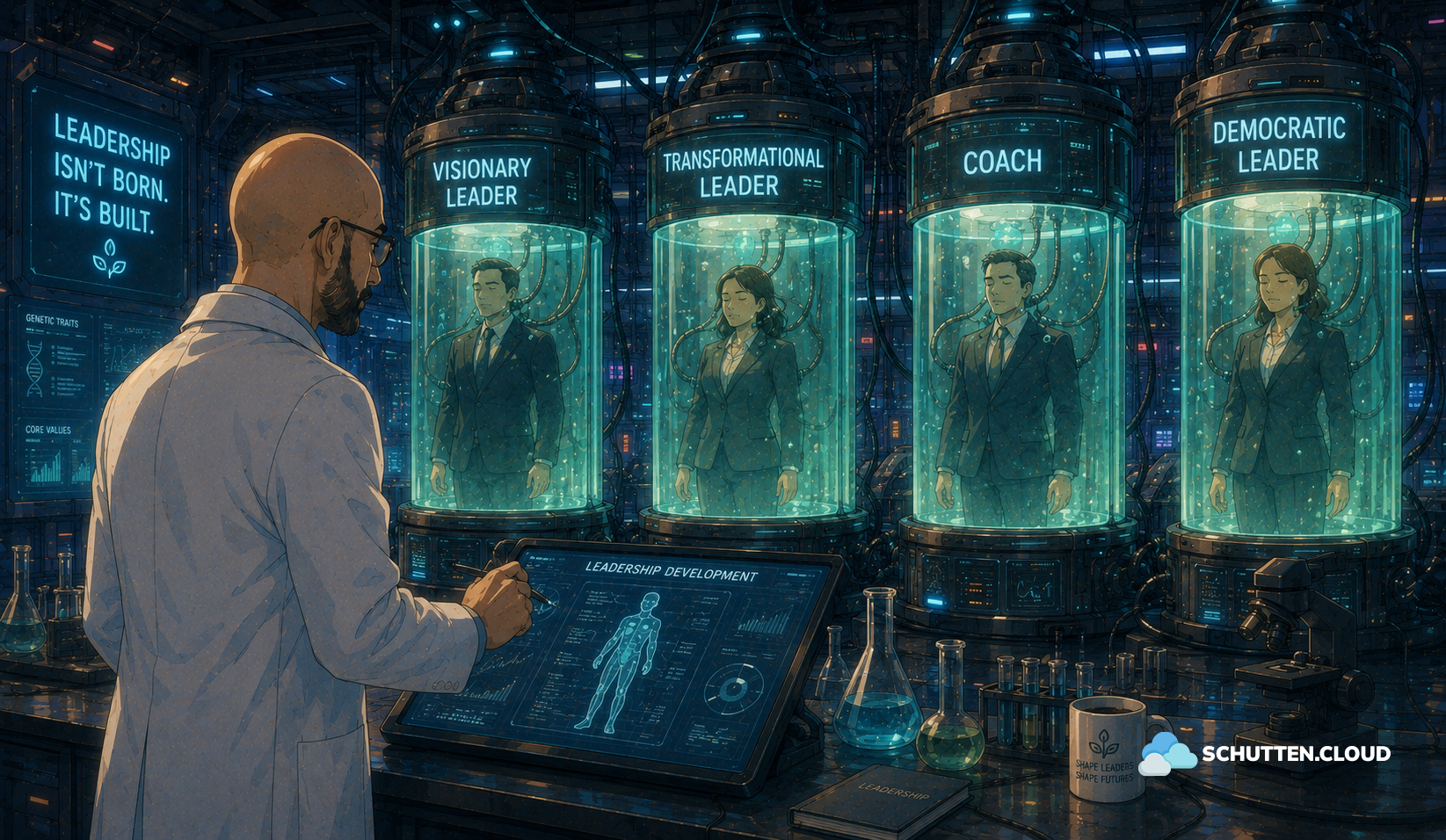
Think about the most impressive leader you have ever worked with in your career. Was this person born with a natural gift for guiding others? Or did they spend years learning how to lead through trial, error, and hard experience? This question has been debated for decades in offices, university classrooms, and executive boardrooms around the world. People often wonder if leadership is an innate talent hardwired into our DNA or a practical skill that anyone can acquire with enough effort. In the past, many researchers supported the idea that historical figures were simply born with extraordinary qualities. Today, modern behavioral science provides a much more complete answer. Scientists study human behavior using a framework called the bio-psycho-social model. This model shows that becoming an effective leader is not a simple choice between nature and nurture. Instead, leadership develops through a continuous interaction between your genetic code, your personality, your childhood upbringing, and your life experiences. The biological blueprint of leadership Let us begin by looking at biology. Are some human beings naturally born to lead? To answer this question, behavioral scientists have spent decades studying identical and fraternal twins. Because twins share either all or half of their genetic material, comparing their life choices helps researchers measure the exact impact of DNA on career paths. These twin studies consistently show that genetic factors account for roughly twenty-four to thirty percent of the variation in who takes on leadership roles. In simple terms, biology plays a real role, but it only explains about a third of the overall story. Scientists have even identified specific genetic markers associated with leadership positions. Research points to specific DNA sequences connected to neural receptors in the brain that appear more frequently in individuals who hold management roles. However, it is vital to understand what these genetic markers actually do. Genes do not automatically create a great manager or a charismatic executive. There is no single leadership gene that guarantees success. Instead, your DNA influences underlying biological systems that make certain leadership behaviors easier to perform. For example, genetics influence how your body regulates stress hormones like cortisol. Some people inherit a nervous system that stays calm during high-pressure situations. When a sudden crisis hits a company, these individuals do not panic easily. Genetics also influence dopamine levels, which drive physical energy, ambition, and the desire to achieve goals. A person born with high physical energy and a steady nervous system may find it easier to step into demanding roles. Yet, having a biological advantage is never enough on its own. Think of genetics as the quality of a seed in agriculture. A high-quality seed has great potential. However, if you drop that seed onto dry rocks without water, sunshine, or fertile soil, it will never grow into a tree. The exact same rule applies to human beings. A person may inherit a strong nervous system and high energy, but without the right environment, proper education, and real opportunities, that biological potential remains completely unused. Learning to lead through practice and experience Since genetics account for less than a third of leadership tendencies, the remaining seventy percent comes down to environment, education, and life experiences. This is an encouraging realization for anyone who wants to improve their skills. It proves that leadership is primarily a learned discipline rather than an exclusive club reserved for a lucky few. To understand how people learn to lead, we must look at how the human brain adapts over time. The brain is not a static organ that stops developing after childhood. Through a natural process known as neuroplasticity, the brain constantly builds new connections whenever you practice a skill or reflect on a new experience. Leadership is made of specific practical behaviors. Active listening, emotional control, strategic planning, clear communication, and delegating tasks are all skills that can be trained. None of these abilities appear magically overnight. Just like learning to play a musical instrument or speak a new language, mastering leadership requires deliberate practice. When a manager repeatedly practices remaining calm during difficult conversations, the brain strengthens the neural connections responsible for self-control. Over time, what felt difficult and awkward becomes a natural habit. People also learn how to lead by observing others around them. From an early age, human beings watch parents, teachers, managers, and public figures. When we see a manager handle a team conflict with fairness and respect, we remember that positive outcome. We mentally store that behavior and copy it when we face similar challenges later in life. Conversely, watching a poor manager destroy team trust teaches us what mistakes to avoid. However, the most powerful learning experiences often come from facing severe hardship. In leadership research, these intense personal challenges are called crucibles. A crucible might be a failed business venture, a painful career setback, a major project collapse, or a personal health crisis. These difficult moments force individuals to pause, examine their values, and rebuild their approach to life. When a leader goes through a crisis and takes time to reflect on what went wrong, they develop deep self-awareness and emotional strength. True confidence is rarely born during easy times. It is forged when you face failure, learn from your mistakes, and rebuild your career with greater wisdom. Personality traits and the myth of the extrovert While everyone can learn leadership skills, personal traits shape how individuals approach the role. Psychologists often study personality using five main characteristics: extraversion, conscientiousness, openness to experience, agreeableness, and emotional stability. Understanding these traits helps explain why different people adopt distinct management styles. Extraversion is often the most visible personality trait. People who score high in extraversion are outgoing, energetic, and comfortable in social settings. Because extraverts naturally speak up in groups and seek attention, they are frequently the first people to step forward into leadership positions. Researchers call this phenomenon leader emergence. When a team faces an uncertain situation, the loudest and most confident voice often gets chosen to take charge. However, there is a big difference between emerging as a leader and being an effective leader over time. While extraversion helps people get noticed initially, traits like conscientiousness and openness to experience predict long-term success. Conscientious individuals are organized, disciplined, reliable, and detail-oriented. They keep promises, meet deadlines, and create structured systems that allow businesses to run smoothly. Openness to experience brings curiosity, creativity, and a willingness to explore new ideas, which is vital for long-term strategy. Emotional stability is another crucial factor. Leaders who experience high anxiety, frequent mood swings, and deep self-doubt often struggle to make decisions under pressure. These negative emotions hurt decision-making and make it difficult for team members to feel secure. A leader who panics under stress spreads fear throughout the entire organization. For many years, popular culture assumed that great leaders had to be loud, dramatic extraverts. This assumption created a widespread myth that introverted individuals could not lead effectively. Modern psychological research has proven that myth completely wrong. In complex and fast-moving business environments, introverted leaders often outperform extraverted leaders. Introverted managers tend to be quiet, thoughtful, and excellent listeners. Instead of trying to dominate every conversation, they create space for their team members to share creative suggestions and take initiative. When a team consists of proactive, highly skilled employees, an introverted leader allows those employees to shine and innovate. Extraverted leaders, on the other hand, sometimes feel the need to control every discussion, which can accidentally crush the initiative of talented workers. While positive personality traits support healthy leadership, dark personality traits can cause immense damage. Characteristics like extreme narcissism, manipulativeness, and a lack of empathy can ruin organizations. Individuals with these traits often appear charming, confident, and persuasive in job interviews. They frequently climb corporate ladders quickly by taking credit for other people's work and manipulating office politics. However, in the long run, these individuals destroy trust, demoralize employees, and ruin corporate cultures. True leadership effectiveness must be measured by long-term organizational health, not short-term power. How early childhood shapes future leaders Long before a person attends their first business meeting or enters a management training program, their leadership foundation is already being built at home. The way parents raise their children leaves a permanent mark on how those children interact with authority, manage stress, and build relationships in adulthood. Psychologists study early childhood development using attachment theory. When parents provide consistent love, protection, and emotional warmth, a child forms a secure emotional bond. This secure attachment creates a strong sense of basic trust. Children who grow up feeling safe and valued develop healthy self-esteem and learn to trust other people. In adulthood, this basic trust becomes a cornerstone of healthy leadership. Secure leaders do not feel threatened when their team members succeed or express different opinions. They do not need to micromanage every detail because they genuinely trust their workers. Instead of controlling people through fear, secure leaders empower their teams, offer constructive support, and build environments where employees feel safe to take calculated risks. Parenting styles also play a direct role in developing personal responsibility. The most effective approach combines high emotional warmth with clear rules and boundaries. Parents who use this balanced approach set firm expectations, but they also explain the reasons behind those rules and listen to their children's feelings. This supportive environment teaches children that their actions have real consequences, developing an internal locus of control. An internal locus of control is the firm belief that you have the power to shape your own life through your choices and effort. Individuals who grow up with this mindset do not blame outside circumstances when things go wrong. When they face a crisis at work, they take ownership, adapt their strategy, and look for practical solutions. Furthermore, parents who encourage their children to make age-appropriate decisions build personal resilience early in life. Allowing a child to solve small problems, manage minor conflicts, and experience failure teaches them that mistakes are not fatal. When these children grow into adults, they possess the courage to make tough decisions under uncertainty without being paralyzed by the fear of making a mistake. Putting the bio-psycho-social model into practice Understanding the complete picture of how leadership develops changes how organizations should select, train, and support their managers. Relying on outdated ideas about natural talent or charismatic personalities leads to poor hiring decisions and wasted human potential. When companies hire or promote leaders, they should look beyond outward confidence and superficial charisma. Assessment processes should focus on emotional stability, conscientiousness, self-awareness, and personal integrity. Evaluating how a candidate handles failure and listens to feedback provides far better clues about their future performance than listening to an impressive interview speech. Organizations must also redesign their leadership development programs. Traditional management training often consists of short lectures and reading materials, which do little to change actual daily behavior. Because the brain learns through practice and active reflection, effective training must include hands-on experience, real-world projects, long-term mentoring, and continuous feedback. Creating a culture that views mistakes as learning opportunities is equally critical. If a company punishes every minor error, managers will avoid taking risks and default to rigid, defensive behaviors. However, when an organization treats setbacks as natural learning experiences, leaders develop the resilience and adaptability required to navigate complex market changes. Summary of leadership factors To bring all these elements together, it is helpful to look at how different factors contribute to the overall development of a leader.Dimension Share or role Primary mechanism Key research conceptsGenetics 24% to 30% Biological predisposition, stress and energy regulation Genetic markers and twin studiesLearnability Around 70% Neuroplasticity, practical experience, role models, reflection Social learning and life challengesPersonality Moderating role Main personality traits guide leadership style and effectiveness Extraversion, conscientiousness, introversionUpbringing Foundational role Secure attachment, supportive parenting, personal responsibility Early trust and internal controlClosing thoughts The debate over whether leaders are born or made turns out to be incomplete. Biology sets a basic foundation, providing raw physical energy, stress tolerance, and temperament tendencies. Childhood upbringing builds the emotional security and personal responsibility needed to interact healthily with others. Finally, years of deliberate practice, observation, and reflection turn that potential into practical skill. Nobody is born a finished leader, and nobody becomes a great leader purely by accident. Becoming a leader is a lifelong process of learning, making mistakes, and growing as a human being. When organizations recognize this truth, they can stop searching for mythical born leaders and start building environments where real leadership can flourish. Great leaders are neither simply born nor purely made, but continually developed through experience, reflection, and growth.

- Rolf Schutten
- 26 Aug, 2026
Humanizing change to build better organizations
Experiencing major unexpected changes in your career can be a frightening experience, especially when you are young and just starting out in the professional world. Early in many people's careers, there comes a moment when the stability of a company suddenly disappears. Imagine starting a new job at a historic airline that has spent decades helping millions of people travel across the world. Suddenly, the company declares bankruptcy, and everyone in the office realizes that difficult decisions are coming. The atmosphere becomes heavy with anxiety because saving the business requires hard choices, including laying off many dedicated employees. It is painful to think about saying goodbye to colleagues who have devoted their entire working lives to one organization. During such a crisis, external advisers and coaches are often brought in to guide leadership through the emotional and operational process. In one memorable meeting, an adviser asked a question that shocked everyone in the room. He asked the leadership team to consider what would happen if being laid off was actually a good thing for every person who lost their job. At first, this idea sounded completely unreasonable. For anyone living paycheck to paycheck, losing a job brings immediate fears about paying rent, covering utility bills, buying groceries, and maintaining health insurance. It creates deep worry about future career opportunities and personal stability. However, keeping an open mind allowed people to listen to the actual research behind workplace transitions. The adviser had tracked hundreds of laid-off employees over several years to see what happened to their lives after leaving the company. The data revealed that, in most cases, losing a job was actually a blessing in disguise. It forced people out of comfortable routines and career ruts that no longer challenged them. With the help of severance packages, supportive professional networks, and career coaching, these individuals pushed themselves to try completely new directions. Many found new positions that accelerated their career growth, while others went back to college, learned valuable technical skills, or started their own successful businesses. Learning about this research creates a powerful shift in perspective. It leads to a fundamental belief that change, even when forced upon us, can bring positive outcomes if we remain patient and curious. When unexpected events happen, instead of asking why something bad is happening to us, we can choose to ask what opportunity the situation is creating for us. This mindset becomes especially valuable when leading organizations through major transformations, where uncertainty is constant and human emotions run high. Understanding the biological fear of uncertainty Leading organizational transformations across different industries shows that change is happening faster and becoming more complex than ever before. Whether working with global manufacturers restructuring their workforce, mining companies on the edge of financial failure, or essential grocery chains during global health crises, one truth remains clear. Change is continuous, and it is not going away. Yet, despite its frequency, the vast majority of people dislike change and actively try to avoid it. This resistance is not simply a negative attitude or a lack of discipline. Human beings are biologically built to resist change and uncertainty. The human brain is designed to seek safety and avoid potential threats in order to ensure survival. Whenever a person encounters an unexpected or unfamiliar situation, the brain automatically identifies it as a potential danger. Before a person even has time to think logically, a small part of the brain called the amygdala triggers an immediate physical response by releasing stress hormones such as cortisol and adrenaline. To understand how this reaction works in daily life, consider a simple situation in nature. If you are walking through a forest and suddenly encounter a large bear, your brain immediately recognizes a life-threatening danger. Your body is instantly flooded with stress hormones, and your immediate physical reaction is to run away as fast as possible. However, running away from a wild animal is often the worst thing you can do, because it triggers the animal's natural instinct to chase you. To stay safe, you need to override your emotional panic, remain completely still, and rely on logical thinking rather than immediate impulse. A similar biological process happens in the modern corporate world. When a chief executive officer announces a sudden company merger, a major restructuring, or a new software system, employees experience the exact same chemical reaction in their brains as if they were facing a wild animal in the forest. Their bodies receive a wave of stress hormones, causing them to feel threatened, anxious, and defensive. This automatic response explains why nearly three-quarters of all corporate transformation programs fail to achieve their intended goals. When major changes are announced in the workplace, employees rarely respond with immediate excitement or open minds. Instead, their natural reaction is to list every possible reason why the initiative will fail. People often express skepticism by claiming that new strategies never work, or they silently choose to ignore the new rules in the hope that the initiative will eventually disappear. It does not matter how well a company plans its technical strategy if the humans involved are unconsciously working against it. Effective change management is fundamentally about helping people manage their biological fear response so they can use their intelligence and creativity to support the organization's growth. Moving beyond corporate metrics and financial goals To overcome this natural human resistance, business leaders must humanize the way they approach organizational transformation. Too often, companies focus entirely on structural adjustments, technology deployments, and project deadlines, completely forgetting about the emotional experience of the employees who must carry out the work. Humanizing change means placing the needs, motivations, and mental capacities of workers at the center of every strategic decision. One of the biggest mistakes corporate leaders make when communicating new strategies is relying entirely on financial language and executive metrics. Leaders frequently try to motivate their workforce by talking about increasing shareholder value, raising the company stock price, expanding profit margins, or hitting target bonuses. While these numbers are important to executive boards and investors, they fail to inspire the vast majority of everyday employees. Expecting frontline workers to feel passionate about corporate profit metrics ignores basic human psychology. Research conducted in behavioral science labs shows that people are motivated by very different internal drivers. When you study what truly inspires individuals to give their best effort at work, five main motivators consistently emerge. Everyone responds to these motivators to different degrees, but almost every person has one primary driver that influences their daily decisions and commitment. The first driver is personal achievement. Employees who are motivated by personal achievement care deeply about their individual career progression. They are energized by reaching clear career milestones, earning promotions, securing prestigious job titles, and being selected for high-profile projects that demonstrate their skills. The second driver focuses on customers. Workers who are driven by this motivation want to see how their daily effort directly impacts the real world. They care about the quality of the products or services their company provides and are energized by listening to user feedback so they can continuously improve the customer experience. The third driver revolves around team dynamics. People who are motivated by teams care intensely about their colleagues and the social environment of their workplace. Financial rewards alone will not keep these individuals in a company if they dislike their work environment. Conversely, if they feel supported by a strong and caring team, they will happily work late hours and overcome difficult challenges together to help their colleagues succeed. The fourth driver is community impact. Employees motivated by community need to know that their organization contributes positively to society. They look for companies that support social causes, participate in local charity initiatives, protect the environment, and actively work to make the world a better place. The fifth driver is financial outcomes. This motivator is straightforward and relates directly to monetary rewards. People driven by financial outcomes want to know exactly how a project or business performance will translate into higher wages, clear bonuses, and financial security for themselves and their families. When you survey a large group of employees across an organization, their primary motivators are usually divided quite evenly across these five categories. This means that if leadership only talks about corporate profit margins and executive bonuses, they are completely failing to connect with the majority of their workforce. By ignoring the drivers related to customers, team culture, personal growth, and community contribution, leaders leave most of his or her employees feeling uninspired and disconnected from the company's mission. Connecting company transformation to personal meaning To create a successful transformation, leaders must encourage employees to build their own personal change stories. A personal change story explains why an individual is personally motivated to support a new direction and why they are committed to seeing it through difficult times. When employees understand their own personal motivations and review them regularly, they can overcome their natural biological urge to resist workplace changes. A powerful example of this principle occurred during the turnaround of a large mining company that was just three months away from complete financial failure. The organization needed an immediate and drastic transformation to survive. During a strategy workshop with senior managers, one leader stood up to share his personal change story. He explained that he had grown up in severe poverty and knew firsthand how difficult life could be without financial security. Because of his background, he was deeply disturbed by the massive amount of wasted materials and inefficiency within the mining operations. This manager then connected the company's transformation plan directly to all five core motivators. He explained that if the turnaround succeeded, the business would attract essential investment from shareholders, satisfying the financial requirement. With that new capital, the company could purchase modern equipment to increase efficiency, allowing them to keep prices low for their customers. The increase in business stability would allow the company to raise worker wages, fulfilling personal achievement goals. Most importantly to him, the profits would allow the business to fund a local poverty reduction program in the surrounding community, while the improved operational stability would give internal teams more time to invest in learning and professional development. By the time the manager finished speaking, he was moved to tears, as were many of his colleagues in the room. In that single moment, the company's transformation shifted from a cold, numerical goal about saving money into a meaningful shared mission. Every employee in the room could see how their work connected to something larger than themselves. As a result, the entire organization united behind the plan, successfully turning the business into a profitable and stable enterprise. Modern technology makes it easier than ever for organizations to connect with employees on a personal level. By using communication platforms, automated tools, and thoughtful message segmentation, leadership can share news and updates that directly appeal to different employee motivators. For instance, workers who care deeply about team culture can receive updates highlighting collaborative achievements, while those motivated by community impact can receive stories about the company's environmental progress. Tailoring the message helps every employee stay reminded of why the change matters to them personally. Measuring cognitive load and managing team capacity Even when employees understand the purpose of a transformation and feel motivated to participate, leaders must remember that every individual has a different capacity to handle extra stress and work. A common mistake in corporate management is assuming that every employee possesses the exact same amount of energy, time, and emotional resilience. Organizations often manage major projects by using standard activity charts and assigning equal numbers of tasks to every team member, completely ignoring their individual circumstances. In reality, two employees sitting next to each other may have completely different ability levels to manage new responsibilities. One employee might have a stable personal life, high energy levels, and plenty of time to take on new challenges. Meanwhile, another employee might be experiencing severe personal stress, such as a painful divorce, a health issue, or family difficulties at home. Assigning the exact same workload to both individuals will inevitably cause the second employee to feel overwhelmed, leading to exhaustion, errors, and deep resentment toward the company. To prevent burnout and maintain steady progress during a transformation, organizations must regularly measure and manage cognitive load. Cognitive load refers to the total amount of mental effort and emotional energy required to perform a job effectively. It consists of two primary elements: capacity and confidence. Capacity relates to whether an employee has the actual time, physical energy, and material resources required to complete their assigned duties. Confidence relates to whether an employee truly believes in their personal ability to execute those duties successfully. If either capacity or confidence is lacking, the employee's cognitive load becomes dangerously heavy, making it nearly impossible for them to adapt to new workplace systems or expectations. Measuring cognitive load does not require complex or expensive tools. Leaders can gather valuable insight by asking employees to complete short, simple surveys on a regular basis. These surveys ask individuals how they are feeling emotionally, giving options such as feeling excited, tired, proud, or anxious. The survey then asks direct questions about their personal capacity, such as how effectively they are managing their balance between work and home life. Finally, it asks questions about their confidence, measuring how certain they feel about completing challenging tasks successfully. Gathering this information allows managers to make intelligent, human-centered adjustments across their teams. When the data shows that an employee has high confidence and extra capacity, managers can offer them new leadership opportunities, assign them complex projects, and help them advance their careers. Conversely, when the data reveals that an employee is struggling with heavy emotional stress or low confidence, managers can temporarily reduce their workload, adjust project deadlines, or provide extra support. Combining personal motivation with active capacity management creates a healthy workplace environment where change can actually succeed. When an employee experiences a dip in confidence or feels overwhelmed by new expectations, managers can step in with targeted support. A simple, encouraging note from a trusted leader or a brief reminder of the employee's personal change goals can help them regain their confidence. These small human interactions provide the support workers need to push through temporary difficulties and overcome their natural fear of uncertainty. Closing thoughts Navigating continuous change is one of the greatest challenges facing modern organizations, yet it also presents the greatest opportunity for long-term improvement. Success depends on recognizing that technological tools, strategic plans, and operational processes are only as effective as the people who run them. By understanding the biological reasons behind fear, connecting company goals to individual motivators, and actively protecting the mental capacity of employees, leaders can transform resistance into genuine commitment. Lasting organizational progress occurs when leaders stop fighting human nature and start designing change around the needs of their people.