 Rolf Schutten
- 11 Aug, 2026
The involuntary digital citizen: How public systems expose private lives.
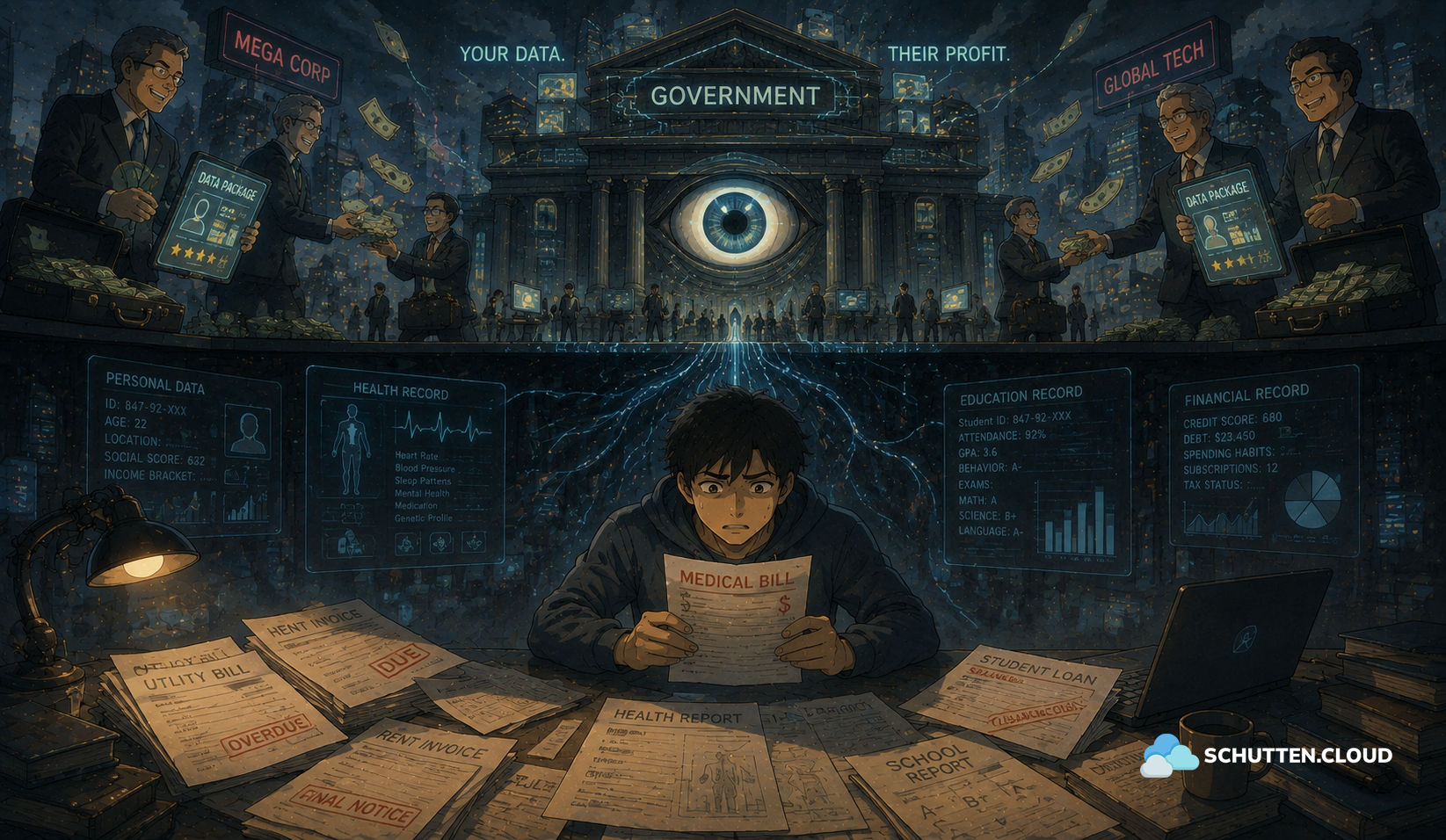
There was a time when using the internet was a choice. You logged on to send an email, read the news, or order a product. If you didn't trust a website, you simply closed your browser. Today, that choice no longer exists. If you want to file your income tax, view your medical lab results, apply for student support, or register a business, you are forced to use a digital platform. Governments and public institutions across Europe, the United Kingdom, and North America call this "digital transformation" and "efficiency." However, technical investigations reveal an uncomfortable truth: public digital platforms silently leak sensitive citizen data to commercial advertising networks, data brokers, and global tech corporations. Because you cannot opt out of paying taxes or seeking medical care, you are no longer just a citizen using a public service. You have been turned into an involuntary data provider. The illusion of voluntary consent Modern privacy regulations like the GDPR in Europe or the CCPA in California are built on a simple promise: consent. Companies must ask for your permission before collecting your data, and you have the right to say no. When applied to public services, this promise breaks down completely. Consent requires a genuine choice. But consider what happens when a citizen tries to opt out of public digital systems:Refuse a digital portal? You face administrative delays, physical office visits during work hours, or financial penalties. Refuse a health app? You lose direct access to your test results, prescriptions, and appointment schedules. Refuse digital identity verification? You are locked out of essential state benefits and civic rights.When saying "no" results in social or financial exclusion, consent is no longer voluntary. It is forced. Public platforms place cookie banners on their websites and act as if citizens have made a free choice. But clicking "accept" when you have no alternative is not consent. It is compliance. Public portals on foreign clouds One of the main reasons public data leaks so easily is that governments rarely build or operate their own digital infrastructure. Instead, they outsource their systems to global cloud platforms and commercial software vendors. This creates structural dependencies that few public institutions can control.Domain What Citizens See What Happens Behind the ScreenTax & Benefits Official state login portals Analytics scripts and tracking pixels measure payment behavior and session length.Healthcare Patient portals and medical apps Third-party cloud hosts process health records under extra-territorial legal regimes.Crisis Support Helplines and mental health sites Session recording tools track mouse clicks and text fields in real time.When a tax authority or public health service runs its infrastructure on cloud providers owned by foreign corporations, that data becomes subject to laws like the US CLOUD Act. This law allows foreign law enforcement agencies to demand access to data stored on systems owned by domestic companies, regardless of where the physical server is located. Furthermore, technical audits of government websites frequently discover commercial tracking tools—such as Google Tag Manager or Adobe Analytics—embedded directly into payment flows and application forms. What starts as an official interaction between a citizen and their government quietly turns into a data stream for third-party ad networks. Surveillance at our most vulnerable The failure of data protection becomes even more serious in the healthcare and welfare sectors. This is where citizens interact with the state during their most vulnerable moments. Consider crisis helplines and mental health platforms. Investigations across multiple countries have revealed that third-party trackers were active on suicide prevention websites and emergency mental health portals. Search terms, location data, and visits to specific support pages were transmitted to commercial analytics vendors. Another widespread practice is the use of "Session Replay" software on public health and charity portals. These tools record a visitor's screen experience in real time. They capture mouse movements, clicks, and even text typed into form fields before the user presses "submit." When someone enters sensitive personal information while searching for debt relief, mental health support, or medical advice, that interaction should be private by default. Instead, it is recorded, analyzed, and stored on external servers operated by third-party vendors. The low-tech reality of public breaches When governments force citizens to surrender their personal data, they have a strict responsibility to protect it. Yet public sector cybersecurity is frequently weakened by outdated systems, lack of technical understanding, and basic operational errors. Data leaks in the public sector rarely require sophisticated state-sponsored hackers. More often, they happen because of fundamental mistakes:Redaction errors: Official documents are routinely published with black shapes placed over sensitive names and addresses in PDF editors, leaving the underlying text readable and easy to copy. Misconfigured storage: Databases containing scanned passports, driver's licenses, and tax records are regularly discovered sitting on open cloud storage without basic authentication. Unmanaged API endpoints: Public applications often expose internal data interfaces that allow unauthorized users to request citizen records without proper authorization checks.These leaked records do not stay isolated. Data brokers combine scattered data points to build detailed profiles on millions of people. When your phone number, home address, and tax information leak from a public database, that information is quickly weaponized. It directly fuels targeted phishing campaigns, identity theft, and bank impersonation fraud against unsuspecting citizens. Sovereignty cannot be bought with a cookie banner Many public institutions believe that placing a privacy banner on their website or passing a compliance checklist means their platform is secure. This misses the point. Privacy is not a legal statement added to a website after it is built. It is an architectural constraint that must shape how systems are designed from the start. There is a profound asymmetry of power in digital government:The state demands complete transparency from the citizen (income, health status, living situation, identity). The state offers almost no transparency about where that data flows, which vendors process it, or who has access to it.When privacy watchdogs discover these violations, the response is usually an administrative warning or a fine. But when a public agency pays a privacy fine, it pays that fine using taxpayer money. The citizen pays twice: first with their data, and then with their tax money to settle the fine. The real cost of forced digitalization Digital progress should make life simpler without stripping people of their basic rights. When public services make digital interaction mandatory, they create a system where citizens are forced to trade their personal privacy for access to society. You cannot choose another tax authority. You cannot choose another national healthcare system. You have no market choice. If governments insist on digital-first public services, they must guarantee true digital sovereignty. That means public platforms built on open, audited, locally controlled infrastructure—completely free from commercial tracking, third-party profiling, and foreign jurisdiction. Until that happens, digital citizenship is not an upgrade. It is an obligation. Closing thought The argument "I have nothing to hide" completely fails when you do not know where your data goes, who profits from it, or how it might be used against you in the future. Privacy is not a feature you turn on in a settings menu. It is not a luxury for people who have the time and money to avoid digital channels. Privacy is a fundamental human right. A government that demands complete transparency from its citizens while offering complete opacity in its technology is no longer serving its people—it is monitoring them.

- Rolf Schutten
- 10 Aug, 2026
The executive prompt playbook: Mastering context, techniques, and multi-agent AI
Many business leaders still view prompt engineering as a technical trick reserved for IT departments or junior analysts. They open a chat interface, type a vague question like "Draft a strategy for market expansion," and end up disappointed by a generic, middle-of-the-road answer. They assume the technology is overhyped, close the tab, and go back to traditional ways of working. This misses the fundamental nature of modern artificial intelligence. Prompting an AI model is not like typing a query into a search engine; it is an exercise in strategic delegation. If you give a brilliant human executive assistant a vague instruction without background information, you will receive a superficial result. But if you give that same assistant a clear strategic context, defined boundaries, and explicit expectations, you receive executive-grade work. The same principle applies to AI. For a modern board member or director, learning how to frame prompts, apply proven cognitive techniques, and structure multi-agent workflows is becoming a core leadership capability. The architecture of an executive prompt: Context and framing The single biggest mistake executives make with AI is omitting context. Large language models are designed to predict plausible text based on probabilities. Without specific framing, the model defaults to the average corporate jargon found across the open internet. To get sharp, actionable insights, you must anchor the AI inside your specific business reality. A high-performing executive prompt consists of five essential structural blocks: Role, Context, Task, Constraints, and Output Format. First, you establish the Role by telling the AI who it is supposed to be. Second, you provide the Context, explaining the background, market situation, or internal pressures surrounding the issue. Third, you define the Task with absolute clarity. Fourth, you set strict Constraints, specifying what the AI must avoid, what assumptions it must challenge, or what regulatory rules it must respect. Finally, you specify the Output Format, such as a structured memo or a risk matrix. [ROLE] Act as a conservative M&A advisor specializing in European industrial manufacturing.[CONTEXT] Our company is a mid-sized Dutch manufacturer ($150M revenue) considering acquiring a German competitor with strong software capabilities ($30M revenue). Our board is risk-averse, highly protective of existing cash flow, and concerned about cultural integration and hidden software maintenance debt.[TASK] Review the attached summary financial report and technical audit. Identify the top three strategic and operational risks associated with this acquisition.[CONSTRAINTS] Do not summarize the general benefits of M&A. Focus strictly on potential failure points. Assume interest rates will remain elevated over the next 36 months.[OUTPUT FORMAT] Provide a 1-page executive memo organized into three sections: Key Risk, Operational Impact, and Recommended Mitigation.Essential prompt techniques for executive decision-making Beyond basic prompt structure, executives can draw on specific prompt techniques to unlock far deeper strategic reasoning from AI systems. 1. Role-Based Prompting (Persona Framing) Instead of asking for general advice, you force the AI to look at a problem through a specific expert lens. By asking the system to evaluate a proposal as a skeptical activist investor, a strict compliance officer, or a disruptive tech founder, you quickly surface blind spots that a single perspective would miss. Act as a skeptical activist investor who has just taken a 5% stake in our company. Read our proposed three-year digital transformation roadmap attached below. Identify three initiatives in this roadmap that appear over-budgeted, unnecessary, or unlikely to deliver clear ROI within 18 months. Challenge our leadership assumptions aggressively, using concise, direct executive language.2. Chain-of-Thought (CoT) Prompting AI models perform significantly better when forced to explain their reasoning step-by-step before delivering a final answer. If you ask a complex strategic question directly, the model might rush to an oversimplified conclusion. By instructing the model to work through the logic systematically, you force higher decision quality. We are considering shifting our enterprise software pricing from a traditional fixed seat-based model to a usage-based consumption model. Before giving me your final recommendation, work through this decision step-by-step: 1. Analyze the immediate cash flow risks during the transition phase. 2. Evaluate how our sales compensation structure needs to adapt. 3. Assess customer retention risks among our largest conservative enterprise accounts. 4. Weigh the long-term upside against these operational hurdles.Show your reasoning for each step clearly before providing a final executive summary recommendation.3. Few-Shot Prompting (Learning by Example) If you want the AI to draft a strategic document, do not just describe the format—provide one or two examples of actual memos that reflect your preferred executive style. By showing the model what excellent work looks like in your company, the AI immediately matches the desired tone, structure, and depth. I need you to write a brief strategic update for our advisory board regarding our AI adoption policy. Below are two examples of previous memos I wrote that the board praised for their clarity, direct tone, and bulleted risk focus.---EXAMPLE 1--- [Insert past memo text here] ---END EXAMPLE 1------EXAMPLE 2--- [Insert past memo text here] ---END EXAMPLE 2---Draft a new memo regarding our proposed internal policy on employee use of generative AI tools. Mirror the exact tone, paragraph length, and bullet-point structure of the examples above.4. Meta-Prompting (Socratic Alignment) When facing a complex scenario where you are not even sure what questions to ask, you can instruct the AI to interview you first. This turns the AI into a thought partner that helps you clarify your own thinking before generating a single line of strategy. I need to draft a comprehensive AI governance framework for our healthcare organization, but the parameters are complex and I want to ensure we do not miss key operational details. Do not generate the framework yet. Instead, act as an expert risk management consultant and ask me 5 targeted questions, one at a time, about our current infrastructure, data privacy controls, and risk tolerance. Wait for my answer after each question before asking the next one. Once we finish all 5 questions, synthesize my answers into the final governance draft.Advanced techniques for complex strategic scenarios As executives deal with higher levels of business complexity, more advanced prompt techniques become necessary. 5. Generated Knowledge Prompting Before asking the AI to make a strategic judgment, you instruct the system to articulate and list key domain facts, regulatory constraints, and market truths first. This ensures the AI grounds its final recommendation on accurate underlying knowledge rather than high-level speculation. First, list the top five regulatory requirements under the European Union AI Act that specifically apply to automated risk-assessment software in financial services. Second, based strictly on those regulatory facts you just generated, evaluate our proposed AI credit-scoring workflow attached below and highlight where we are non-compliant.6. Tree of Thoughts (Scenario Branching) When evaluating major strategic crossroads, you can instruct the AI to explore multiple decision paths simultaneously, evaluate the failure points of each branch, and compare the outcomes before selecting the strongest path forward. Our logistics company is facing a 25% rise in fuel and operational costs. I want you to evaluate three distinct strategic responses: - Option A: Pass 100% of the cost increases directly to customers through a fuel surcharge. - Option B: Absorb the costs short-term while aggressively automating route planning to reduce total mileage by 15%. - Option C: Restructure customer contracts around longer delivery windows in exchange for fixed pricing.For each option, generate two potential downstream consequences (one positive, one negative). Then, evaluate which path offers the best balance of customer retention and margin protection over a 24-month horizon.7. Directional Stimulus Prompting This technique involves giving the AI explicit strategic anchors, keywords, or core themes to guide its analytical focus. It prevents the model from wandering into irrelevant topics and keeps the analysis tied directly to leadership priorities. Analyze our quarterly operational performance report. In your analysis, focus strictly through the following strategic anchors: [Cost Efficiency], [Supply Chain Volatility], and [Key Person Dependency]. Ignore general marketing or sales metrics. Provide a brief assessment explaining how our current performance impacts each of these three strategic anchors.Beyond single prompts: Orchestrating a multi-agent council While individual prompt techniques are powerful, the ultimate revolution in executive decision-making lies in multi-agent architecture. Instead of relying on one AI model to perform every task, you design a digital council of specialized AI agents, where each agent has a distinct role, personality, and set of responsibilities. In a multi-agent setup, the human executive moves from being the writer or analyst to becoming the chairman of the digital board. You set the agenda, monitor the debate between specialized agents, intervene when the discussion strays off course, and make the ultimate human decision based on synthesized insights. Act as the Chairman of an AI Advisory Board evaluating our entry into the US healthcare market. You will simulate a debate between three specialized board members before providing a final synthesis.Step 1: Have [Agent A: Chief Strategy Officer] present a 2-paragraph expansion argument focused on market size and revenue growth. Step 2: Have [Agent B: Chief Risk Officer] challenge Agent A's plan, pointing out three critical regulatory and legal hurdles in the US healthcare landscape. Step 3: Have [Agent C: CFO] analyze the financial trade-offs between both perspectives, focusing on cash burn and payback timelines. Step 4: As Chairman, summarize the core points of debate, resolve the conflicts between the agents, and present a final executive decision brief for the CEO.The executive mindset shift Mastering these techniques requires a fundamental mindset shift. You must stop viewing AI as an automated search box and start treating it as a team of highly capable, hyper-fast advisers who know nothing about your company until you brief them properly. The quality of the output you receive from AI is a direct reflection of the clarity of your own leadership. If your instructions are confused, your context is weak, and your boundaries are vague, the AI will return confusing, weak, and vague results. But when you master the art of framing, provide rich context, and orchestrate specialized agents, AI becomes an incredible lever for executive productivity and decision speed. Closing thought Technology will not replace strategic leadership, but leaders who know how to direct AI will rapidly replace those who do not. The goal of prompt engineering for executives is not to turn managers into programmers. It is about learning how to communicate intent, set clear boundaries, and demand rigorous thinking from digital systems. Stop asking AI for quick answers. Start giving it the strategic context it needs to deliver real executive value.
- Rolf Schutten
- 09 Aug, 2026
The AI security paradox: From board-level strategy to digital defense
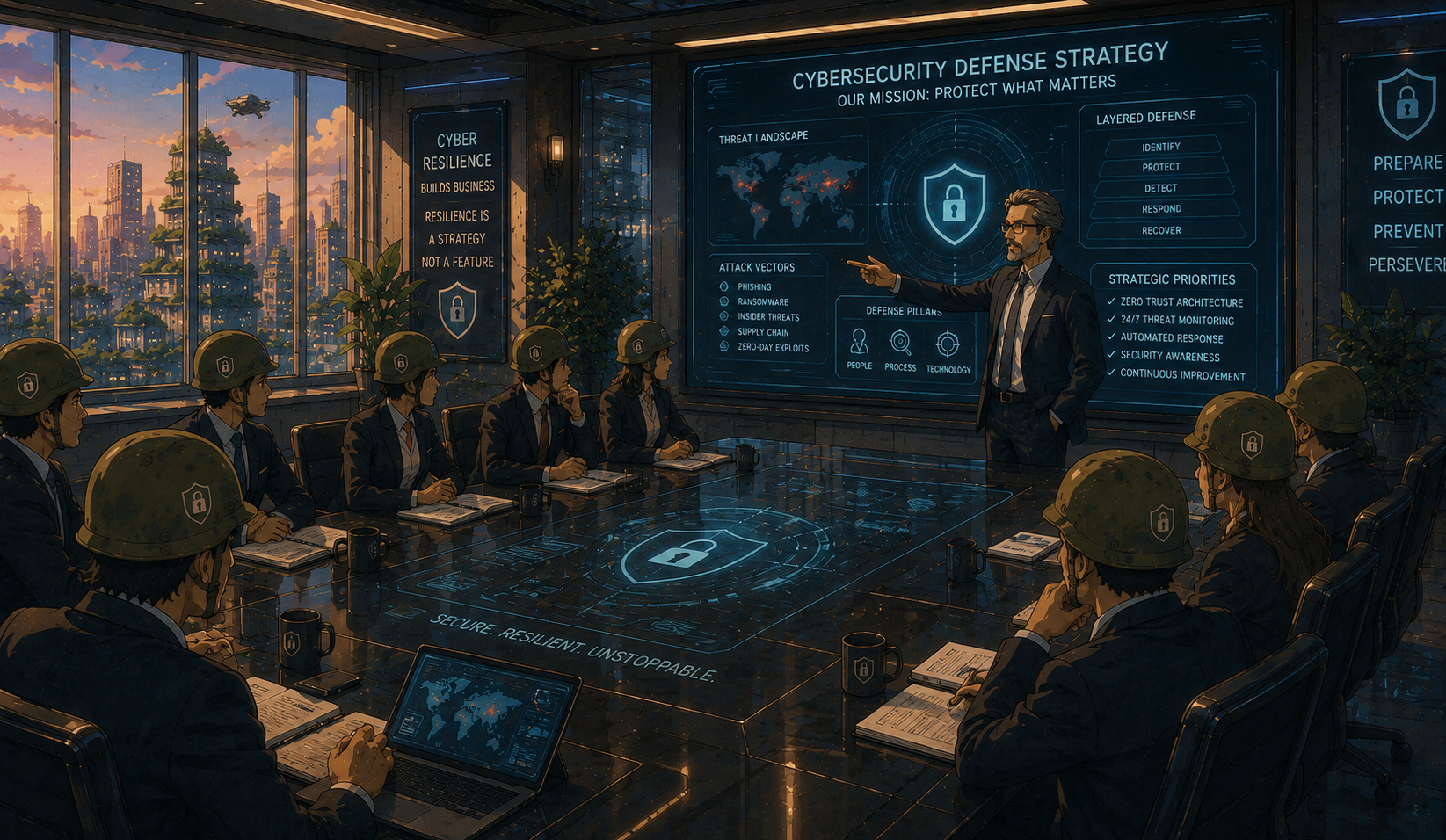
Cybersecurity used to be a simple battle of human speed against human skill. Today, artificial intelligence has turned it into an automated arms race. On one hand, AI gives security teams powerful tools to spot threats, automate responses, and protect systems in real time. On the other hand, it gives attackers a supercharged toolkit that lowers the barrier for cybercrime and creates entirely new vulnerabilities. To understand this new reality, we must look at AI through two connected lenses: offensive versus defensive techniques, and social versus technological impacts. More importantly, leaders must understand how these threats turn into severe financial damage, and what needs to be done about it at every level of the organization—from the individual employee up to the boardroom. Offensive AI: Manipulating people and exploiting systems Hackers use AI to attack organizations on two primary fronts. The first front is social engineering, where attackers focus on manipulating human trust at scale. Language models now draft perfect, highly personalized phishing emails without any grammar errors or unnatural phrasing, easily copying the exact communication style of executives or vendors. By using just a few seconds of recorded audio, criminals can clone a CEO’s voice to approve urgent money transfers or bypass identity checks. Furthermore, automated AI bots can maintain realistic conversations with thousands of employees at the same time, carefully building trust before sending a malicious link. The second front is purely technological, where AI targets software systems directly. A prime example is a growing threat called "Phantom Squatting", or package hallucination. Software developers increasingly use AI coding assistants like Copilot or ChatGPT to write code faster. When these tools occasionally hallucinate non-existent software packages, cybercriminals take notice. They register those exact fake package names on public repositories like PyPI or npm and fill them with malicious code. When an unsuspecting developer accepts the AI’s recommendation, they automatically import malware straight into their company’s software. Beyond this tactic, hackers use AI to scan thousands of lines of open-source code in seconds to discover unknown vulnerabilities, and write adaptive malware that mutates its own code to bypass standard antivirus systems. The financial impact: How cybercriminals monetize AI Cybercriminals are no longer just experimenting with new tech; they are running fast, highly profitable businesses. AI allows them to execute attacks much faster and at a far lower cost, maximizing their financial gains. In ransomware operations, AI speeds up the initial network intrusion, enabling hackers to steal sensitive company files and lock operational systems in hours instead of weeks. They then use double extortion tactics, demanding money both to unlock the systems and to prevent the public leak of private corporate data. Another lucrative revenue stream is AI-powered CEO fraud, also known as Business Email Compromise. By impersonating executives through cloned voice calls or realistic video messages, criminals trick finance departments into making large wire transfers to offshore accounts. Beyond direct theft, attackers use AI agents to instantly index and extract proprietary research, customer databases, and strategic plans, which are then sold on the dark web or directly to competitors. For the victim company, the damage goes far beyond the initial loss. Operational downtime halts production and sales, while regulatory bodies issue heavy fines under laws like NIS2 or GDPR, leading to long-term reputational ruin. Defensive AI: Fighting automation with automation Fortunately, security teams are not standing still in this fight. Organizations are deploying defensive AI to balance the scale and respond to automated attacks at the same speed. Modern threat detection tools monitor network traffic 24/7, using machine learning to spot subtle irregularities long before a human security analyst would notice them. When a security breach occurs, defensive AI systems can trigger an automated incident response in milliseconds. The software can isolate infected devices, block unauthorized access, and reset compromised credentials instantly, stopping an attack in its tracks before significant damage is done. Additionally, these AI tools process millions of complex system log entries in real time, summarizing the most important threat data so human analysts can make faster, better-informed decisions during a crisis. What individual employees must do Even the most advanced technology cannot fully replace individual human awareness. Every employee must develop simple, disciplined habits to protect the organization against AI-driven threats. First, verification must become a standard routine. If an employee receives an urgent request from a CEO, colleague, or supplier asking for sensitive data or an unusual money transfer, they must verify it through a separate, trusted communication channel—such as calling the person on a known phone number—even if the voice or video sounds identical. Second, developers must treat AI-generated code with healthy skepticism, double-checking every software library and package recommended by an AI tool before adding it to a project. Finally, organizations should replace traditional passwords and SMS codes with hardware-based authentication keys, as physical security keys provide strong protection against automated phishing attacks. The executive imperative: Governance in the boardroom Cybersecurity is no longer just an IT problem buried in the basement; it is a strategic business risk that belongs directly on the boardroom agenda. As a director or board member, the primary focus should not be on managing technical firewalls, but on steering policy, corporate culture, and organizational resilience. Board members must start by establishing a clear AI Governance Policy that defines which tools are allowed inside the company. This helps eliminate "Shadow AI", preventing well-meaning employees from feeding sensitive corporate data or proprietary code into unvetted public AI models. Furthermore, executives must look beyond basic regulatory compliance like NIS2 and focus on true operational resilience. Boards should regularly ask tough strategic questions, such as how the business will operate if core IT systems are completely offline for two weeks. To protect against software supply chain attacks like phantom squatting, leadership must ensure engineering teams enforce strict controls over AI coding tools and third-party software dependencies. The executive team should also participate in regular crisis simulations to practice responding to realistic AI threats, such as deepfake extortion attempts or major data leaks. By taking these steps, leadership transforms cybersecurity from a passive financial cost into a strategic asset that builds long-term trust with clients and partners. Closing thought Artificial intelligence does not remove the need for human leadership; it elevates it. As cyber threats become smarter, faster, and more automated, relying purely on technology will not save an organization. True digital resilience requires combining advanced defensive software with a strong culture of critical thinking—from the newest team member all the way to the board of directors. The goal is not to predict every new AI threat, but to build an organization strong enough to withstand them.

- Rolf Schutten
- 08 Aug, 2026
The tech literacy crisis: Why we are raising a generation unprepared for the real world
A worrying trend has been growing in secondary education over the past twenty years. In many middle schools, practical technology classes have quietly disappeared or seen their hours cut by more than half. This might look like a simple change in school schedules. But in reality, it shows a huge gap between what we teach our children and what our modern world actually needs. We are raising a generation that uses touchscreens every day, but has no basic understanding of how those devices are powered, built, or programmed. The big contradiction of our time We live in a world that relies heavily on fast technological growth. Almost every major challenge we face today requires real technical skills. We need:Energy transition experts to build solar grids, manage battery storage, and run modern power plants. Electronics and hardware engineers to design microchips, PCBs, and robotics. Software developers and cybersecurity specialists to keep our digital networks safe. Industrial construction engineers to build sustainable houses and modern factories.The demand for these technical specialists is higher than ever. Yet, our education system treats basic technology lessons like an optional hobby instead of an essential core subject. We expect young people to choose technical careers later in life, even though they barely get to touch practical engineering during their school years. From creators to passive consumers By removing technology education from schools, we create a passive mindset. When students never get the chance to open a circuit board, build a simple frame, or write basic code, they start viewing technology purely as consumers. They treat complex machines as black boxes—magic objects that just work until they break. A strong economy cannot rely only on consumers. It needs builders, fixers, and creators. Understanding basic technology—like electric circuits, mechanical parts, and software logic—is no longer just for future mechanics. It is a basic skill everyone needs in a high-tech world. The danger for future leadership This lack of basic technical knowledge also creates a problem in the workplace. When general technical knowledge drops, the gap between management and technical execution grows wider. Companies end up led by managers who understand spreadsheets, but have no idea how their company's physical or digital products actually work. As a result, organizations struggle to innovate. They make wrong estimations about timelines, underestimate technical challenges, and fail to understand their own engineers. If we want smart, tech-savvy leaders in boardrooms tomorrow, we must introduce children to practical technology today. Bringing practical technology back to school Fixing this problem does not mean every student needs to become a software developer or a nuclear engineer. It simply means treating technology education with the same respect as math, history, or language. We need to teach young people how the world around them works. That means bringing practical technology back to the classroom:Combine theory with practice: Teach math and physics using real-world technical problems. Remove the mystery: Give students the confidence to take things apart, fix problems, and build new things. Show real career paths: Help students see early on what modern jobs in software, energy, and building actually look like.Closing thought We cannot build a high-tech future on a foundation of low-tech education. If we want to maintain our infrastructure, succeed in the energy transition, and stay competitive, we must take technology education seriously again. It is time to give the next generation the practical skills, curiosity, and knowledge they need to build the future.

- Rolf Schutten
- 07 Aug, 2026
Accountability begins where blame ends
One of the biggest differences I've observed between average managers and exceptional leaders has nothing to do with intelligence. Or experience. Or technical expertise. It has everything to do with a simple question: "From which position do I choose to act?" Do I wait until circumstances improve? Or do I accept responsibility for influencing the outcome? That distinction sounds subtle. In practice, it changes everything. Waiting is often a decision disguised as patience Recently I witnessed an interesting situation. One of the companies within our group had entered into a strategic partnership with another IT company several years ago. Over time, that partner was acquired by a competing investment group. Suddenly, the partnership no longer made strategic sense. The conclusion was obvious. The partnership had to end. The company did exactly what you would expect. They evaluated alternatives. Created a longlist. Reduced it to a shortlist. Performed technical and commercial assessments. Produced a thorough recommendation. Everything was ready for the next phase. Except... Nothing happened. The recommendation was sent upwards. Everyone waited. The contract termination deadline approached. Time became increasingly valuable. And so did urgency. The conversations gradually shifted from: "How do we move this forward?" to "We're still waiting for a decision." Blame feels safe What struck me wasn't the delay itself. It was the mindset that emerged. "We already warned them." "We're still waiting." "There's nothing more we can do." None of those statements were factually incorrect. But every single one had something in common. They transferred control to someone else. And once you believe someone else owns the outcome... You also surrender your ability to influence it. Blame is strangely comfortable. Because it removes responsibility. Unfortunately, it also removes agency. Responsibility is not the same as fault One of the most valuable lessons I've ever taken is the distinction between being responsible and being guilty. Those are not the same thing. Leadership is not about accepting blame for everything. Leadership is about accepting responsibility for what happens next. That shift changes the entire conversation. Instead of asking: "Whose fault is this?" Leaders ask: "Given where we are today, what can I do?" That's an entirely different mindset. One keeps you waiting. The other gets you moving. Accountability isn't permission The company in this situation had already done almost all the hard work. They knew the preferred supplier. They understood the risks. They owned the operational relationship. They had the expertise. Yet they were waiting for permission to continue. I couldn't help wondering: What would happen if they simply behaved like owners? Not recklessly. Not ignoring governance. But proactively. Preparing implementation. Scheduling conversations. Building momentum. Reducing the time needed once formal approval arrived. Sometimes leadership means asking for permission. Sometimes it means asking for forgiveness. Knowing the difference is part of the job. Ownership is a state of mind Many people think ownership is something an organization gives you. A title. A role. A mandate. I don't believe that. Ownership is a choice. It's the decision to stop defining yourself by the constraints around you. Every leader experiences moments of frustration. Every leader encounters bureaucracy. Every leader occasionally has to wait. The question isn't whether those obstacles exist. The question is whether you allow them to determine your behavior. Owners ask: "What is still within my control?" Victims ask: "Why won't somebody else fix this?" The circumstances may be identical. The outcomes rarely are. Leaders create options One of the dangers of the victim mindset is that it gradually convinces you there are no choices left. You're waiting. You're blocked. Someone else has to decide. The world becomes smaller. Real leadership does the opposite. It expands possibilities. Not because every obstacle disappears. But because leaders instinctively search for the next move they can make. Even under pressure. Especially under pressure. Because time is both your greatest enemy... ...and often your greatest ally. Pressure creates movement. If you're willing to create it. Accountability is contagious Just like culture, accountability spreads. When leaders blame circumstances... Others blame circumstances. When leaders wait... Others wait. When leaders take ownership... Others start looking for what they can influence instead of what they can't. Organizations rarely become accountable because accountability appears in a set of company values. They become accountable because enough people consistently model that behavior. Leadership is always more visible than leaders think. Closing thought There will always be reasons why something cannot move forward. Budgets. Governance. Approvals. Dependencies. Those constraints are real. But they should never become an excuse for giving away ownership. The most effective leaders I've worked with don't spend much time asking who is responsible for the situation. They ask what they are responsible for next. Because blame looks backwards. Accountability looks forwards. And that's where leadership begins. Not when someone hands you authority. Not when circumstances become perfect. But the moment you decide: "I am responsible for what happens next."