The tech literacy crisis: Why we are raising a generation unprepared for the real world
 Rolf Schutten
- 08 Aug, 2026
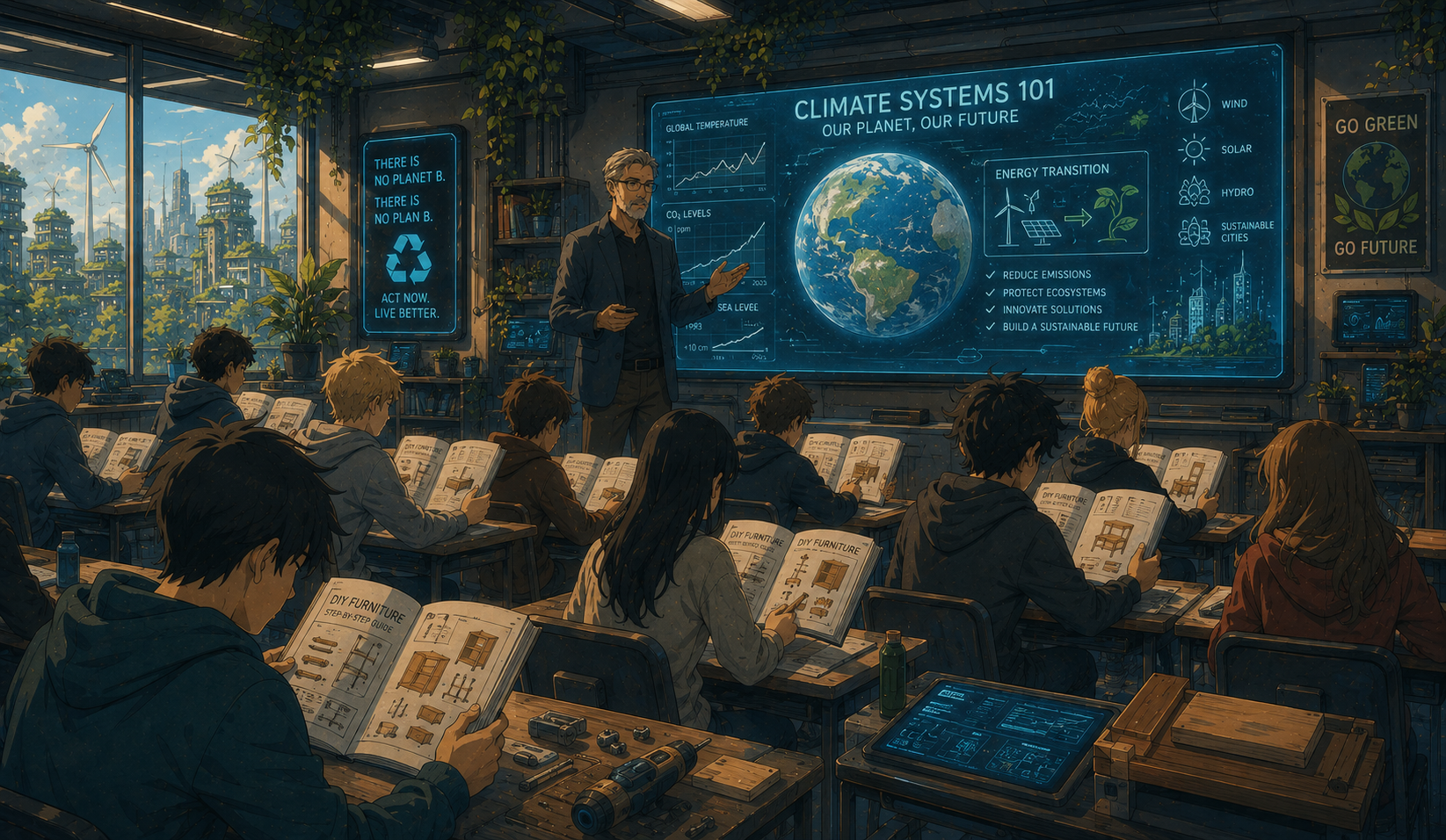
A worrying trend has been growing in secondary education over the past twenty years.
In many middle schools, practical technology classes have quietly disappeared or seen their hours cut by more than half.
This might look like a simple change in school schedules. But in reality, it shows a huge gap between what we teach our children and what our modern world actually needs.
We are raising a generation that uses touchscreens every day, but has no basic understanding of how those devices are powered, built, or programmed.
The big contradiction of our time
We live in a world that relies heavily on fast technological growth.
Almost every major challenge we face today requires real technical skills. We need:
- Energy transition experts to build solar grids, manage battery storage, and run modern power plants.
- Electronics and hardware engineers to design microchips, PCBs, and robotics.
- Software developers and cybersecurity specialists to keep our digital networks safe.
- Industrial construction engineers to build sustainable houses and modern factories.
The demand for these technical specialists is higher than ever. Yet, our education system treats basic technology lessons like an optional hobby instead of an essential core subject.
We expect young people to choose technical careers later in life, even though they barely get to touch practical engineering during their school years.
From creators to passive consumers
By removing technology education from schools, we create a passive mindset.
When students never get the chance to open a circuit board, build a simple frame, or write basic code, they start viewing technology purely as consumers. They treat complex machines as black boxes—magic objects that just work until they break.
A strong economy cannot rely only on consumers. It needs builders, fixers, and creators.
Understanding basic technology—like electric circuits, mechanical parts, and software logic—is no longer just for future mechanics. It is a basic skill everyone needs in a high-tech world.
The danger for future leadership
This lack of basic technical knowledge also creates a problem in the workplace.
When general technical knowledge drops, the gap between management and technical execution grows wider. Companies end up led by managers who understand spreadsheets, but have no idea how their company’s physical or digital products actually work.
As a result, organizations struggle to innovate. They make wrong estimations about timelines, underestimate technical challenges, and fail to understand their own engineers.
If we want smart, tech-savvy leaders in boardrooms tomorrow, we must introduce children to practical technology today.
Bringing practical technology back to school
Fixing this problem does not mean every student needs to become a software developer or a nuclear engineer.
It simply means treating technology education with the same respect as math, history, or language. We need to teach young people how the world around them works.
That means bringing practical technology back to the classroom:
- Combine theory with practice: Teach math and physics using real-world technical problems.
- Remove the mystery: Give students the confidence to take things apart, fix problems, and build new things.
- Show real career paths: Help students see early on what modern jobs in software, energy, and building actually look like.
Closing thought
We cannot build a high-tech future on a foundation of low-tech education.
If we want to maintain our infrastructure, succeed in the energy transition, and stay competitive, we must take technology education seriously again.
It is time to give the next generation the practical skills, curiosity, and knowledge they need to build the future.