Showing Posts From
Operations
 Rolf Schutten
- 01 Sep, 2026
Breaking the pattern of being the operational bottleneck
You spend your entire working day running from one urgent problem to another. Your digital calendar is completely packed with back-to-back meetings, and your phone buzzes constantly with urgent questions from your team. You work hard late into the evening, answering emails and reviewing documents that should have been finished hours ago. Yet, when you finally close your laptop at night, you realize that your strategic goals have not moved forward at all. It is exhausting. Disconnecting from work becomes almost impossible because your mind remains trapped in daily operational details. When an entire operational department depends on one person for every minor decision, progress slows down significantly. The team stays extremely busy, but the exact same issues keep returning to your desk week after week. You feel like a firefighter putting out the same fires over and over again. You wonder why your capable employees cannot handle these tasks on their own, and you feel frustrated that you are the central bottleneck holding everything up. The reality of the operational bottleneck To understand why this situation happens, we must look at how daily work actually flows through an organization. An operational bottleneck occurs when too many approvals, decisions, and technical checks must pass through a single person before work can move forward. In many companies, this person is the department manager, team lead, or senior operations director. At first, being the central point of contact feels productive. You know everything that is happening in your department, and you can give fast, accurate answers to complex questions. However, as the business grows or work becomes more complex, this setup quickly breaks down. Decisions start piling up in your inbox. Projects stall while team members wait for your approval. Instead of spending your time on strategic planning, process improvement, or long-term growth, you spend your entire day handling micro-decisions and operational emergencies. This pattern is rarely created by incompetent or lazy employees. In fact, it happens most frequently to highly talented, dedicated leaders who care deeply about their work. Because you are fast, experienced, and knowledgeable, solving a problem yourself takes less time than explaining the solution to someone else. It feels efficient in the moment. However, every time you provide a quick answer, you accidentally teach your team that bringing their problems directly to you is the easiest path forward. Over time, your team stops attempting to solve difficult problems independently. Examining the counter-perspective: why central control exists Before we talk about breaking this pattern, it is essential to examine the opposite argument. Is central control always a bad thing? Why do so many experienced leaders choose to keep tight control over daily operations, and are there valid reasons for doing so? To build a complete understanding of leadership, we must recognize that tight central control is not always a mistake. In many business situations, holding firm control over decisions is entirely logical, necessary, and even responsible. There are several clear reasons why a leader might choose to stay directly involved in operational details: First, consider high-risk operational environments where mistakes carry severe consequences. In industries like healthcare, aviation, financial compliance, or heavy manufacturing, an error in judgment can cause financial bankruptcy, legal prosecution, or physical harm. In these environments, strict quality control and centralized oversight are vital. A leader cannot simply tell an inexperienced team to figure things out for themselves when safety regulations or legal laws are at stake. Centralized authority ensures that standards remain exceptionally high and that critical procedures are followed without deviation. Second, central control is often necessary during times of organizational crisis or rapid change. When a business faces a sudden financial emergency, a major cyberattack, or a massive market collapse, clear and centralized leadership is essential. During a crisis, there is no time for long group discussions or slow democratic decision-making. The organization needs one decisive leader who can make rapid choices, give direct orders, and coordinate the entire team's effort. In emergency situations, centralization provides clarity, speed, and direction. Third, tight control is natural when a team is very new, understaffed, or lacking basic technical skills. You cannot delegate real responsibility to employees who do not yet possess the knowledge or confidence to perform the work. If a manager steps back too quickly without training their team first, the result is not empowerment; it is operational chaos. In the early stages of building a team, a leader must be hands-on, guiding every step and reviewing every document until the staff builds the necessary competence. Fourth, keeping control protects the team from external organizational noise. Senior leaders often act as a shield, absorbing pressure from executive boards, demanding clients, and corporate politics. By centralizing communication and decisions, the manager prevents their employees from feeling overwhelmed by executive demands. The manager takes on the burden so the team can focus on their daily work without unnecessary anxiety. Finally, we must acknowledge the psychological comfort that tight control provides to the leader. Being needed feels good. When team members constantly ask for your advice, it reinforces your status, authority, and sense of job security. Knowing every detail of the operation gives you a sense of certainty in an unpredictable corporate world. Letting go of control requires stepping into uncertainty, which can feel deeply uncomfortable for someone who takes pride in being an expert. Understanding these counter-arguments helps us see that central control is not an evil habit created by bad intentions. It is a natural response to risk, crisis, and organizational complexity. However, the critical issue arises when temporary control becomes a permanent operational model. The long-term costs of holding control too long While central control serves a clear purpose during crises or early team development, maintaining it permanently creates severe long-term risks. What begins as a protective measure eventually turns into an operational barrier that suffocates organizational growth. The first major risk is employee turnover, especially among your most talented staff. In today's competitive job market, high-performing employees want autonomy, trust, and room to develop their skills. If ambitious workers realize that every minor decision must be double-checked by their manager, they feel micromanaged and disempowered. They quickly realize that their professional growth is blocked. Eventually, these top performers leave for companies that offer real responsibility. Meanwhile, employees who prefer to follow orders without thinking will stay behind, making the department even more dependent on the manager. The second major risk is organizational paralysis. When every decision must pass through one person, the entire department can only move as fast as that single individual can work. If the manager falls ill, takes a vacation, or leaves the company, operations grind to a sudden halt. The organization becomes incredibly fragile because key operational knowledge is stored inside one person's head rather than built into repeatable team processes. The third risk is personal health and burnout. Carrying the entire mental burden of a department takes a heavy toll on a leader's physical and emotional well-being. Sleep deprivation, chronic anxiety, and high stress levels become regular parts of life. Over time, physical fatigue impairs decision-making ability, leading to poor strategic choices and emotional irritability. A leader who is constantly exhausted cannot provide inspiring direction or clear guidance for their team. Recognizing patterns instead of blaming people When managers realize that their department is struggling with dependency, their initial reaction is often to blame the employees. They might assume that their staff lacks ambition, intelligence, or work ethic. However, after working with operational leaders for many years, a clear truth emerges: teams do not become dependent because of bad people; they become dependent because of established patterns. A pattern is a learned cycle of behavior that repeats automatically within an organization. Consider how a typical dependency pattern develops in daily work:An employee encounters a challenging problem or an unfamiliar situation. Feeling uncertain or wanting to avoid making a mistake, the employee asks the manager what to do. The manager, wanting to be helpful and keep work moving quickly, immediately provides the answer. The employee carries out the solution, relieved that they did not have to take personal responsibility for the outcome. The next time a similar problem arises, the employee repeats the exact same step, bringing the issue directly to the manager.Over weeks and months, this cycle reinforces itself until it becomes an automatic habit for everyone involved. The manager feels increasingly overworked, while the employee experiences learned helplessness. Learned helplessness occurs when capable people stop using their own intelligence because they have been conditioned to rely on someone else for every solution. Breaking this cycle does not require firing your staff or completely restructuring your company. It requires recognizing the pattern and systematically changing your daily interactions with your team. Crucially, these patterns are broken not through external training courses or theoretical seminars, but through deliberate, small adjustments made during daily operations. Practical steps to build independence on the job Transitioning from a central bottleneck to an empowering leader is a gradual process that requires patience, discipline, and consistent practice. You cannot simply announce that you are delegating everything starting tomorrow; doing so would cause operational failure and alienate your team. Instead, you must implement a structured approach that gradually builds your team's confidence and capability while maintaining appropriate operational safety. The first step is to establish clear decision boundaries. Your team needs to know exactly which decisions they can make independently, which decisions they can make but must report to you afterward, and which high-risk decisions still require your direct approval. Many employees seek approval simply because they do not know where their authority ends. By defining these boundaries clearly, you remove uncertainty and give your staff permission to act independently within safe limits. The second step is changing how you respond when employees bring problems to your desk. When a team member enters your office asking for a solution, resist the strong internal urge to give an immediate answer. Instead, pause and ask a simple, empowering question: "What do you think we should do?" Initially, your employees might feel surprised or hesitant when you ask this question. They may offer a brief answer or admit that they do not know. Encourage them to analyze the situation, evaluate potential options, and recommend a specific course of action. Even if their proposed solution is not exactly how you would have done it, support their idea as long as it is safe and effective. By shifting from giving answers to asking questions, you teach your team to think critically and take ownership of their work. The third step is creating safe-to-fail opportunities. If employees believe that making a minor mistake will ruin their career or draw harsh criticism from management, they will continue to pass every decision up to you to protect themselves. You must demonstrate that small, low-risk mistakes are treated as valuable learning opportunities rather than punishable failures. When an employee makes a minor error while acting independently, guide them through a constructive debrief. Discuss what happened, what can be learned, and how to handle the situation differently next time. This approach builds psychological safety and encourages continuous improvement. The fourth step is investing time in coaching during daily work. Transforming your team's habits does not require spending hours in a classroom away from your job. Instead, spend about two hours each week providing short, focused coaching moments directly on the shop floor or during regular operational checks. Use real work situations to teach your team how to analyze problems, assess risks, and manage workflows. Over time, these brief coaching moments build deep capability within your workforce, allowing you to step back with confidence. As you implement these steps, you will gradually notice a significant shift in your daily work environment:The constant stream of minor interruptions and urgent questions will decrease significantly. Your team members will demonstrate higher confidence, discipline, and pride in their achievements. You will regain control of your personal schedule, restoring balance to your personal life. You will finally have the time and mental space required to focus on long-term strategic improvements that move the business forward.Comparing operational models To see the fundamental differences between these two ways of leading, it is helpful to contrast their core characteristics.Operational dimension Central bottleneck model Empowered team modelPrimary role of leader Chief problem-solver and central controller Coach, facilitator, and strategic guideDecision-making process All decisions pass through the leader's desk Decisions are made locally within clear boundariesTeam mindset Passive, hesitant, and reliant on permission Proactive, accountable, and focused on solutionsResponse to errors Blame, tighter control, and increased oversight Constructive analysis, learning, and coachingOrganizational speed Slow, limited by the leader's personal capacity Fast, flexible, and capable of handling growthLong-term outcome High burnout, turnover, and operational risk High engagement, resilience, and sustainable successClosing thoughts Being a central operational bottleneck is a common challenge, but it is not a permanent reality. While holding tight control is understandable during a crisis or in high-risk situations, maintaining it indefinitely limits your company's growth and damages your personal well-being. By recognizing the automatic patterns that create dependency, setting clear decision boundaries, and coaching your team during daily work, you can transform your department into a confident, self-sustaining unit. True leadership is not about making yourself indispensable, but about empowering your team to succeed without you.

- Rolf Schutten
- 24 Aug, 2026
Co-managed IT explained: who is really responsible?
Choosing how to run your IT infrastructure is one of the most important strategic decisions a business can make. However, many business leaders struggle with confusing terminology in the IT service provider landscape. Terms like co-managed IT, co-sourcing, fully managed services, and co-creation are often used incorrectly, leading to failed partnerships and unclear expectations. Understanding what these models actually mean, how responsibilities are divided, and how financial billing works is essential before signing any contract. The landscape of IT management models To make informed choices, business leaders must clearly distinguish between the different ways IT services can be delivered and organized. Under an insourcing model, a business handles all technology needs internally by hiring and managing its own personnel. Outsourcing, by contrast, transfers an entire process or department to an external provider who guarantees specific performance targets. Co-sourcing takes a staff augmentation approach by bringing in external personnel to work under your internal team's direction, adding temporary capacity without shifting operational control. Service delivery models also differ in scope and management approach. A standard managed service focuses on buying a specific functional outcome under a strict agreement, while remote managed services rely on software tools to monitor systems from a distance. Fully managed services go a step further by handing over complete operational responsibility for the entire IT environment to an external partner. Finally, co-managed IT involves an internal team and a provider managing a domain together, whereas co-creation focuses on jointly developing new digital products rather than managing existing systems. Deep dive into co-managed IT: what it is and what it is not Co-managed IT is often misunderstood in the service provider market, where it is frequently confused with buying extra staff or single software tools. In reality, a true co-managed setup is a joint operational partnership. Both the internal IT team and the external provider actively manage a specific domain together by sharing access to management platforms, support queues, and daily workflows. Both parties share equal accountability for system health, overall uptime, and cybersecurity. This approach is fundamentally different from other sourcing arrangements. It is not co-sourcing because co-sourcing merely supplies extra hands without transferring operational accountability to the vendor. It is also distinct from co-creation, which develops new intellectual property, and traditional outsourcing, which removes the internal team from daily operations entirely. Companies select co-managed models when they have a capable internal team that understands the business, but needs enterprise-grade tools, 24/7 coverage, and specialized knowledge. Financially, co-managed services usually rely on a predictable monthly fee per user or device, combined with set rates for project support. Deep dive into co-creation: what it is and what it is not Co-creation is another term that is often misused when organizations confuse custom software development with operational IT management. At its core, co-creation is a collaborative development strategy where a client and a technology vendor build a software tool together. The client provides domain expertise, practical feedback, and operational requirements, while the vendor contributes technical architecture, software engineering, and scalable infrastructure. This model should not be confused with standard custom software development, where a client pays the full cost to keep exclusive rights. Nor should it be mistaken for co-managed IT or co-sourcing, as co-creation focuses on building new digital tools rather than supporting daily IT operations. Businesses choose co-creation when standard commercial software falls short, but building custom tools alone is financially unfeasible. Financially, the client typically receives lower development rates or early software access. In return, the vendor retains the core intellectual property and creative freedom, allowing them to market and sell the solution to other commercial customers. The shared responsibility model: operational versus legal reality When working with an external IT partner, dividing responsibilities correctly is critical to avoiding operational gaps and legal surprises.IT Sourcing Model Operational Execution Operational Responsibility Legal Accountability Common Billing StructureInsourcing Internal staff Internal IT management Internal business board Internal salaries and capital spendOutsourcing External provider External service provider Internal business board Fixed monthly contract or service feeCo-sourcing Internal staff & external personnel Internal IT management Internal business board Time and materials or daily ratesCo-managed Shared internal and external team Joint shared responsibility Internal business board Fixed fee per user/device + project rateCo-creation Joint development team Joint development leadership Internal business board Discounted dev fees + IP retentionFully Managed External provider External service provider Internal business board Fixed monthly fee per user or deviceOperationally, you can delegate tasks and share daily responsibilities with a partner. In a co-managed environment, the vendor might handle backup management and software patches while your internal team supports end users. If a backup fails due to vendor negligence, the vendor is operationally accountable based on agreed service levels. However, legal responsibility works very differently. Regulators and courts hold your board of directors legally accountable if a cyberattack occurs or privacy laws are violated. While you can seek financial damages from a partner for breach of contract, ultimate legal accountability remains with your business. Closing thoughts Modern IT management requires a clear understanding of where effort ends and true responsibility begins. Misidentifying your sourcing model leads to operational confusion, unfulfilled promises, and unmanaged business risk. By defining roles, financial structures, and legal boundaries early, organizations can build effective partnerships that protect their operations. True IT partnerships are built on shared operational accountability, but business leaders must remember that legal responsibility can never be outsourced.

- Rolf Schutten
- 19 Aug, 2026
Why saying 'no' is the only sustainable choice
Many operational leaders recognize this scenario: you return from vacation and discover that important decisions were made informally over coffee. Official rules were ignored, and there is no proper handover. Suddenly, an urgent executive presentation lands on your desk with a 48-hour deadline. Your first instinct is likely to work overtime and clean up the mess. It feels helpful, useful, and necessary. However, stepping in to fix everything is the worst thing you can do. Leadership expert Bas Kodden explains in his book The Devil Inside that you end up sabotaging yourself and your organization. When you solve problems caused by poor leadership, you hide the real damage of broken agreements and keep the chaos alive. To build a healthy organization, you must face the truth: you have to stop helping. The trap of self-sabotage Why is it so hard to say "no"? Why is our default reaction always a stressed "yes"? It comes down to internal "saboteurs" or emotional triggers:Fear: Fear of conflict, fear of appearing unhelpful, or fear that everything will fall apart if you do not step in. Empathy: Excessive sympathy for desperate colleagues, which causes you to take on their pressure and stress. Ego: The desire to be the hero who saves the day, or the fear of feeling guilty.Because of these triggers, we constantly compensate for broken processes. True leadership starts with self-leadership: leading yourself first. You need to reflect on these emotional traps and stop making excuses for poor planning. Why "no" is the most sustainable choice Saying "no" to artificial urgency is not selfish or unhelpful. It is the most sustainable choice for your team and organization. When you decline an unplanned request, three positive things happen:The problem stays with the owner: The person who ignored rules or failed to plan feels the direct consequences, which encourages better behavior next time. You protect your team: You save your team's energy and capacity for planned operational goals. Governance is restored: Declining informal requests forces managers to use official decision-making channels.7 Rules for operational boundaries Saying "no" requires self-control. Use these seven practical rules to evaluate last-minute requests:No goal means "no": If the request does not directly support agreed goals, it is not a priority. Urgent is not always important: Someone else's panic usually means poor planning. Do not make it your problem. Look at hidden costs: Every extra task takes time. Ask yourself: Which important goal must I sacrifice for this? Saying "yes" to chaos means saying "no" to strategy: Time is limited. Last-minute work always hurts the quality of your core duties. Take time to pause: Stop reacting automatically. Take a moment to think before giving a clear answer. Let your calendar decide: If the task does not fit into your schedule, the calendar makes the decision for you. Demand context first: Ask for the business objective and proper approval. Often, you will find the request was not necessary after all.Closing thoughts An organization cannot grow on heroic acts, overtime, and personal favors. Sustainable success comes from clear agreements, structured roles, and respect for operational boundaries. Once you learn to manage fear, ego, and excessive empathy, you realize that saying "no" is not a rejection—it is professional respect. It forces the organization to mature and protect its own systems. Stop helping. Start protecting the system. Saying "no" to artificial chaos is the most sustainable choice you can make.
- Rolf Schutten
- 16 Aug, 2026
The AI productivity paradox: Why more tools aren't saving us time
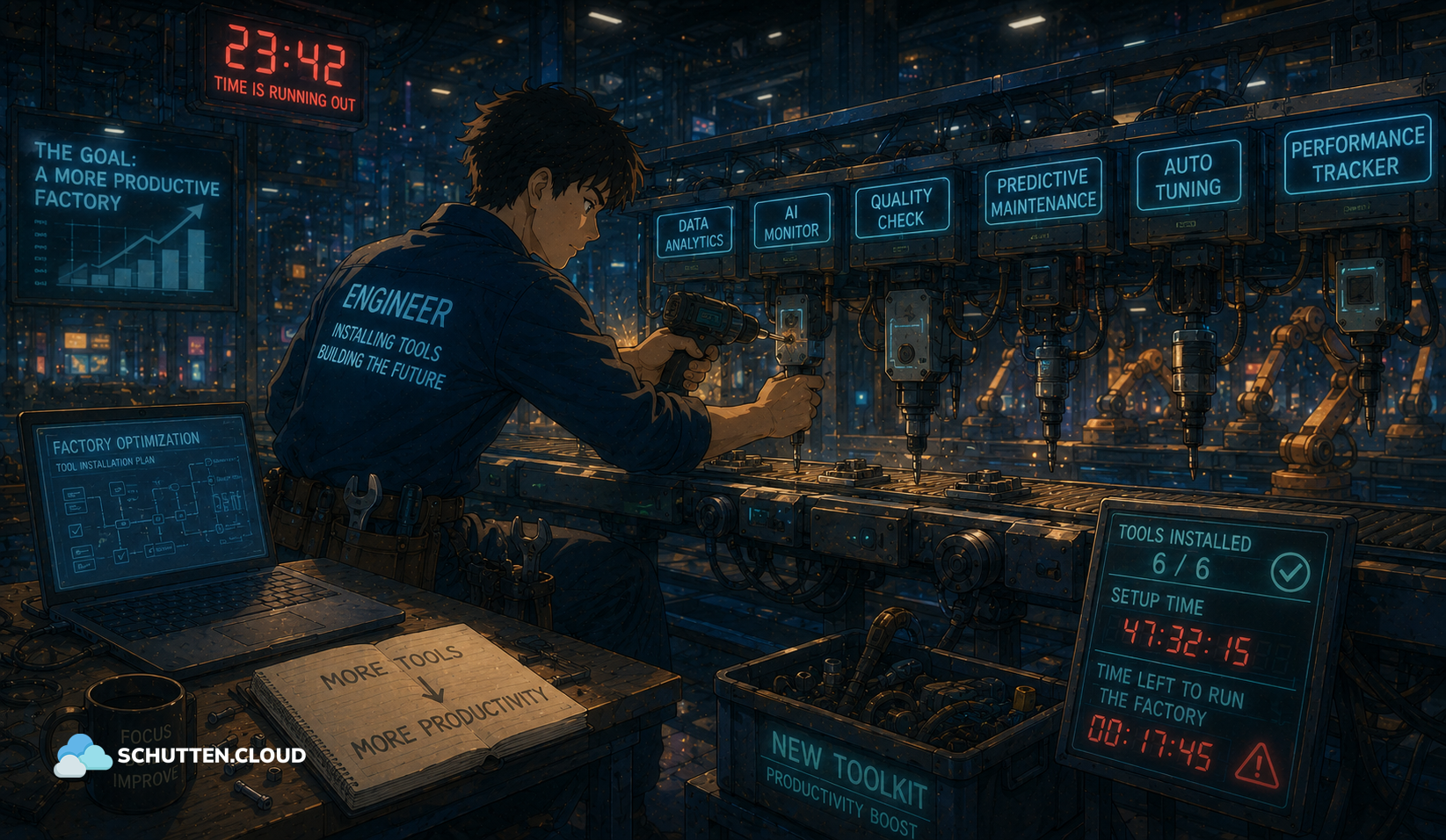
Artificial intelligence has spread faster than almost any other technology in human history. Today, workers across every industry use generative AI daily. They use it for writing reports, designing presentations, writing software, and summarizing long meeting notes. Major software companies have embedded AI directly into our email clients, office suites, and project dashboards. On paper, this should save us hours of work every week. Yet, if you look at modern business statistics, overall productivity has barely moved. Many business leaders are left asking the same frustrating question: If everyone is using AI, why is work not getting done any faster? This situation is not actually new. It is a modern version of the famous "productivity paradox" observed by economist Robert Solow in the 1980s. Back then, he noted that computers were visible everywhere except in the economic productivity numbers. Today, AI faces the exact same challenge. Why AI saves minutes, not whole processes The main reason for this productivity gap is simple: most people use AI to speed up small, isolated tasks rather than fixing full workflows. For example, a customer service agent might use AI to draft a quick reply to an email. The drafting takes five seconds instead of five minutes. However, that message still needs manual review, manager approvals, and input into old database systems. The bottleneck simply moves to another part of the process. In addition, several hidden time-wasters prevent AI from delivering its full potential:The Double-Checking Burden: AI outputs are rarely perfect on the first try. Employees end up spending significant time checking facts, correcting hallucinations, and editing formatting. Tool Overload: Organizations often use multiple specialized AI tools at the same time, such as ChatGPT, Claude, Midjourney, and GitHub Copilot. Deciding which tool to use and switching between them creates mental fatigue. The "More Content" Trap: Because creating documents and emails has become easier, companies generate much more of them. This creates a massive ocean of reports and emails that other employees must spend time reading. Constant Context Switching: Workers constantly jump between Slack messages, email, AI chats, and project boards, which drains mental energy throughout the day.What history teaches us about real efficiency MIT economist Erik Brynjolfsson points out that groundbreaking technologies rarely boost productivity immediately. He compares the current adoption of AI to the arrival of electricity in factories during the late 19th century. When factory owners first replaced steam engines with electric motors, productivity did not go up right away. It was only when they completely redesigned factory layouts and assembly lines around electricity that output exploded. Old Approach: [Standard Process] + [Add AI Tool] = Minimal Time Saved New Approach: [Redesigned Process Built for AI] = Massive EfficiencySimilarly, Wharton professor Ethan Mollick emphasizes that AI works best as a collaborative partner rather than a basic tool. Companies that see massive productivity gains do not just give their workers an AI login; they fundamentally rethink how work gets done. Real-world example: Support & software developmentCustomer Support: Instead of using AI just to suggest email templates, leading companies let AI agents sort tickets, handle routine queries autonomously, and route complex edge cases directly to human experts. Software Engineering: Rather than using AI merely to write single lines of code, teams integrate AI across the whole cycle—from initial architecture planning and automated unit testing to security checks and documentation.Looking ahead: The shift to autonomous agents We are currently moving from simple AI assistants toward autonomous AI agents. New multimodal agentic systems—like Alibaba’s Qwen 3.7 Plus—can look at user interfaces, click buttons, navigate websites, and complete multi-step tasks across different software without constant human prompting. As these tools mature and become affordable to deploy, the central question for businesses will change. It will no longer be "Should we use AI?" but rather "How must we redesign our work to let AI perform whole tasks effectively?" Closing Thoughts Having access to the most powerful AI tools in the world will not automatically make your team faster or smarter. Technology only provides the raw capability; real success depends on how thoughtfully you restructure your daily habits, workflows, and organizational structures to support it. True productivity in the AI era is not about doing old tasks faster. It is about designing completely new ways of working.

- Rolf Schutten
- 23 Jul, 2026
The invisible tax of organizational immaturity
When organizations talk about costs, the conversation usually revolves around salaries. Or around software licenses, cloud consumption. Office space even, or procurement. Those costs are easy to measure. They appear neatly on financial statements. But after working with organizations of different sizes and maturity levels, I've become convinced there's another cost almost nobody measures. An invisible tax. One that quietly drains productivity, frustrates employees and slows decision-making. Not because people aren't working hard. But because the organization itself creates friction. Everyone is busy. Few people are moving forward. One of the first things I pay attention to when joining an organization isn't the technology. It isn't the financial performance. It isn't even the organizational chart. I watch how people work. How decisions are made. How priorities change. How meetings end. How often people say things like:"We're waiting." "Nobody knows who's responsible." "We'll discuss it again next week." "I assumed someone else was taking care of it."Those sentences rarely point to individual performance. They point to organizational design. Because mature organizations don't become productive by hiring smarter people. They become productive by reducing unnecessary friction. The tax nobody budgets for Organizational immaturity doesn't usually appear as one dramatic failure. It appears as thousands of tiny inefficiencies. Like a meeting without decisions. An action without an owner. A priority that changes three times in one week. An approval that waits in someone's inbox. A project delayed because two departments assumed the other was responsible. Individually, none of those events seem particularly significant. Collectively, they become incredibly expensive. Not because they cost money directly. Because they consume something even more valuable: Leadership capacity. Attention. Momentum. Friction compounds Recently I observed an organization working through several operational challenges at the same time. None of them were catastrophic. A leadership transition. A supplier decision waiting for approval. Priorities shifting as new information became available. Teams adjusting schedules to respond to unexpected developments. Every individual situation was understandable. What interested me wasn't the incidents themselves. It was how much organizational energy disappeared into coordinating them. People weren't solving customer problems. They were reorganizing calendars. Clarifying responsibilities. Following up on decisions. Waiting for answers. Every interruption looked small. Together, they formed a pattern. The organization wasn't paying for the incidents. It was paying for the friction between them. Activity is not progress Immature organizations often look incredibly busy. Calendars are full. Teams work hard. Everyone feels under pressure. From the outside, it almost looks impressive. Until you ask a few simple questions: What are our three most important priorities this quarter? Which KPI tells us whether we're improving? Who owns this decision? What happens if nothing changes?Surprisingly often, the answers become vague. Because activity is easy to observe. Progress requires clarity. And clarity requires leadership. The hidden cost of ambiguity Ambiguity is one of the most underestimated operational costs I know. If priorities are unclear... People create their own. If ownership is unclear... People wait. If success is undefined... Everyone believes they're doing the right thing. The irony is that highly capable people become less effective, not because they lack competence, but because they're forced to spend their energy navigating uncertainty instead of creating value. Organizations don't lose momentum because employees suddenly become less talented. They lose momentum because ambiguity quietly taxes every decision. Every interruption has a cost One unexpected meeting. One rescheduled customer visit. One delayed approval. One forgotten follow-up. One unclear decision. Individually, they're almost invisible. But organizations rarely suffer from one interruption. They suffer from hundreds. Every context switch costs attention. Every unclear responsibility creates another conversation. Every missing KPI creates another opinion. Every delayed decision creates another dependency. Eventually, the organization becomes extremely busy managing itself. Instead of serving customers. Maturity isn't about perfection No organization operates without surprises. Nor should it. Markets change. Customers change. People leave. Plans evolve. Operational maturity isn't the absence of unexpected events. It's the ability to absorb them without disrupting everything else. The most mature organizations I've worked with weren't necessarily the most structured. They were the most predictable. People knew who decided. People knew what mattered. People knew what success looked like. That predictability creates an enormous competitive advantage. Because it allows talented people to focus on solving meaningful problems instead of organizational ones. The role of leadership This is why I believe organizational maturity is fundamentally a leadership responsibility. Not because leaders should solve every problem. But because leaders design the environment in which problems are solved. Good leaders don't simply remove obstacles. They remove recurring obstacles. They don't fix today's confusion. They redesign tomorrow's process. They don't celebrate people who constantly save the day. They build organizations that need fewer heroes. Because every recurring operational problem is usually trying to tell you something. Not about the people. About the system. Closing thought The most expensive organizations aren't always the ones with the highest payroll. Sometimes they're the ones quietly paying an invisible tax every single day. A tax on attention. A tax on momentum. A tax on decision-making. A tax on leadership. Most organizations never notice it because they experience it gradually. It simply becomes "the way we work." But it doesn't have to be. Because organizational maturity isn't measured by how hard people work. It's measured by how little unnecessary friction they have to overcome before they can do their best work.

- Rolf Schutten
- 08 Jul, 2026
Great organizations don't react faster. They lead sooner.
Every organization faces unexpected events. A key employee resigns. A customer leaves. A supplier disappoints. A critical project slips behind schedule. None of those situations are remarkable. The interesting question isn't whether they happen. It's what happens next. Because while every organization reacts... Not every organization leads. Two conversations always emerge I've noticed that almost every unexpected event creates two conversations. The first is about what happened. Who made the decision? Could it have been prevented? What were the circumstances? Who approved it? Those questions are natural. Sometimes they're even necessary. But then there's a second conversation. One that often receives far less attention. What are we going to do now? That's where leadership begins. Reality doesn't care whose fault it is One of the most common patterns I observe inside organizations is how quickly conversations drift toward explanation. Why this happened. Why another department was involved. Why someone else needed to decide first. Why a dependency caused the delay. Why governance prevented action. Interestingly, most of those explanations are factually correct. They're also largely irrelevant. Reality doesn't change because we understand it better. Leadership starts the moment we stop negotiating with reality and start working with it. The circumstances are what they are. The only remaining question is what we intend to do next. Waiting is often a decision Every leader encounters situations where formal approval is required. That's normal. Governance exists for a reason. But I've also seen organizations confuse governance with inertia. A recommendation has been written. The preferred solution has been identified. The risks are understood. The business case is complete. Everything is ready. And then... Everyone waits. Not because there's nothing left to do. But because everyone assumes someone else now owns the next step. Waiting feels safe. After all, nobody can criticize you for acting too early. The problem is that waiting is rarely neutral. It is often a decision disguised as patience. Great leaders create momentum The most effective leaders I've worked with share one characteristic. They don't spend much time asking whether circumstances are ideal. They ask a different question. "Given today's reality, what can we move forward?" Maybe implementation can't start yet. But preparation can. Maybe contracts can't be signed. But planning can begin. Maybe a final decision hasn't been made. But dependencies can already be removed. Momentum rarely appears on its own. Someone creates it. Governance should enable action One of the biggest misconceptions about governance is that it's primarily about control. I don't think it is. Good governance exists to improve decision-making. Not to delay it. Not to spread accountability so thinly that nobody feels responsible. And certainly not to create an environment where people stop thinking for themselves. The healthiest organizations I've seen combine strong governance with strong initiative. People understand the boundaries. But they also understand that leadership begins long before formal approval arrives. Governance should answer the question: "How do we make better decisions?" Not: "How do we avoid making them?" Leadership is accepting reality quickly One lesson I've learned over the years is that exceptional leaders don't waste much energy wishing reality were different. They don't spend days arguing with circumstances. Or blaming timing. Or waiting for perfect conditions. They accept reality remarkably quickly. Not because they like it. Because they understand that accepting reality isn't surrender. It's the starting point for changing it. You can't influence the situation you're refusing to acknowledge. The difference between reacting and leading Reactive organizations ask: "Who owns this?" Leading organizations ask: "What can we influence right now?" Reactive organizations focus on why progress is difficult. Leading organizations focus on removing the next obstacle. Reactive organizations wait until certainty appears. Leading organizations create clarity through action. The circumstances may be identical. The outcomes rarely are. Leadership is a mindset before it's a position Titles don't create leadership. Authority doesn't create leadership. Experience doesn't create leadership. Leadership begins with a decision. The decision to stop defining yourself by what others haven't done. And start defining yourself by what you can do next. That doesn't mean ignoring governance. Or bypassing colleagues. Or acting recklessly. It means refusing to surrender your ability to influence the outcome simply because someone else hasn't moved yet. There is almost always another conversation to have. Another dependency to remove. Another scenario to prepare. Another problem you can solve before someone asks you to. That's what leaders do. Closing thought Every organization will experience disruption. Every organization will encounter uncertainty. Every organization will have days where carefully made plans suddenly become obsolete. Those moments don't reveal whether an organization is successful. They reveal how it thinks. Some organizations become trapped in explanations. Others immediately start creating options. Because leadership isn't demonstrated when everything goes according to plan. It's demonstrated in the moment reality refuses to cooperate. You can spend your energy explaining why circumstances prevented progress. Or you can ask the only question that has ever moved an organization forward. "Given reality as it is... what's our next move?"