Are leaders born or made?
 Rolf Schutten
- 27 Aug, 2026
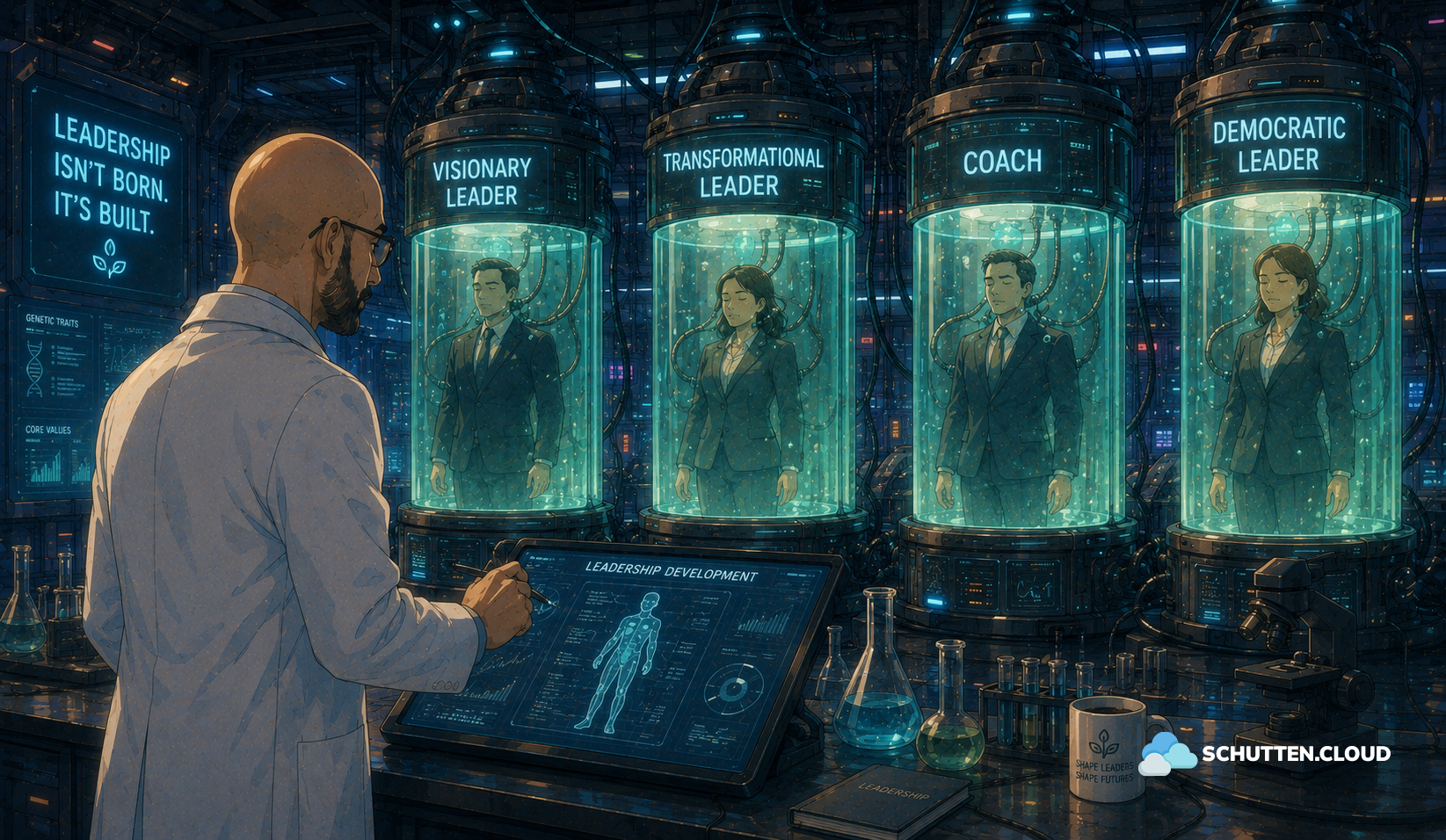
Think about the most impressive leader you have ever worked with in your career. Was this person born with a natural gift for guiding others? Or did they spend years learning how to lead through trial, error, and hard experience? This question has been debated for decades in offices, university classrooms, and executive boardrooms around the world. People often wonder if leadership is an innate talent hardwired into our DNA or a practical skill that anyone can acquire with enough effort.
In the past, many researchers supported the idea that historical figures were simply born with extraordinary qualities. Today, modern behavioral science provides a much more complete answer. Scientists study human behavior using a framework called the bio-psycho-social model. This model shows that becoming an effective leader is not a simple choice between nature and nurture. Instead, leadership develops through a continuous interaction between your genetic code, your personality, your childhood upbringing, and your life experiences.
The biological blueprint of leadership
Let us begin by looking at biology. Are some human beings naturally born to lead? To answer this question, behavioral scientists have spent decades studying identical and fraternal twins. Because twins share either all or half of their genetic material, comparing their life choices helps researchers measure the exact impact of DNA on career paths.
These twin studies consistently show that genetic factors account for roughly twenty-four to thirty percent of the variation in who takes on leadership roles. In simple terms, biology plays a real role, but it only explains about a third of the overall story. Scientists have even identified specific genetic markers associated with leadership positions. Research points to specific DNA sequences connected to neural receptors in the brain that appear more frequently in individuals who hold management roles.
However, it is vital to understand what these genetic markers actually do. Genes do not automatically create a great manager or a charismatic executive. There is no single leadership gene that guarantees success. Instead, your DNA influences underlying biological systems that make certain leadership behaviors easier to perform.
For example, genetics influence how your body regulates stress hormones like cortisol. Some people inherit a nervous system that stays calm during high-pressure situations. When a sudden crisis hits a company, these individuals do not panic easily. Genetics also influence dopamine levels, which drive physical energy, ambition, and the desire to achieve goals. A person born with high physical energy and a steady nervous system may find it easier to step into demanding roles.
Yet, having a biological advantage is never enough on its own. Think of genetics as the quality of a seed in agriculture. A high-quality seed has great potential. However, if you drop that seed onto dry rocks without water, sunshine, or fertile soil, it will never grow into a tree. The exact same rule applies to human beings. A person may inherit a strong nervous system and high energy, but without the right environment, proper education, and real opportunities, that biological potential remains completely unused.
Learning to lead through practice and experience
Since genetics account for less than a third of leadership tendencies, the remaining seventy percent comes down to environment, education, and life experiences. This is an encouraging realization for anyone who wants to improve their skills. It proves that leadership is primarily a learned discipline rather than an exclusive club reserved for a lucky few.
To understand how people learn to lead, we must look at how the human brain adapts over time. The brain is not a static organ that stops developing after childhood. Through a natural process known as neuroplasticity, the brain constantly builds new connections whenever you practice a skill or reflect on a new experience.
Leadership is made of specific practical behaviors. Active listening, emotional control, strategic planning, clear communication, and delegating tasks are all skills that can be trained. None of these abilities appear magically overnight. Just like learning to play a musical instrument or speak a new language, mastering leadership requires deliberate practice. When a manager repeatedly practices remaining calm during difficult conversations, the brain strengthens the neural connections responsible for self-control. Over time, what felt difficult and awkward becomes a natural habit.
People also learn how to lead by observing others around them. From an early age, human beings watch parents, teachers, managers, and public figures. When we see a manager handle a team conflict with fairness and respect, we remember that positive outcome. We mentally store that behavior and copy it when we face similar challenges later in life. Conversely, watching a poor manager destroy team trust teaches us what mistakes to avoid.
However, the most powerful learning experiences often come from facing severe hardship. In leadership research, these intense personal challenges are called crucibles. A crucible might be a failed business venture, a painful career setback, a major project collapse, or a personal health crisis. These difficult moments force individuals to pause, examine their values, and rebuild their approach to life. When a leader goes through a crisis and takes time to reflect on what went wrong, they develop deep self-awareness and emotional strength. True confidence is rarely born during easy times. It is forged when you face failure, learn from your mistakes, and rebuild your career with greater wisdom.
Personality traits and the myth of the extrovert
While everyone can learn leadership skills, personal traits shape how individuals approach the role. Psychologists often study personality using five main characteristics: extraversion, conscientiousness, openness to experience, agreeableness, and emotional stability. Understanding these traits helps explain why different people adopt distinct management styles.
Extraversion is often the most visible personality trait. People who score high in extraversion are outgoing, energetic, and comfortable in social settings. Because extraverts naturally speak up in groups and seek attention, they are frequently the first people to step forward into leadership positions. Researchers call this phenomenon leader emergence. When a team faces an uncertain situation, the loudest and most confident voice often gets chosen to take charge.
However, there is a big difference between emerging as a leader and being an effective leader over time. While extraversion helps people get noticed initially, traits like conscientiousness and openness to experience predict long-term success. Conscientious individuals are organized, disciplined, reliable, and detail-oriented. They keep promises, meet deadlines, and create structured systems that allow businesses to run smoothly. Openness to experience brings curiosity, creativity, and a willingness to explore new ideas, which is vital for long-term strategy.
Emotional stability is another crucial factor. Leaders who experience high anxiety, frequent mood swings, and deep self-doubt often struggle to make decisions under pressure. These negative emotions hurt decision-making and make it difficult for team members to feel secure. A leader who panics under stress spreads fear throughout the entire organization.
For many years, popular culture assumed that great leaders had to be loud, dramatic extraverts. This assumption created a widespread myth that introverted individuals could not lead effectively. Modern psychological research has proven that myth completely wrong.
In complex and fast-moving business environments, introverted leaders often outperform extraverted leaders. Introverted managers tend to be quiet, thoughtful, and excellent listeners. Instead of trying to dominate every conversation, they create space for their team members to share creative suggestions and take initiative. When a team consists of proactive, highly skilled employees, an introverted leader allows those employees to shine and innovate. Extraverted leaders, on the other hand, sometimes feel the need to control every discussion, which can accidentally crush the initiative of talented workers.
While positive personality traits support healthy leadership, dark personality traits can cause immense damage. Characteristics like extreme narcissism, manipulativeness, and a lack of empathy can ruin organizations. Individuals with these traits often appear charming, confident, and persuasive in job interviews. They frequently climb corporate ladders quickly by taking credit for other people’s work and manipulating office politics. However, in the long run, these individuals destroy trust, demoralize employees, and ruin corporate cultures. True leadership effectiveness must be measured by long-term organizational health, not short-term power.
How early childhood shapes future leaders
Long before a person attends their first business meeting or enters a management training program, their leadership foundation is already being built at home. The way parents raise their children leaves a permanent mark on how those children interact with authority, manage stress, and build relationships in adulthood.
Psychologists study early childhood development using attachment theory. When parents provide consistent love, protection, and emotional warmth, a child forms a secure emotional bond. This secure attachment creates a strong sense of basic trust. Children who grow up feeling safe and valued develop healthy self-esteem and learn to trust other people.
In adulthood, this basic trust becomes a cornerstone of healthy leadership. Secure leaders do not feel threatened when their team members succeed or express different opinions. They do not need to micromanage every detail because they genuinely trust their workers. Instead of controlling people through fear, secure leaders empower their teams, offer constructive support, and build environments where employees feel safe to take calculated risks.
Parenting styles also play a direct role in developing personal responsibility. The most effective approach combines high emotional warmth with clear rules and boundaries. Parents who use this balanced approach set firm expectations, but they also explain the reasons behind those rules and listen to their children’s feelings.
This supportive environment teaches children that their actions have real consequences, developing an internal locus of control. An internal locus of control is the firm belief that you have the power to shape your own life through your choices and effort. Individuals who grow up with this mindset do not blame outside circumstances when things go wrong. When they face a crisis at work, they take ownership, adapt their strategy, and look for practical solutions.
Furthermore, parents who encourage their children to make age-appropriate decisions build personal resilience early in life. Allowing a child to solve small problems, manage minor conflicts, and experience failure teaches them that mistakes are not fatal. When these children grow into adults, they possess the courage to make tough decisions under uncertainty without being paralyzed by the fear of making a mistake.
Putting the bio-psycho-social model into practice
Understanding the complete picture of how leadership develops changes how organizations should select, train, and support their managers. Relying on outdated ideas about natural talent or charismatic personalities leads to poor hiring decisions and wasted human potential.
When companies hire or promote leaders, they should look beyond outward confidence and superficial charisma. Assessment processes should focus on emotional stability, conscientiousness, self-awareness, and personal integrity. Evaluating how a candidate handles failure and listens to feedback provides far better clues about their future performance than listening to an impressive interview speech.
Organizations must also redesign their leadership development programs. Traditional management training often consists of short lectures and reading materials, which do little to change actual daily behavior. Because the brain learns through practice and active reflection, effective training must include hands-on experience, real-world projects, long-term mentoring, and continuous feedback.
Creating a culture that views mistakes as learning opportunities is equally critical. If a company punishes every minor error, managers will avoid taking risks and default to rigid, defensive behaviors. However, when an organization treats setbacks as natural learning experiences, leaders develop the resilience and adaptability required to navigate complex market changes.
Summary of leadership factors
To bring all these elements together, it is helpful to look at how different factors contribute to the overall development of a leader.
| Dimension | Share or role | Primary mechanism | Key research concepts |
|---|---|---|---|
| Genetics | 24% to 30% | Biological predisposition, stress and energy regulation | Genetic markers and twin studies |
| Learnability | Around 70% | Neuroplasticity, practical experience, role models, reflection | Social learning and life challenges |
| Personality | Moderating role | Main personality traits guide leadership style and effectiveness | Extraversion, conscientiousness, introversion |
| Upbringing | Foundational role | Secure attachment, supportive parenting, personal responsibility | Early trust and internal control |
Closing thoughts
The debate over whether leaders are born or made turns out to be incomplete. Biology sets a basic foundation, providing raw physical energy, stress tolerance, and temperament tendencies. Childhood upbringing builds the emotional security and personal responsibility needed to interact healthily with others. Finally, years of deliberate practice, observation, and reflection turn that potential into practical skill.
Nobody is born a finished leader, and nobody becomes a great leader purely by accident. Becoming a leader is a lifelong process of learning, making mistakes, and growing as a human being. When organizations recognize this truth, they can stop searching for mythical born leaders and start building environments where real leadership can flourish.
Great leaders are neither simply born nor purely made, but continually developed through experience, reflection, and growth.